
Academy › Single Essential Oils › Cumin Seed
Cumin Seed Essential Oil
The Sun-Drenched Spice of the Ancient Trade Routes
Cumin seed essential oil is a bold, pungent and warm-spicy oil steam-distilled from the dried seeds of the cumin plant, best used in tiny amounts in diffuser blends and perfumery, and with great care on the skin.
Botanical name: Cuminum cyminum
Aroma: Pungent, warm, spicy and earthy with a musky edge
Note: Middle to base
Main growing region: Mediterranean and India (as described on our product page)
Typically extracted: Steam-distilled from the dried, ripened seeds
Blends well with: Sweet Orange, Bergamot, Cedarwood, Black Pepper and Coriander Seed
Top 3 benefits:
- Bold and warming scent: a pungent, earthy spice that brings real depth and heat to diffuser blends.
- Energising aroma: many people find its strong spiced character stimulating on a slow, grey morning.
- Perfumery depth: a distinctive spicy heart note for natural fragrance makers who like a daring, savoury edge.
Safety first: cumin seed oil is phototoxic and potent, so avoid sun and UV on any skin it touches, keep skin use to 0.4% or less, and avoid it during pregnancy. Read the full safety information.
What Is Cumin Seed Essential Oil?
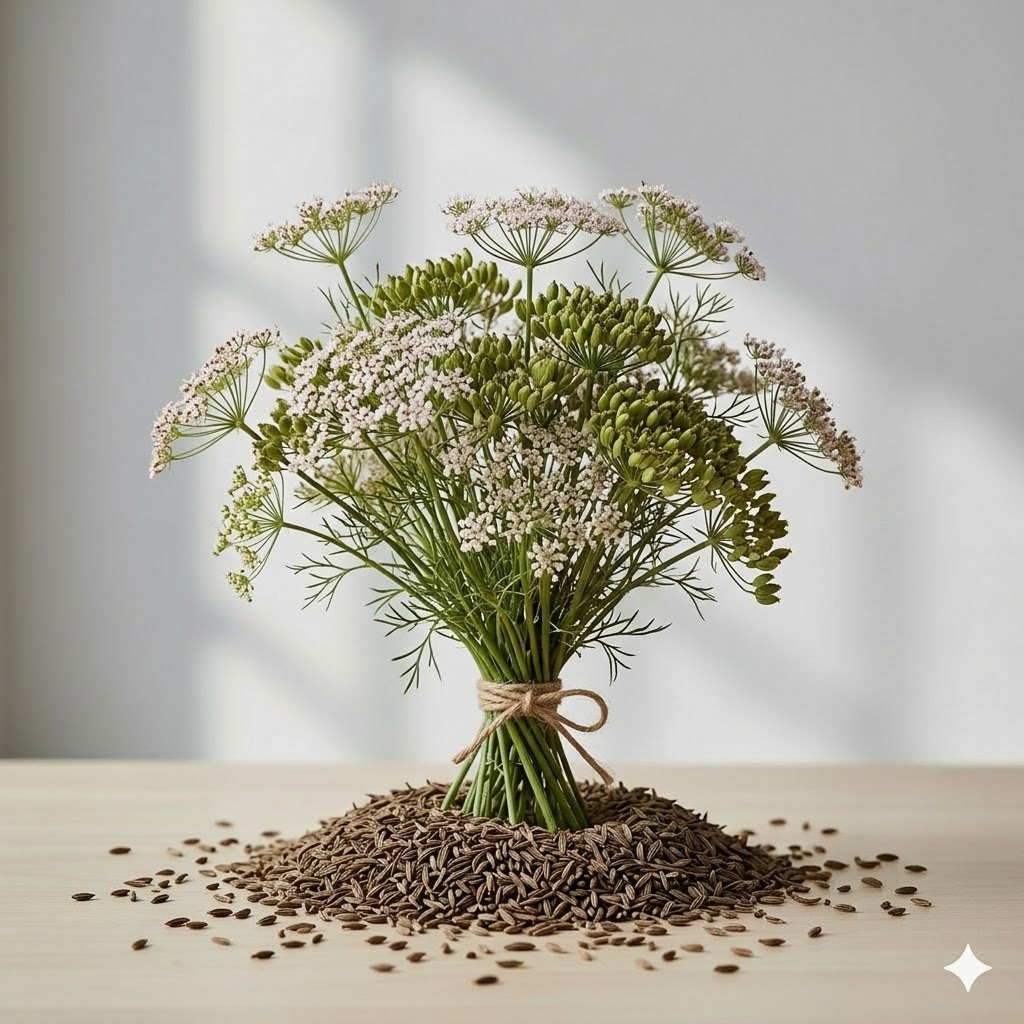
Cumin seed essential oil is steam-distilled from the dried, ripened seeds of Cuminum cyminum, a slender annual herb in the carrot family. The seeds are a kitchen staple in dishes from North Africa to India, and the oil captures their pungent, savoury character in a very concentrated form. It is a strong oil, so a single drop goes a long way.
Its aroma comes largely from cuminaldehyde, along with gamma-terpinene and beta-pinene. Cuminaldehyde gives the unmistakable warm, earthy, slightly musky spice, while the terpenes add a green, fresh lift. The result is a powerful oil that is best blended with citrus or woods to soften its intensity.
Benefits and Traditional Uses
The science: cumin seed has a bold, savoury aroma that adds warmth and depth to a room. On its own it can feel overwhelming, so it is traditionally softened with citrus or wood oils. Research on cumin oil as an aromatherapy ingredient is limited, so enjoy it for its scent rather than for any therapeutic effect.
How to use (the spiced room blend): add 1 drop of cumin seed to 3 drops of Sweet Orange and 2 drops of Cedarwood in a diffuser, in a well-ventilated room.
The science: strong, pungent spice aromas are traditionally associated with a stimulating, awakening effect. Many people find a brief sniff of cumin seed bracing when they feel sluggish, though research is limited and responses are personal.
How to use (the spark inhalation): place a single drop on a cotton wick or tissue and inhale briefly from a comfortable distance in the morning or before a demanding task. Do not let the tissue touch your skin.
The science: perfumers have long valued cumin as a bold, spicy accent, used in tiny quantities to add an earthy, skin-like warmth to oriental and woody blends. Because cumin seed oil is phototoxic, it is best kept for diffusing and room scents rather than for fragrance worn on the skin in sunlight.
How to use (the scent accent): add a single drop to a blend of 5 drops Bergamot and 3 drops Black Pepper for a warm, spicy diffuser or room-spray base.
How to Use Cumin Seed Essential Oil
| Method | Instructions | VivaForte tip |
|---|---|---|
| Diffusion | 1 to 2 drops in an ultrasonic diffuser, blended with other oils, in short sessions of 30 minutes. | Always blend with citrus (such as sweet orange) or wood (such as cedarwood) to balance its potent aroma. |
| Inhalation | 1 drop on a tissue or cotton wick, inhaled briefly. | Keep it off your skin and well away from children. |
| Topical | Maximum 0.4% dilution (about 1 drop per 15ml of carrier oil). Many people prefer not to use cumin seed on the skin at all. | Patch test first and avoid sun and UV on the area for at least 12 hours. |
| Blending | 1 drop added to a diffuser blend as a spicy accent. | Pair with sweet orange, bergamot, cedarwood or black pepper. |
Cumin Seed Safety Information
- Phototoxic. Cumin seed oil can cause skin reactions in sunlight. Avoid direct sun and sunbeds on any skin it has touched for at least 12 hours, and never use it on skin that will be exposed.
- Dilute and patch test. If you use it on the skin at all, keep it to 0.4% or less (about 1 drop per 15ml of carrier oil). Cumin seed oil can irritate, so patch test first and stop if irritation occurs. Avoid the face, sensitive skin and broken skin. Diffusion is the gentler choice.
- External and aromatic use only. Do not swallow essential oils. The cumin you cook with is a different product.
- Pregnancy, breastfeeding and health conditions. Avoid cumin seed oil during pregnancy. Speak to a healthcare professional before use if you are breastfeeding, have a medical condition or take regular medication.
- Children. Keep out of reach of children, and do not use it on or near the face of babies or young children.
- Pets. Essential oils can be harmful to pets, particularly cats. Use only in a ventilated room, let animals leave freely, and never apply the oil to them.
- Chemical profile. High in cuminaldehyde, gamma-terpinene and beta-pinene.
For general guidance on dilution, patch testing and sun safety, read our Essential Oil Safety guide.
History and Heritage
Cumin is thought to be native to the eastern Mediterranean and western Asia, and has been cultivated for thousands of years. Cumin seeds have been found at ancient archaeological sites, and the spice is closely tied to the cooking of North Africa, the Middle East and India.
In the ancient Mediterranean, cumin was a familiar table spice, and in classical writing it is also linked with stinginess, a reputation that lasted for centuries. Later, European tradition came to treat cumin as a symbol of loyalty, and a charming (though unproven) story says soldiers were sent off with cumin bread to ensure they came home faithful.
Today cumin is one of the most widely used spices in the world. The essential oil, distilled from the same seeds, is a much more concentrated and specialist ingredient, valued by perfumers and blenders for its distinctive character.
Cumin Seed Essential Oil FAQs
Is cumin seed essential oil safe to use on the skin?
Only with great care. It is phototoxic and can irritate. Keep it to 0.4% or less (about 1 drop per 15ml of carrier oil), patch test first, and avoid sun and UV on the area for at least 12 hours. Diffusion is gentler.
Is cumin seed oil safe in pregnancy?
It is best avoided during pregnancy. Speak to a healthcare professional if you are pregnant, breastfeeding, have a health condition or take medication before using any essential oil.
Is cumin seed essential oil safe around pets?
Take care. Cats and small animals are sensitive to essential oils. Diffuse in a ventilated room, let animals leave freely, and never apply the oil to their skin or fur.
What does cumin seed oil smell like and what blends with it?
It smells pungent, earthy and warmly spiced with a musky edge. It blends well with Sweet Orange, Bergamot, Cedarwood and Black Pepper.
Why is cumin seed oil phototoxic?
Cumin seed oil contains compounds that can make skin more reactive to ultraviolet light, which may cause redness or marks in sunshine. That is why it should be kept off skin that will be exposed, and used mainly in a diffuser.
Continue Exploring
- Black Pepper: another warm, spicy oil that pairs well in a diffuser blend.
- Coriander Seed: a gentler, sweeter spice oil from the same plant family.
- Cardamom: a sweet, fresh spice that softens bold, earthy blends.
- Essential Oil Safety: dilution, patch testing and sun safety explained.
- All Single Essential Oils: browse the full VivaForte botanical range.