
Academy › Single Essential Oils › Coriander Seed
Coriander Seed Essential Oil
The Warm Spice of Quiet Confidence
Coriander seed essential oil is a warm, sweet and gently spicy oil steam-distilled from the dried seeds of the coriander plant, loved for its smooth, woody-citrus aroma in diffuser blends, massage oils and natural perfumery.
Botanical name: Coriandrum sativum
Aroma: Warm, sweet, spicy and slightly woody, with a soft peppery edge
Note: Middle
Main growing region: Eastern Europe, including Russia and Bulgaria
Typically extracted: Steam-distilled from the dried, crushed seeds
Blends well with: Lemon, Bergamot, Ginger, Cardamom and Sandalwood
Top 3 benefits:
- A warm, bright scent: many people find its sweet-spicy aroma smooth, grounding and gently uplifting.
- Massage blends: traditionally added in small amounts to warming body oils for use after a long day.
- Perfumery connector: a spicy-floral middle note that bridges bright citrus tops and deeper woody bases.
Safety first: coriander seed oil is generally gentle, but keep skin use to 1% or less, patch test first, and keep it away from cats and young children. Read the full safety information.
What Is Coriander Seed Essential Oil?
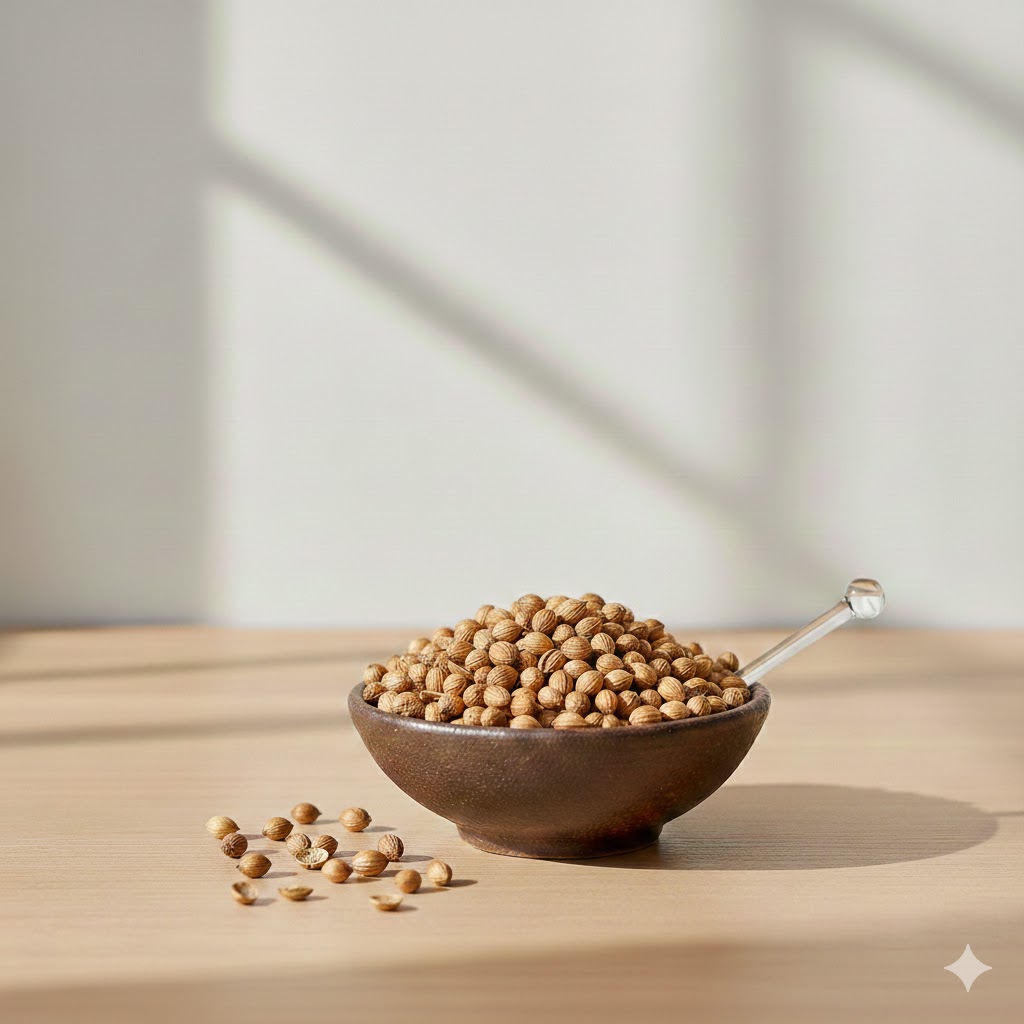
Coriander seed essential oil is steam-distilled from the dried, crushed seeds of Coriandrum sativum, the same plant whose fresh leaves are known as cilantro. The seed and the leaf smell quite different: the leaves have a sharp, fresh, herbal character, while the seeds are warm, sweet, spicy and slightly woody with a gentle peppery undertone.
The oil is typically high in linalool, a sweet, floral-woody compound also found in lavender and rosewood, together with smaller amounts of alpha-pinene and gamma-terpinene. This is what gives coriander seed its smooth, rounded character. It sits in the middle of a blend and works as a connector between bright citrus tops and deeper, heavier base notes.
Benefits and Traditional Uses
The science: coriander seed combines a spicy, alert edge with the smooth, floral softness of linalool, and many people find it a pleasant companion for study and work. Research on aromatherapy and concentration is limited, so enjoy it as part of a calm, tidy routine rather than as a treatment.
How to use (the study sanctuary): diffuse 3 drops of coriander seed with 3 drops of Lemon in a ventilated room for 30 to 60 minutes while you work or read.
The science: coriander seed has long been used in traditional massage blends for its warm, comforting aroma. It is gentle enough for most adults at low dilution, and a calm, unhurried massage is a pleasant way to ease the end of a busy day.
How to use (the evening rub): mix 3 drops of coriander seed with 15ml of a carrier oil such as sweet almond or jojoba (about 1%) and massage into the shoulders, arms or legs. Patch test first.
The science: the spicy, sweet scent of coriander seed is a natural fit for the kitchen and living areas, where it can lift stale cooking smells and suits a warm, inviting atmosphere.
How to use (the warm welcome): diffuse 3 drops of coriander seed with 2 drops of Ginger and 2 drops of Bergamot in an open-plan living space, away from pets.
How to Use Coriander Seed Essential Oil
| Method | Instructions | VivaForte tip |
|---|---|---|
| Diffusion | 3 to 5 drops in an ultrasonic diffuser, in short sessions in a well-ventilated room. | Lovely for freshening kitchen and living areas. Keep pets out of the room. |
| Inhalation | 1 drop on a tissue or cotton ball kept nearby. | A quick midday pick-me-up. Keep it off your skin. |
| Topical | Maximum 1% dilution (about 3 drops per 15ml, or 2 drops per 10ml, of carrier oil). | Patch test first and avoid the face and broken skin. |
| Massage | 3 drops in 15ml of sweet almond or jojoba oil (about 1%). | Blend with copaiba or ginger for a warming massage oil. |
| Blending | 1 to 2 drops added to a diffuser or perfume blend as a spicy-sweet middle note. | Pair with citrus, ginger, cardamom or sandalwood. |
Coriander Seed Safety Information
- Dilute and patch test. Use no more than 1% on the skin (about 3 drops per 15ml of carrier oil). Coriander seed oil is considered to have a low risk of irritation, but, like any oil, it may cause an allergic skin reaction in some people, particularly if it is old or oxidised. Patch test first and stop using it if irritation occurs. Avoid broken or sensitive skin.
- External and aromatic use only. Do not swallow essential oils.
- Pregnancy, breastfeeding and health conditions. Speak to a healthcare professional before use, particularly if you are pregnant or breastfeeding, have a medical condition or take regular medication.
- Children. Keep out of reach of children, and do not use on or near the face of babies or young children.
- Pets. Essential oils can be harmful to pets, particularly cats. Ventilate the room, let animals leave freely when diffusing, and do not apply the oil to or near them.
- Store well. Keep the bottle tightly closed, cool and away from light. Oils rich in linalool can oxidise with age, which may make skin reactions more likely.
- Chemical profile. High in linalool, with alpha-pinene and gamma-terpinene.
For general guidance on dilution, patch testing and sun safety, read our Essential Oil Safety guide.
History and Heritage
Coriander is one of the oldest known culinary and aromatic plants. Seeds have been found in ancient Egyptian tombs, including that of Tutankhamun, and the plant appears in early texts from the Mediterranean, the Near East and India. It has long been grown for both its leaves and its seeds across a wide stretch of the world.
In many traditional kitchens the seeds were used whole or ground to add a warm, citrusy sweetness to food, and they were also valued in scented preparations. The name is thought to come from the Greek koriannon. Today the essential oil is distilled from the seeds in several countries, including parts of Eastern Europe, and is popular in both aromatherapy and natural perfumery.
Coriander Seed Essential Oil FAQs
Is coriander seed essential oil safe to use on the skin?
Yes, when diluted. Keep skin use to 1% or less (about 3 drops per 15ml of carrier oil), patch test first, avoid the face and broken skin, and stop if irritation occurs. Store it well, as old oils are more likely to irritate.
Is coriander seed oil safe in pregnancy or around pets?
Speak to a healthcare professional before using any essential oil in pregnancy or while breastfeeding. Around pets, especially cats, keep diffusing short in a ventilated room, let animals leave freely, and never apply it to them.
What does coriander seed oil smell like?
It smells warm, sweet and gently spicy, with a woody, slightly peppery and citrusy character. It is quite different from the fresh, sharp smell of coriander leaves (cilantro). Many people find it smooth and comforting.
What blends well with coriander seed essential oil?
It blends well with citrus and spice oils such as Lemon, Bergamot, Ginger and Cardamom, and with woods like Sandalwood.
What is the difference between coriander seed oil and cilantro?
They come from the same plant, Coriandrum sativum. Cilantro is the fresh leaf, with a sharp herbal scent. The essential oil is distilled from the dried seeds, and smells warm, sweet and spicy.
Continue Exploring
- Cardamom: another sweet-spicy seed oil that pairs beautifully with coriander.
- Ginger: a warm, zesty oil for cosy, spicy diffuser blends.
- Lemon: a bright citrus partner that lifts coriander seed’s warm notes.
- Essential Oil Safety: dilution, patch testing and sun safety explained.
- All Single Essential Oils: browse the full VivaForte botanical range.