
Academy › Single Essential Oils › Black Pepper
Black Pepper Essential Oil
The Warm Spark of the Spice Trade
Black pepper essential oil is a warm, dry and spicy oil steam-distilled from dried peppercorns, loved for its invigorating scent, its place in warming massage blends and the grounded depth it adds to perfumery.
Botanical name: Piper nigrum
Aroma: Sharp, warm, spicy and woody
Note: Middle
Main growing region: Tropical India, the historic home of the pepper vine
Typically extracted: Steam-distilled from nearly ripe, sun-dried peppercorns
Blends well with: Ginger, Lavender, Frankincense, Sweet Orange and Cardamom
Top 3 benefits:
- Warming massage partner: its dry, peppery heat is a traditional favourite in diluted blends for tired limbs after exercise.
- Invigorating aroma: many people find its sharp, spicy scent bright and focusing during a long or draining day.
- Depth in blends: a middle note that adds a dry, spicy “spine” to citrus, floral and resinous perfumery.
Safety first: black pepper oil can irritate the skin, so keep skin use to 2% or less, patch test first, and never use it neat. Read the full safety information.
What Is Black Pepper Essential Oil?
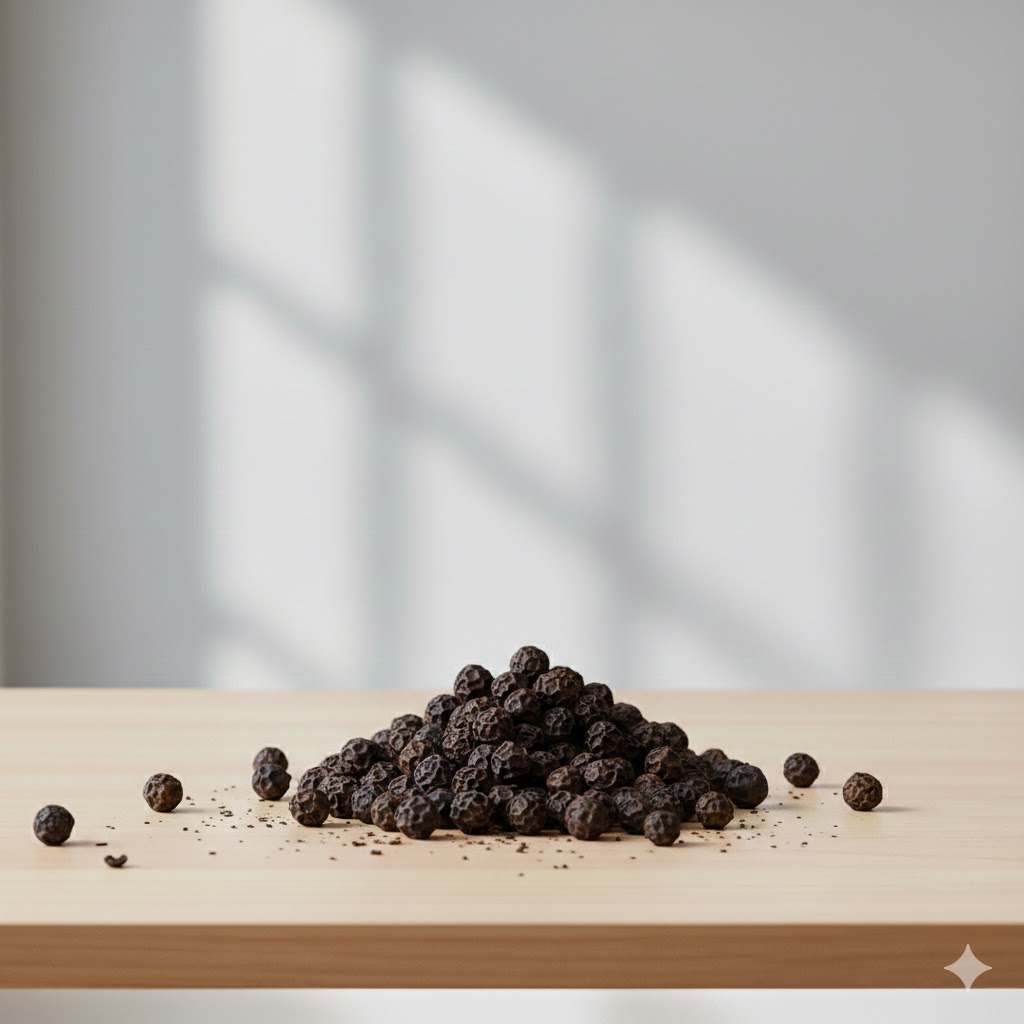
Black pepper essential oil is steam-distilled from the nearly ripe, sun-dried peppercorns of Piper nigrum, a climbing vine long associated with the tropical south of India. It is the same plant that gives us the everyday kitchen spice, but the oil smells quite different: sharper, drier and more woody, with a gentle warmth rather than a burn.
Its character comes mainly from beta-caryophyllene, limonene and alpha-pinene. The ground spice owes its bite to piperine, which is not a significant part of the distilled oil, so the oil is best thought of as a fragrant, warming note for diffusers, massage blends and perfumery rather than a kitchen ingredient.
Benefits and Traditional Uses
The science: black pepper oil contains beta-caryophyllene and limonene, and has long been used in massage blends for its warming feel on the skin. Research into its effects is limited, so enjoy it as a pleasant, comforting part of a post-exercise routine rather than a treatment.
How to use (the post-workout rub): blend 2 drops of black pepper and 2 drops of Ginger in 20ml of carrier oil (about 1% in total), patch test first, and massage gently into the shoulders or legs. Avoid broken or sensitive skin.
The science: the sharp, spicy aroma is traditionally associated with alertness and drive. Aromatherapy research is limited, but many people find a peppery scent clears the head and makes a flat afternoon feel brighter.
How to use (the mid-day reset): put 1 drop on a tissue and breathe in slowly, or diffuse 2 drops of black pepper with 3 drops of Sweet Orange for a bright, spicy lift.
The science: warm, dry spice notes suit cold or damp seasons, giving a room a cosy, grounded feel. This is a matter of scent and atmosphere, not of air purification.
How to use (the winter evening): diffuse 2 drops of black pepper with 2 drops of Frankincense and 2 drops of Lavender in a ventilated room for an hour at a time.
How to Use Black Pepper Essential Oil
| Method | Instructions | VivaForte tip |
|---|---|---|
| Diffusion | 2 to 4 drops in an ultrasonic diffuser, in sessions of 30 to 60 minutes. | Pairs well with citrus for a bright, spicy atmosphere. Ventilate the room. |
| Inhalation | 1 drop on a tissue or cotton ball, breathed in gently. | Keep the tissue away from your skin and eyes. |
| Topical | Maximum 2% dilution (about 4 drops per 10ml, or 6 drops per 15ml, of carrier oil). 1% is a good starting point. | Patch test first. The warming feel is strong, so use on small areas only and avoid the face. |
| Massage | 2 drops with 2 drops of ginger in 20ml of carrier oil (about 1% in total). | Wash your hands after use and keep away from the eyes. |
| Blending | 1 to 2 drops added to a diffuser or perfume blend as a middle note. | A little goes a long way. Try it with sweet orange, lavender or frankincense. |
Black Pepper Safety Information
- Dilute and patch test. Use no more than 2% on the skin (about 6 drops per 15ml of carrier oil), and use 1% if your skin is sensitive. Black pepper oil can irritate the skin and may cause an allergic reaction, so patch test first. Never apply it neat, and avoid broken or sensitive skin.
- External and aromatic use only. Do not swallow essential oils. The oil is very different from the culinary spice and is not a food ingredient.
- Pregnancy, breastfeeding and health conditions. Speak to a healthcare professional before use if you are pregnant or breastfeeding, have a medical condition or take prescription medicines.
- Children. Keep out of reach of children, and do not use on or near the face of babies or young children.
- Pets. Essential oils can be harmful to pets, particularly cats. Ventilate the room, let animals leave freely when diffusing, and do not apply the oil to or near them.
- Chemical profile. High in beta-caryophyllene, limonene and alpha-pinene.
For general guidance on dilution, patch testing and sun safety, read our Essential Oil Safety guide.
History and Heritage
Black pepper is among the oldest and most widely traded spices in the world. The vine is native to the Malabar Coast of south-west India, and pepper travelled overland and by sea to the Mediterranean world many centuries ago. It was so highly prized that it is often called “black gold”, and records suggest that the ransom demanded of Rome by Alaric in the early 5th century included a large quantity of pepper.
Peppercorns have also been found with the mummy of the pharaoh Ramesses II, which shows how long the spice has been valued. In medieval Europe the word “peppercorn” became a byword for a small token payment, a trace of the days when pepper was a luxury. The essential oil is a more modern development, now used in perfumery, massage blends and home fragrance.
Black Pepper Essential Oil FAQs
Is black pepper essential oil safe to use on the skin?
Only when diluted and used with care. Keep skin use to 2% or less (about 6 drops per 15ml of carrier oil), start at 1% if your skin is sensitive, patch test first, and avoid the face and broken skin.
Is black pepper oil safe during pregnancy?
Guidance is limited, so it is best to speak to a midwife or healthcare professional before using it if you are pregnant or breastfeeding. Keep to light diffusion in a ventilated room if you have their approval.
Is black pepper oil safe around pets?
Take care. Essential oils can affect cats and dogs. Diffuse only in a ventilated room, let animals leave freely, and never apply the oil to their skin or fur.
What does black pepper essential oil smell like and what blends with it?
It smells sharp, warm, spicy and woody, like freshly cracked pepper but drier. It blends well with Ginger, Lavender, Frankincense and Sweet Orange.
Is black pepper essential oil the same as ground pepper?
No. The oil is steam-distilled from peppercorns and smells drier and more woody than the spice. It does not carry the same bite, and it should never be swallowed or used as a seasoning.
Continue Exploring
- Ginger: another warm spice oil that pairs naturally in massage blends.
- Cardamom: a sweeter, aromatic spice for a softer take on warmth.
- Frankincense: a calm, resinous partner that rounds off the sharp pepper notes.
- Essential Oil Safety: dilution, patch testing and sun safety explained.
- All Single Essential Oils: browse the full VivaForte botanical range.