
Academy › Single Essential Oils › Cardamom
Cardamom Essential Oil
The Queen of Spices, Bottled
Cardamom essential oil is a warm, sweet and spicy oil steam-distilled from the dried seeds of a tropical plant in the ginger family, loved for its fresh, slightly camphorous aroma in diffusers, blends and cosy home scenting.
Botanical name: Elettaria cardamomum
Aroma: Warm, spicy, sweet, slightly camphorous and woody
Note: Middle
Main growing region: Southern India and Guatemala (as described on our product page)
Typically extracted: Steam-distilled from the dried seeds
Blends well with: Sweet Orange, Bergamot, Cedarwood, Ginger and Lemon
Top 3 benefits:
- Bright and focusing: its crisp, spicy aroma is a favourite for desks, study corners and busy working days.
- Warm and comforting: a sweet, chai-like spice that makes diffuser blends feel cosy and inviting.
- Fresh and clearing: its slightly camphorous edge gives a clean, open feeling when you inhale it gently from a tissue.
Safety first: cardamom is rich in cineole, so keep it away from the face of babies and young children, and keep skin use to 1% or less after a patch test. Read the full safety information.
What Is Cardamom Essential Oil?
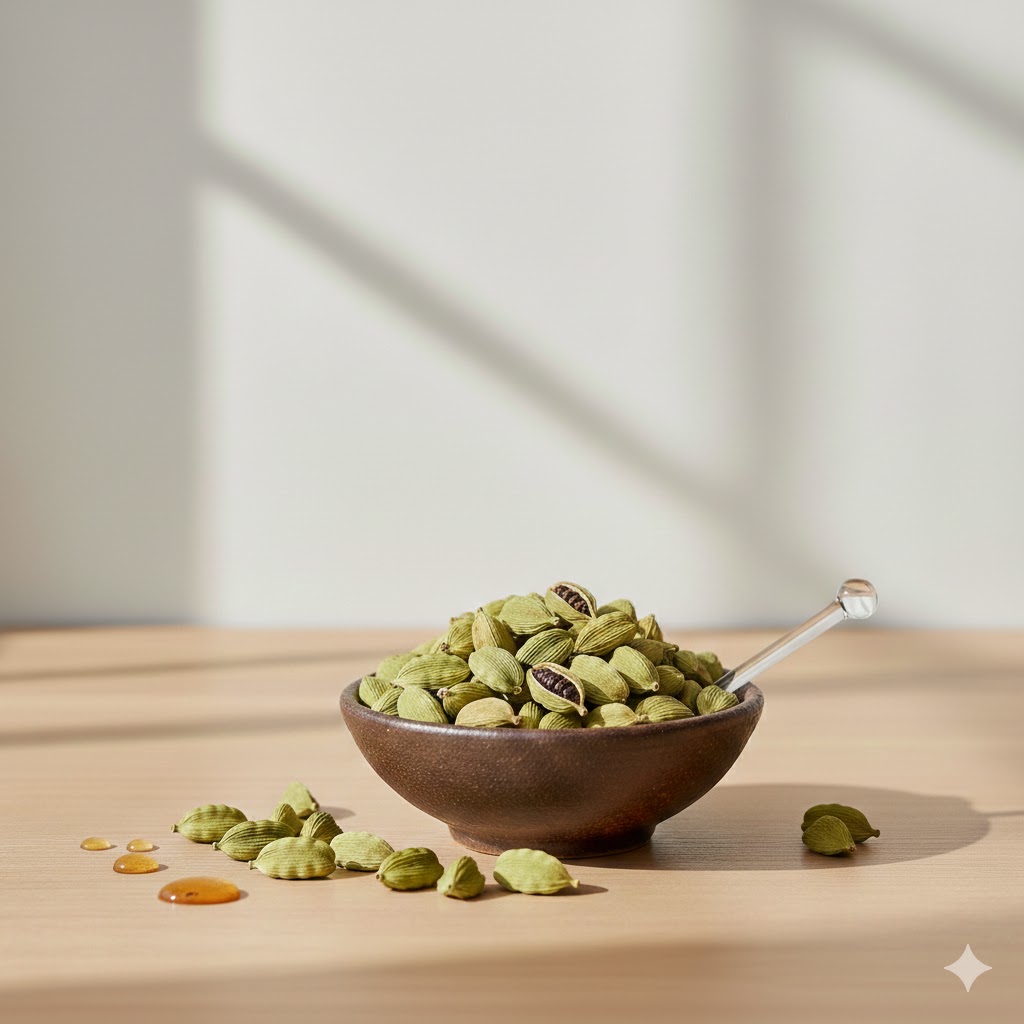
Cardamom essential oil is steam-distilled from the dried seeds of Elettaria cardamomum, a leafy perennial in the ginger family. The pods are best known in the kitchen, where the whole seeds flavour curries, coffee, chai and baking. The oil captures the aromatic heart of the seed in a far more concentrated form, so it is used by the drop, never by the spoon.
Its character comes mainly from 1,8-cineole and alpha-terpinyl acetate, with smaller amounts of linalool and other aromatic compounds. Cineole gives the fresh, camphorous lift, while terpinyl acetate adds a sweet, softly floral spice. The result is a middle note that sits happily between bright citrus and deep woods.
Benefits and Traditional Uses
The science: cardamom is rich in 1,8-cineole, a fresh-smelling compound also found in eucalyptus and rosemary. Many people find cineole-rich aromas bright and wakeful, which is why cardamom is a popular choice for desks and study spaces. Research on aroma and concentration is limited, so treat it as a pleasant part of your routine.
How to use (the deep work blend): diffuse 3 drops of cardamom with 3 drops of Lemon in a well-ventilated room, in sessions of 30 to 60 minutes.
The science: cardamom has a long tradition in the kitchens and home remedies of India, where the seeds are chewed or brewed after meals. The essential oil is a different thing and should not be swallowed, but its warm, sweet aroma is traditionally associated with a sense of ease around the table. If you have ongoing digestive symptoms, please speak to a healthcare professional.
How to use (the relaxing rub): mix 1 drop of cardamom into 5ml of carrier oil such as sweet almond (about 1%), patch test first, then massage gently over the abdomen in slow clockwise circles.
The science: cardamom has a warm, spiced and slightly camphorous aroma that brings a comforting, café-like feel to a room. Its fresh edge keeps blends from feeling too heavy, making it an easy oil for autumn and winter scenting.
How to use (the spiced chai atmosphere): diffuse 2 drops of cardamom with 3 drops of Sweet Orange and 1 drop of Ginger for a warm, sweet, spicy room scent.
How to Use Cardamom Essential Oil
| Method | Instructions | VivaForte tip |
|---|---|---|
| Diffusion | 3 to 5 drops in an ultrasonic diffuser, in sessions of 30 to 60 minutes. | Pair with sweet orange for a warm, spiced chai atmosphere. |
| Inhalation | 1 drop on a tissue or cotton ball, inhaled gently. | A good pick-me-up when you feel mentally flat. Keep it away from children. |
| Topical | Maximum 1% dilution (about 3 drops per 15ml of carrier oil, or 2 drops per 10ml). | Patch test first and avoid the face and broken skin. |
| Bath | 2 to 3 drops mixed into a tablespoon of carrier oil or unscented bath base before adding to the water. | Never add oil straight to bath water, as it floats and can irritate. |
| Blending | 1 to 2 drops added to a citrus or woody diffuser blend as a middle note. | Adds a sophisticated spicy edge to bergamot or cedarwood. |
Cardamom Safety Information
- Dilute and patch test. Use no more than 1% on the skin (about 3 drops per 15ml of carrier oil). Cardamom is generally regarded as gentle, but any essential oil can cause a reaction in some people, so patch test first and stop if irritation occurs. Avoid sensitive or broken skin.
- External and aromatic use only. Do not swallow essential oils. The cardamom you cook with is a different product.
- Pregnancy, breastfeeding and health conditions. Published safety guidance for cardamom oil in pregnancy and breastfeeding is limited, so speak to a healthcare professional before use. The same applies if you have asthma, epilepsy or any other medical condition, or take regular medication.
- Children. Cardamom is rich in 1,8-cineole, so do not apply it on or near the face of babies and young children, and keep it out of their reach. Use only very gentle diffusion around children.
- Pets. Essential oils can be harmful to pets, particularly cats and small animals. Ventilate the room, let animals leave freely when diffusing, and never apply the oil to them.
- Chemical profile. Rich in 1,8-cineole and alpha-terpinyl acetate, with linalool.
For general guidance on dilution, patch testing and sun safety, read our Essential Oil Safety guide.
History and Heritage
Cardamom is native to the forested hills of southern India, and is often called the “Queen of Spices”, a title usually explained by its high value and its long place in the spice trade. It has been used in Indian cooking and in Ayurvedic tradition for a very long time, and ancient trade routes carried it well beyond the places where it grew.
Cardamom was known in the ancient Mediterranean, and it is thought to have been used there in perfumery and as a flavouring. In Scandinavia it is now a baking staple, and a popular story says Vikings first brought it home from Constantinople, though this is more tradition than proven fact.
Today cardamom is grown in India and Guatemala among other places, and remains a treasured spice in coffee and sweet dishes across the Middle East and South Asia. The essential oil carries that warm, fragrant character into the world of aromatherapy.
Cardamom Essential Oil FAQs
Is cardamom essential oil safe to use on the skin?
Yes, when well diluted. Keep skin use to 1% or less (about 3 drops per 15ml of carrier oil), patch test first, avoid the face and broken skin, and stop if irritation occurs.
Is cardamom oil safe in pregnancy or around children?
Guidance is limited for pregnancy and breastfeeding, so ask a healthcare professional first. Because it is rich in cineole, keep it off the face of babies and young children and keep bottles out of reach.
Is cardamom essential oil safe around pets?
Take care. Cats and small animals are sensitive to essential oils. Diffuse in a ventilated room, let animals leave freely, and never apply the oil to their skin or fur.
What does cardamom oil smell like and what blends with it?
It smells warm, sweet, spicy and slightly camphorous. It blends well with Sweet Orange, Bergamot, Cedarwood and Ginger.
Can I swallow cardamom essential oil like the spice?
No. The essential oil is far more concentrated than the whole spice and is for aromatic and diluted external use only. If you want the flavour in food, use the dried pods or ground seeds.
Continue Exploring
- Ginger: another warm, spicy oil from the same plant family.
- Sweet Orange: a sunny citrus partner for a spiced chai diffuser blend.
- Coriander Seed: a gentle, sweet and spicy seed oil with a similar kitchen heritage.
- Essential Oil Safety: dilution, patch testing and sun safety explained.
- All Single Essential Oils: browse the full VivaForte botanical range.