
Academy › Single Essential Oils › Bergamot
Bergamot Essential Oil
The Italian Jewel of Emotional Balance
Bergamot essential oil is a bright, floral citrus oil from the coast of Calabria in southern Italy, loved for its uplifting aroma and its place in classic perfumery and Earl Grey tea.
Botanical name: Citrus bergamia (INCI: Citrus aurantium bergamia)
Aroma: Citrus, floral, lightly spicy and bright
Note: Top
Main growing region: Calabria, Italy
Typically extracted: Cold-pressed from the fruit rind
Blends well with: Frankincense, Geranium, Chamomile, Cypress and lavender
Top 3 benefits:
- Uplifting aroma: a bright, sunny citrus scent traditionally used to lift the mood and ease tension.
- Evening skincare ritual: traditionally used in blends for oily or blemish-prone skin, in the evening and always well diluted.
- A calming wind-down: its soft floral notes make a lovely addition to relaxing evening routines.
Safety first: bergamot is phototoxic. On the skin, use it in the evening only, diluted to 0.4% or less, and keep the area out of the sun and away from UV for 24 hours. Read the full safety information.
What Is Bergamot Essential Oil?
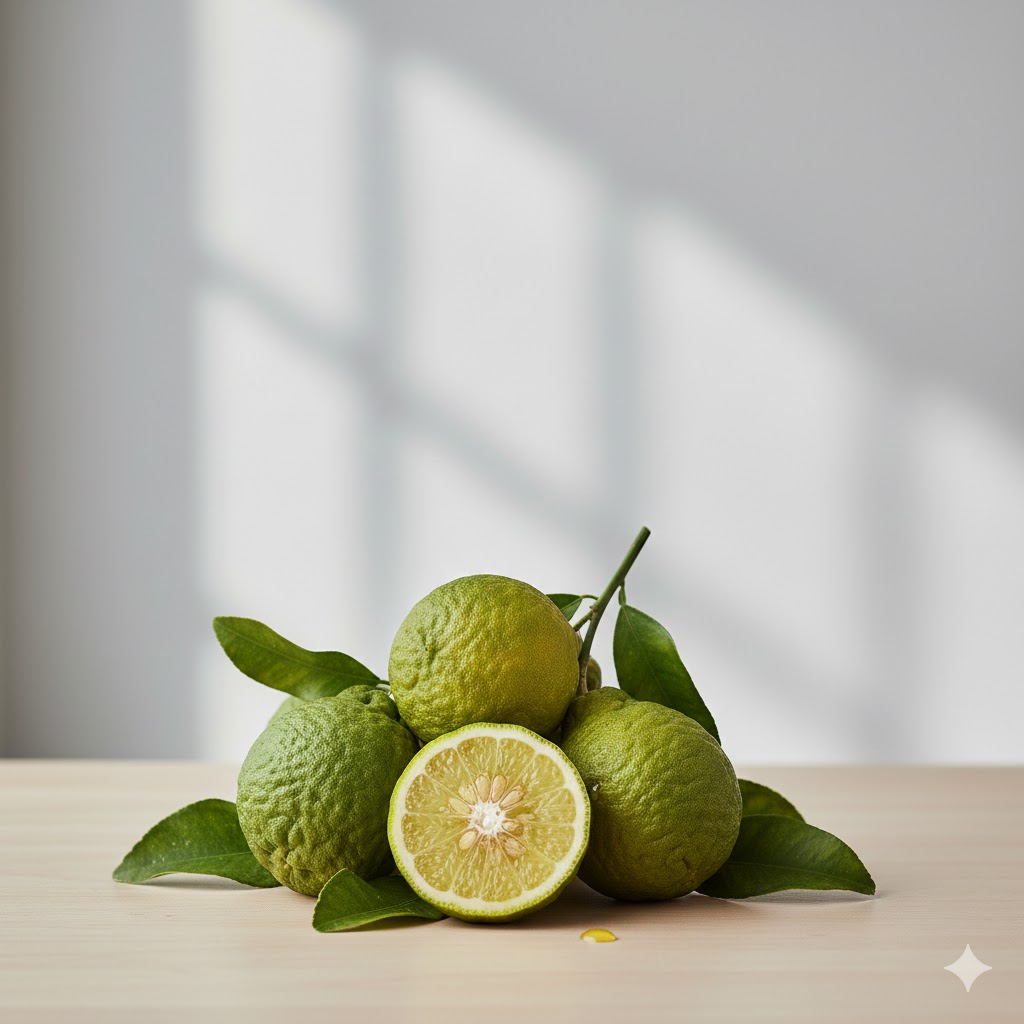
Bergamot essential oil is cold-pressed from the rind of Citrus bergamia, a small citrus tree grown mainly on a narrow coastal strip of Calabria in southern Italy. The fruit is a natural hybrid of bitter orange and lemon, and the oil it yields is one of the most distinctive in aromatherapy: bright and zesty at first, then softly floral and lightly spicy as it settles.
That aroma comes from a high concentration of limonene, linalyl acetate and linalool. Limonene provides the fresh, zesty lift, while linalyl acetate and linalool add the smoother, floral character that rounds out the scent. It is this balance that has made bergamot a favourite top note in perfumery for centuries, and why it blends so easily with other oils.
Benefits and Traditional Uses
The science: bergamot’s bright limonene top notes are traditionally associated with an uplifting aroma, while linalool and linalyl acetate add a softer, calming floral character. That combination is why many people reach for bergamot when they want to feel lifted without feeling overstimulated. Research into aromatherapy is still limited, so think of it as a pleasant part of your routine rather than a treatment.
How to use (the morning rise): diffuse 4 drops of bergamot with 2 drops of Frankincense for a balanced, grounding start to the day.
The science: bergamot has a clean, fresh aroma and has shown antimicrobial activity in laboratory studies, which is why it features in traditional blends for oily or blemish-prone skin. It also contains furanocoumarins, which make it phototoxic, so it needs real care on the skin.
How to use (night spot treatment): add 1 drop to 15ml of jojoba oil (about 0.3%) and apply in the evening only. Keep the area out of sunlight and away from UV for 24 hours, and patch test first.
The science: in Italian folk tradition, bergamot was valued as a digestive tonic, and its citrus aroma is still associated with calm, settled evenings. Aromatherapy is not a treatment for digestive conditions, so speak to a healthcare professional about any persistent symptoms.
How to use (soothing rub): dilute to no more than 0.4% (about 1 drop per 15ml of carrier oil) and massage the upper abdomen in gentle circles in the evening, keeping the area out of the sun and away from UV for 24 hours.
How to Use Bergamot Essential Oil
| Method | Instructions | VivaForte tip |
|---|---|---|
| Diffusion | 4 to 6 drops in an ultrasonic diffuser, in short sessions in a well-ventilated room. | Pair with Frankincense for a balanced morning blend. |
| Inhalation | 1 to 2 drops on a tissue or in a personal inhaler. | A quick midday reset. Keep the tissue away from your skin. |
| Topical | Maximum 0.4% dilution (about 1 drop per 15ml of carrier oil). | Crucial: evening use only, then avoid sun and UV for 24 hours. |
| Bath | Mix 3 drops into a tablespoon of carrier oil or unscented bath base, then add to the water. | Best as an evening ritual. Avoid sun and UV for 24 hours afterwards. |
| Skincare | Add 1 drop per 15ml of night cream, lotion or carrier oil. | Evening routines only, and keep the skin away from sunlight. |
Bergamot Safety Information
- Highly phototoxic. Bergamot can cause burns, blistering or pigmentation on skin exposed to sunlight or UV. Avoid sun and sunbeds for 24 hours after using it on the skin.
- Dilute and patch test. Use no more than 0.4% on the skin (about 1 drop per 15ml of carrier oil). May cause an allergic skin reaction, so patch test first and stop using it if irritation occurs.
- External and aromatic use only. Do not swallow essential oils.
- Pregnancy, breastfeeding and health conditions. Speak to a healthcare professional before use.
- Children and pets. Keep out of reach of children. Citrus oils can be harmful to pets, particularly cats, so ventilate the room and let animals leave when diffusing.
- Chemical profile. High in limonene, linalyl acetate and linalool.
For general guidance on dilution, patch testing and sun safety, read our Essential Oil Safety guide.
History and Heritage
Bergamot is thought to take its name from the Italian city of Bergamo, although some historians trace it to the Turkish phrase beg armudi, meaning “prince’s pear”. Genetic studies show that the tree is a natural hybrid of bitter orange and lemon, and it found its perfect home on the coast of Calabria, where the sea air and mild climate still produce most of the world’s bergamot.
By the early 1700s, bergamot had become a cornerstone of classical perfumery. It was one of the citrus oils in the original Eau de Cologne, created in Cologne, Germany, in 1709, and its fresh, golden scent soon travelled through the courts and salons of Europe. It is also the ingredient that gives Earl Grey tea its unmistakable aroma. Legend credits the 2nd Earl Grey, a British prime minister of the 1830s, although the true origins of the blend are not well documented.
In Italian folk tradition, bergamot was kept as a household remedy for fevers and skin troubles and was valued as a digestive tonic. It was also said to “brighten the shadows” of the mind and welcome prosperity into the home.
Bergamot Essential Oil FAQs
Is bergamot essential oil safe to use on the skin?
Only when it is diluted and used with care. Bergamot is phototoxic, so keep skin use to the evening, dilute to 0.4% or less (about 1 drop per 15ml of carrier oil), patch test first and avoid sun and UV for 24 hours afterwards.
Why is bergamot phototoxic?
Cold-pressed bergamot contains furanocoumarins such as bergapten, which react with UV light and can irritate or darken the skin. Some bergamot oils are sold as bergapten-free (often labelled FCF), but you should still follow the dilution and sun-avoidance guidance on your product label.
Can I diffuse bergamot every day?
Most people enjoy bergamot in the diffuser for short sessions of 30 to 60 minutes in a well-ventilated room. Take regular breaks, and avoid diffusing in a closed space around babies or pets, especially cats.
What does bergamot blend well with?
Bergamot pairs beautifully with Frankincense, Geranium, Chamomile and Cypress, as well as lavender and other citrus oils. As a top note, it brings brightness to heavier resinous and woody blends.
Does bergamot essential oil smell like Earl Grey tea?
Yes, the distinctive aroma of Earl Grey comes from bergamot. The essential oil smells fresher, brighter and more floral than the tea because it is concentrated and carries the full citrus top notes.
Continue Exploring
- Frankincense: the grounding partner for bergamot in a morning diffuser blend.
- Geranium: a soft floral companion that rounds out bright citrus.
- Chamomile: a gentle, calming pairing for evening routines.
- Essential Oil Safety: dilution, patch testing and sun safety explained.
- All Single Essential Oils: browse the full VivaForte botanical range.