
Academy › Single Essential Oils › Sweet Orange
Sweet Orange Essential Oil
The Oil of Simple Happiness
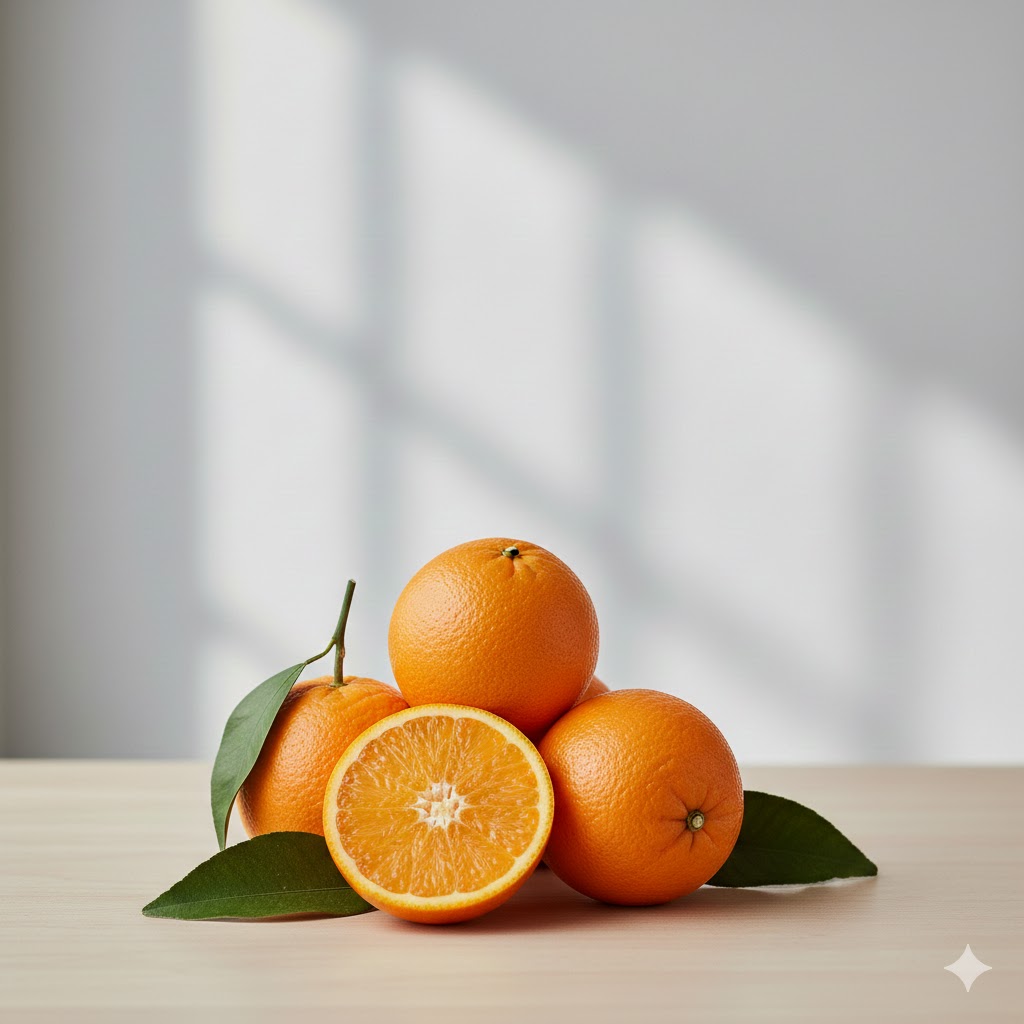
Sweet orange essential oil is a bright, juicy and instantly familiar oil cold-pressed from the peel of ripe oranges, loved for its cheerful aroma in diffusers, home care and warm seasonal blends.
Botanical name: Citrus sinensis
Aroma: Bright, sweet, juicy and fruity
Note: Top
Main growing region: Brazil
Typically extracted: Cold-pressed from the peel
Blends well with: Cinnamon, Clove, Ginger, Frankincense and Lavender
Top 3 benefits:
- Cheerful scent: its sweet, juicy aroma is one of the most universally liked of all essential oils.
- Fresh home air: a bright, clean-smelling choice for kitchens, living rooms and spaces that feel flat or stale.
- Warm seasonal blends: a generous top note that pairs beautifully with warm spices and resins.
Safety first: sweet orange oxidises easily, which raises the risk of skin reactions, so keep skin use to 1% or less, use fresh oil, patch test first, and keep it away from cats. Read the full safety information.
What Is Sweet Orange Essential Oil?
Sweet orange essential oil is cold-pressed from the rind of the ripe fruit of Citrus sinensis. Unlike steam-distilled oils, cold-pressing is a mechanical process that uses no heat, so the aroma closely resembles the fresh peel. It is one of the most widely produced citrus oils, and one of the easiest to enjoy.
The oil is made up mostly of limonene, which gives it its bright, juicy sweetness, with small amounts of compounds such as myrcene and linalool. Limonene oxidises readily when exposed to air, which is why storage matters with this oil. As a top note, sweet orange softens sharper citrus oils and blends easily with spices, florals and woods.
Benefits and Traditional Uses
The science: sweet orange is one of the best-loved scents for creating a cheerful atmosphere, and many people find its sweet, juicy aroma uplifting. Aromatherapy research is limited, so enjoy it as a simple pleasure rather than a treatment.
How to use (the sunny room): diffuse 5 drops of sweet orange in a well-ventilated room for 30 to 60 minutes whenever the house feels flat. Add 2 drops of Lavender for a softer, calmer feel.
The science: the clean, fruity scent of sweet orange is a natural fit for the kitchen, and its main constituent, limonene, is a familiar ingredient in household products. A pleasant scent is not the same as proven cleaning power, so use it for fragrance alongside your usual cleaning.
How to use (the fresh spray): mix 5 drops of sweet orange with 100ml of distilled water and a tablespoon of witch hazel in a glass spray bottle (about 0.25%). Shake well before each use and test on a hidden area first. Do not use on natural stone or unsealed wood.
The science: sweet orange has a long partnership with warm spices, and is a classic ingredient in festive and gourmand-style blends. It softens the sharper edges of spice oils while adding juicy sweetness.
How to use (the cosy blend): diffuse 4 drops of sweet orange with 1 drop of Cinnamon and 1 drop of Ginger in a ventilated room, away from pets.
How to Use Sweet Orange Essential Oil
| Method | Instructions | VivaForte tip |
|---|---|---|
| Diffusion | 4 to 6 drops in an ultrasonic diffuser, in short sessions in a well-ventilated room. | It is light and disperses quickly, so it takes a slightly more generous hand. Keep pets out of the room. |
| Inhalation | 1 to 2 drops on a tissue or cotton ball kept nearby. | A quick, cheerful lift. Keep it off your skin. |
| Topical | Maximum 1% dilution (about 3 drops per 15ml, or 2 drops per 10ml, of carrier oil). | Patch test first, use fresh oil, and avoid the face and broken skin. |
| Home and surfaces | 5 drops in 100ml of distilled water with a tablespoon of witch hazel (about 0.25%). | Shake before each use and test a hidden area first. |
| Blending | 1 to 3 drops added to a diffuser blend as a sweet top note. | Pair with cinnamon, clove, ginger, frankincense or lavender. |
Sweet Orange Safety Information
- Dilute and patch test. Use no more than 1% on the skin (about 3 drops per 15ml of carrier oil). Sweet orange may cause an allergic skin reaction, particularly when the oil has oxidised. Patch test first, stop using it if irritation occurs, and avoid broken or sensitive skin.
- Store well and use fresh. Cold-pressed citrus oils oxidise readily on contact with air, which raises the risk of skin sensitisation. Keep the bottle tightly closed, cool and away from light, and use it within about 12 months of opening.
- Sun exposure. Sweet orange is not generally regarded as phototoxic, but if you have sensitive skin it is sensible to avoid strong sun or sunbeds on skin where you have used a citrus oil blend.
- External and aromatic use only. Do not swallow essential oils.
- Pregnancy, breastfeeding and health conditions. Speak to a healthcare professional before use, particularly if you are pregnant or breastfeeding, have a medical condition or take regular medication.
- Children. Keep out of reach of children, and do not use on or near the face of babies or young children.
- Pets. Citrus oils can be harmful to pets, particularly cats. Ventilate the room, let animals leave freely when diffusing, and do not apply the oil to or near them.
- Chemical profile. Very high in limonene, with small amounts of myrcene and linalool.
For general guidance on dilution, patch testing and sun safety, read our Essential Oil Safety guide.
History and Heritage
The sweet orange is thought to have originated in southern China and the surrounding regions of Asia, and its species name, sinensis, means “of China”. It is generally believed that sweet oranges reached Europe through trade in the 15th and 16th centuries, and they later spread to the Americas.
Today the sweet orange is one of the most widely grown fruits in the world, with Brazil a leading producer. Orange peel oil is a by-product of the juice industry, which is part of why it is so widely available. It remains a staple of home fragrance, cleaning products, flavourings and perfumery.
Sweet Orange Essential Oil FAQs
Is sweet orange essential oil safe to use on the skin?
Yes, when diluted and fresh. Keep skin use to 1% or less (about 3 drops per 15ml of carrier oil), patch test first, avoid the face and broken skin, and stop if irritation occurs. Oxidised oil is more likely to cause reactions.
Is sweet orange oil safe around pets and children?
Take care. Citrus oils can be harmful to pets, especially cats, so ventilate, let animals leave and never apply it to them. Keep the bottle away from children, and do not use it on or near the faces of babies or young children.
Is sweet orange oil phototoxic?
Sweet orange is not generally regarded as phototoxic, unlike some other cold-pressed citrus oils such as bergamot or lime. If you have sensitive skin, it is still sensible to avoid strong sun on skin where you have applied a blend.
What does sweet orange smell like and what blends with it?
It smells bright, sweet and juicy, like fresh orange peel. It blends well with Cinnamon, Clove, Ginger, Frankincense and Lavender.
How long does sweet orange essential oil last?
Cold-pressed citrus oils oxidise faster than most. Keep the bottle tightly closed, cool and out of the light, and aim to use it within about 12 months of opening. Do not use oil that smells sharp, off or turpentine-like on your skin.
Continue Exploring
- Mandarin: a gentle, sweet citrus that is softer than orange.
- Grapefruit: a zesty, tangy citrus for brighter, sharper blends.
- Cinnamon: a classic spice partner for warm, festive diffuser blends (diffuse only).
- Essential Oil Safety: dilution, patch testing and sun safety explained.
- All Single Essential Oils: browse the full VivaForte botanical range.