
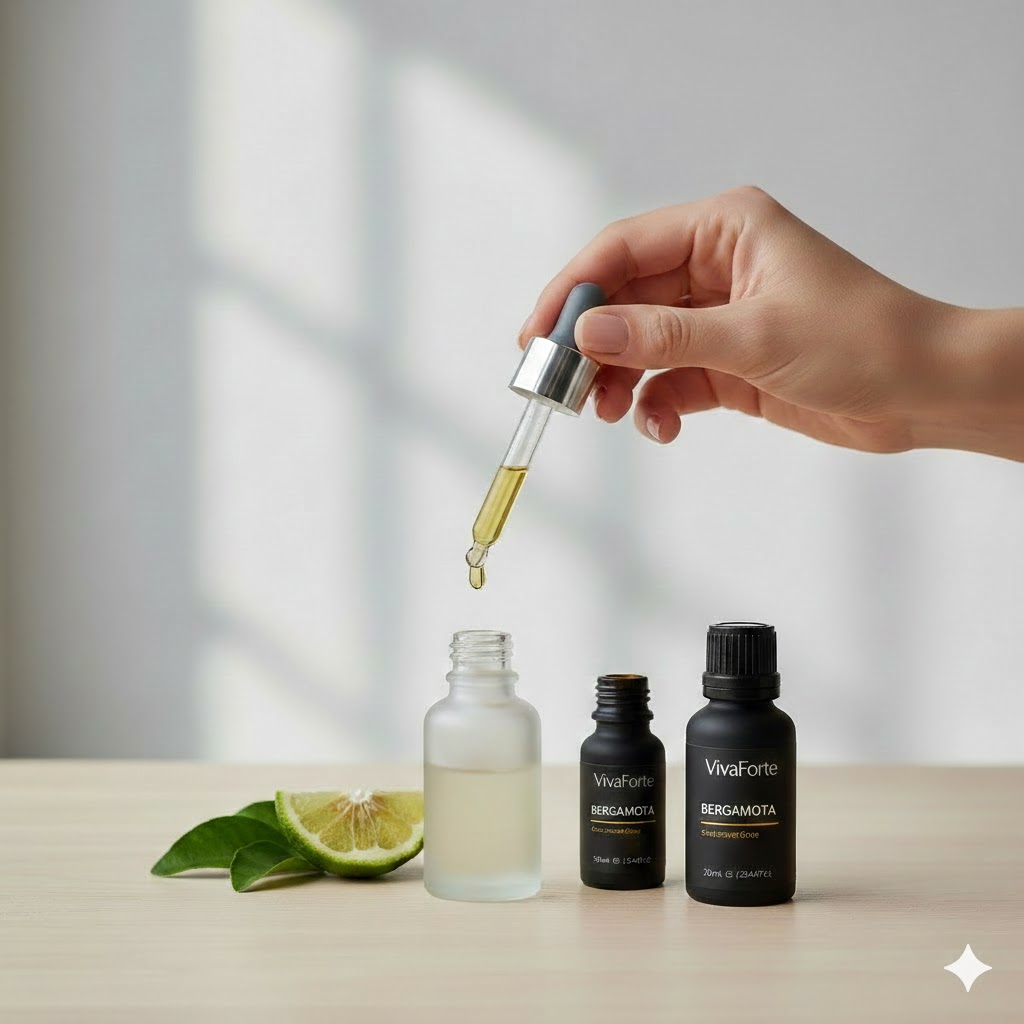
Essential Oil Safety
Essential oils are concentrated aromatic extracts. Natural does not mean risk-free: safe use depends on the particular oil, its concentration, the product and the person using it. Read the label before every use and use each product only for its stated purpose. This guide supports informed use; it does not replace personalised medical advice.
The Three Golden Rules
Respect the Potency
Do not swallow essential oils or add them to food, drinks or capsules. Keep bottles locked away from children and pets.
Always Dilute
Never apply concentrated essential oils undiluted to skin. Use only products labelled for skin use and follow their specific dilution limits. Ready-to-use cosmetics should be used as supplied.
Listen to Your Body
Stop if irritation, a rash, coughing or breathing discomfort occurs. Wash affected skin with soap and water. For urgent advice, use the emergency information below.
Topical Safety: Dilution Guide
There is no universal safe dilution for every oil. Follow the specific product instructions; some oils require much lower limits or are unsuitable for skin use. The figures below explain percentages only — they are not a recipe or a recommendation for children, pregnancy or sensitive skin.
| Concentration | Essential oil | Carrier oil |
|---|---|---|
| 0.5% | 0.05 ml | 9.95 ml |
| 1% | 0.10 ml | 9.90 ml |
| 2% | 0.20 ml | 9.80 ml |
Drops are not a precise measurement: their volume varies with the oil and dropper. These very small quantities require suitable measuring equipment. If the label gives no skin-use instructions, ask before mixing; choose a ready-to-use cosmetic instead.
Specialised Safety Categories
Phototoxicity (Citrus Safety)
Certain oils, particularly cold-pressed citrus like Bergamot, contain furanocoumarins. These compounds react with UV light and can cause skin discoloration or burns.
- Check the exact oil: Phototoxicity depends on extraction method, composition and concentration. Follow the product’s UV-exposure warning and dilution limit. If these are unclear, do not apply it to skin that will be exposed to sunlight or sunbeds.
- Evening use is not a guarantee: A risk may remain the following day. Do not assume all citrus oils have the same restrictions.
Sensitisation
Essential oils can cause irritation or allergic sensitisation, including after previous trouble-free use. An allergy may persist. A small-area test cannot guarantee that a later reaction will not occur.
- Reduce the risk: Follow the product limits and avoid broken or irritated skin, eyes and mucous membranes. Rotating oils does not prevent allergy. Stop using any product that causes a reaction.
Safety by Life Stage
Pregnancy & breastfeeding: Ask your doctor or midwife before using essential oils. Suitability depends on the oil, route of use and your circumstances; this guide does not provide a pregnancy-safe list. Avoid application where a baby could contact or ingest the product.
Babies & children: Do not use adult dilution guidance for children. Use only products explicitly labelled as suitable for the child’s age, following the label and paediatric advice. Do not apply oils near a child’s face, nose or mouth. Keep bottles and diffusers inaccessible.
Pets: Never apply these products to animals or add them to their food or water. Ask your vet before using a diffuser around pets, particularly those with respiratory conditions. Avoid diffusers in homes with birds. Prevent access to bottles, spills and diffuser liquid; contact a vet promptly after suspected exposure.
In Case of Emergency
If oil gets in the eyes: Immediately rinse with gently running lukewarm water for at least 15 minutes. Remove contact lenses if easy to do and continue rinsing. Do not put carrier oil or other remedies in the eye. Get medical advice if pain, redness or vision problems persist.
If swallowed: Rinse the mouth and contact the poison service immediately, even if there are no symptoms. Do not induce vomiting or give food, milk or other drinks unless instructed by the poison service. Keep the bottle and label available. Never give anything by mouth to an unconscious person.
Skin exposure: Remove contaminated clothing and wash the affected skin with soap and water. Stop using the product; seek medical advice if symptoms persist. Breathing irritation: Stop diffusion and move to fresh air. Call 112 for breathing difficulty, collapse, seizures or a severe allergic reaction.
Storage for Longevity
Keep products in their original, labelled containers with closures securely fastened. Follow the expiry or period-after-opening information. Store away from heat, sunlight, ignition sources and food; never transfer oils into drinking bottles.
- Keep the collared pipette tightly sealed.
- Store bottles in a cool, dark place (away from bathroom humidity or kitchen heat).
- Keep out of reach of children and pets.
Everyday use: choose the right product
Diffusers: Follow both the oil label and device instructions. Use intermittently in a ventilated space, with breaks; avoid continuous overnight diffusion. Stop if the scent causes discomfort.
Baths: Do not add neat oils directly to bath water. Water does not dilute them, and salt or milk is not a reliable dispersant. Choose a properly formulated bath product.
Health conditions and medicines: Ask a healthcare professional before use if you have asthma, epilepsy, allergies, a skin condition or take medication.
Different products, different uses: A diffuser blend or room spray is not a skin product. Use roll-ons, massage oils and body products only as their labels direct. Do not put oils in eyes, ears, nostrils or intimate areas. Keep oils and sprays away from flames; never add essential oil to a burning candle.
Questions about a label? Contact VivaForte with the product name and batch number before using it. For a reaction, seek medical or poison-service advice first.
About this guide & sources
Reviewed 14 October 2026. This is general safety information, not an individual treatment plan. VivaForte products are not medicines and are not intended to diagnose, treat, cure or prevent disease. This page does not replace product-specific directions, warnings or professional advice. If instructions are unclear or conflict, pause use and ask for clarification.