
Academy › Single Essential Oils › Patchouli
Patchouli Essential Oil
The Deep Earth Note of Natural Perfumery
Patchouli essential oil is a rich, earthy and sweetly musky oil steam-distilled from dried, lightly fermented leaves, loved for its grounding scent in perfumery, diffuser blends and evening rituals.
Botanical name: Pogostemon cablin
Aroma: Deep, earthy, sweet, musky and balsamic
Note: Base
Main growing region: Indonesia
Typically extracted: Steam-distilled from dried, lightly fermented leaves
Blends well with: Sandalwood, Bergamot, Geranium, Clary Sage and Vetiver
Top 3 benefits:
- Grounding scent: a deep, earthy aroma that many people find calming and settling at the end of a busy day.
- Perfumery fixative: one of the best-loved natural base notes, holding lighter citrus and floral notes in a blend.
- Evening rituals: a warm, musky scent that suits massage blends and quiet evening routines when well diluted.
Safety first: patchouli can cause skin reactions in some people, so keep skin use to 1% or less, patch test first, and take care if you feel drowsy before driving. Read the full safety information.
What Is Patchouli Essential Oil?
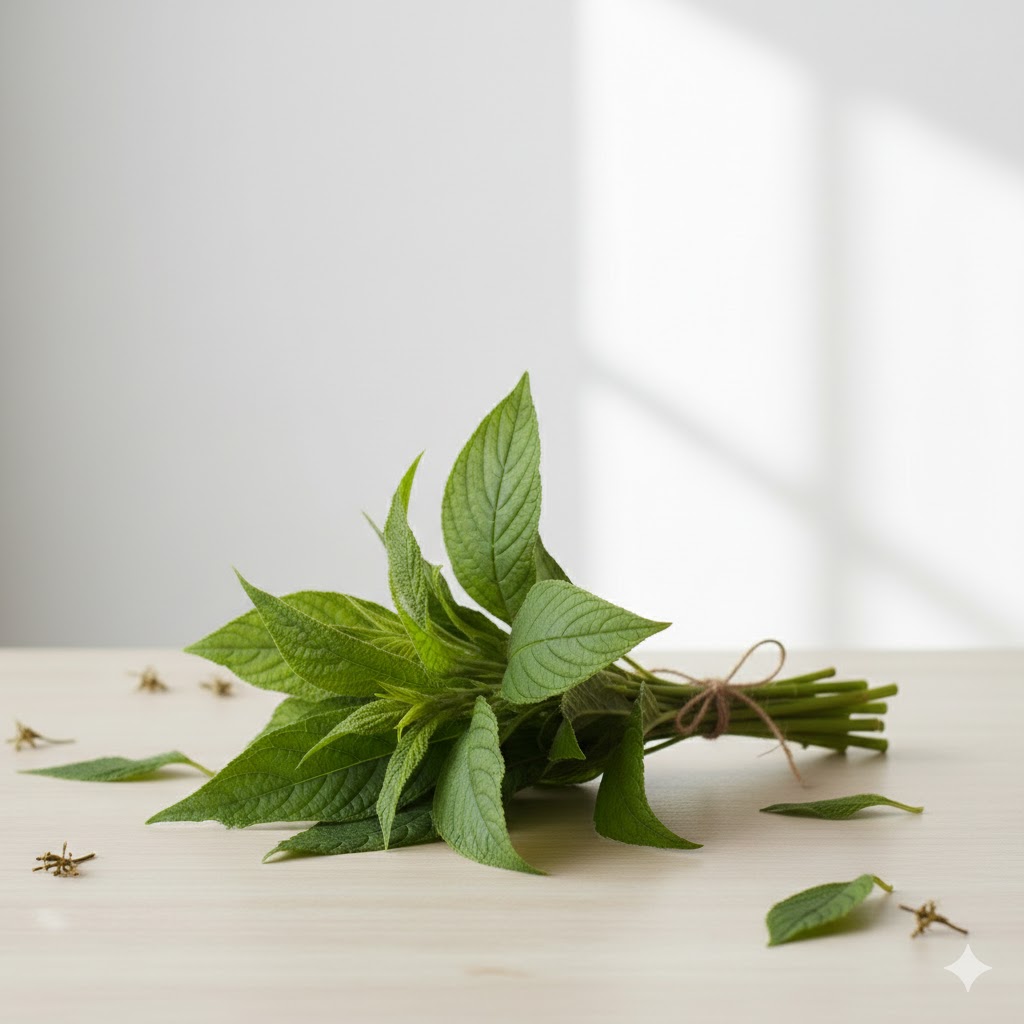
Patchouli essential oil is steam-distilled from the leaves of Pogostemon cablin, a bushy tropical herb in the mint family. Our product page describes the oil as coming from Indonesia, where the leaves are dried and lightly fermented before distillation, a traditional step that helps develop the oil’s famously rich, dark character.
Its scent comes mainly from patchoulol, with alpha-bulnesene and alpha-guaiene adding sweet, woody depth. It is a thick, slow-evaporating base note that is strong and long-lasting, and it tends to soften and become smoother with age. A little goes a long way, so start with less than you think you need.
Benefits and Traditional Uses
The science: patchouli has a deep, earthy aroma that is traditionally associated with a settled, grounded mood. Research on aromatherapy is limited, so think of it as a comforting scent for winding down rather than a treatment for stress or sleep.
How to use (the evening diffuser): diffuse 2 drops of patchouli with 3 drops of Bergamot in a ventilated room for 30 to 60 minutes as the evening begins.
The science: patchouli has long been used in traditional skincare oils and body oils, and many people enjoy its earthy scent in a nourishing blend. It is always used well diluted, because it can cause skin reactions in some people.
How to use (the body oil): mix 3 drops of patchouli into 15ml of jojoba or rosehip oil (about 1%) and patch test first. For the face, use half the amount (1 drop per 10ml, about 0.5%) and avoid the eye area.
The science: patchouli is a traditional scent for wardrobes, linen cupboards and studio spaces, where its long-lasting, earthy aroma lingers on fabrics. It is enjoyed here as a fragrance rather than a cleaning or deodorising treatment.
How to use (the linen cupboard): put 2 drops on a cotton wool ball or a small piece of untreated wood, and tuck it into a drawer or cupboard, away from direct contact with fabrics and out of reach of children and pets.
How to Use Patchouli Essential Oil
| Method | Instructions | VivaForte tip |
|---|---|---|
| Diffusion | 2 to 3 drops in an ultrasonic diffuser, in sessions of 30 to 60 minutes in a ventilated room. | It is potent, so start with less. Keep pets out of the room. |
| Inhalation | 1 drop on a tissue or cotton ball, held a little way from the face. | Keep it off your skin and away from children. |
| Topical | Maximum 1% dilution (about 3 drops per 15ml of carrier oil). | Patch test first and avoid the face (see below), sensitive areas and broken skin. |
| Skincare | For the face, use about 0.5% (1 drop per 10ml of carrier oil, or in an unscented base). | Avoid the eye area, and stop if the skin feels irritated. |
| Blending | 1 drop added to a diffuser or perfume blend as a deep base note. | Pair with citrus oils to lift it, or with sandalwood and vetiver for depth. |
Patchouli Safety Information
- Dilute and patch test. Use no more than 1% on the skin (about 3 drops per 15ml of carrier oil). Patchouli may cause skin irritation or an allergic skin reaction in some people, so patch test first and stop using it if irritation occurs. Avoid sensitive or damaged skin.
- External and aromatic use only. Do not swallow essential oils.
- Drowsiness. Patchouli may feel sedating in stronger concentrations, so take care before driving or operating machinery.
- Pregnancy, breastfeeding and health conditions. Speak to a healthcare professional before use if you are pregnant or breastfeeding, have a medical condition, or take regular medication.
- Children and pets. Keep it out of reach of children, and do not use it on or near the face of babies or young children. Essential oils can be harmful to pets, particularly cats, so ventilate the room, let animals leave when diffusing, and do not apply it to or near them.
- Chemical profile. High in patchoulol, with alpha-bulnesene and alpha-guaiene.
For general guidance on dilution, patch testing and sun safety, read our Essential Oil Safety guide.
History and Heritage
Patchouli is native to tropical Asia and has long been grown in countries such as Indonesia, India and the Philippines. The name is thought to come from a Tamil word for the plant, and its leaves have long been used in traditional medicine and as a fragrant herb in the regions where it grows.
In the 19th century, dried patchouli leaves were famously used to scent and protect imported Indian shawls and fabrics in Europe, which helped make its aroma familiar and fashionable there. Today it remains a classic base note in natural perfumery and in oriental, woody and chypre-style fragrances.
Patchouli Essential Oil FAQs
Is patchouli essential oil safe to use on the skin?
Only when well diluted. Keep skin use to 1% or less (about 3 drops per 15ml of carrier oil), patch test first, avoid the eye area and broken skin, and stop if irritation occurs.
Is patchouli oil safe around pets?
Take care. Essential oils can be harmful to pets, especially cats. If you diffuse patchouli, use a ventilated room, let animals leave freely, and never apply it to their skin or fur.
Is patchouli oil safe during pregnancy?
Speak to your midwife, doctor or a qualified aromatherapist before using patchouli oil while pregnant or breastfeeding. Guidance varies, so it is best to check before using any essential oil at this time.
What does patchouli smell like and what blends with it?
It smells deep, earthy, sweet and musky. It blends well with Sandalwood, Bergamot, Geranium and Clary Sage.
Why does patchouli oil get better with age?
Patchouli is a thick base-note oil, and many perfumers find its scent mellows and becomes smoother over time. Store it tightly closed, in a cool place away from light, to help it keep its character.
Continue Exploring
- Vetiver: another deep, earthy base note with a smoky, grounding character.
- Sandalwood: a creamy, woody partner that softens patchouli’s earthiness.
- Geranium: a rosy floral that brightens patchouli in perfumes and body oils.
- Essential Oil Safety: dilution, patch testing and sun safety explained.
- All Single Essential Oils: browse the full VivaForte botanical range.