
Academy › Single Essential Oils › Vetiver
Vetiver Essential Oil
The Oil of Tranquillity
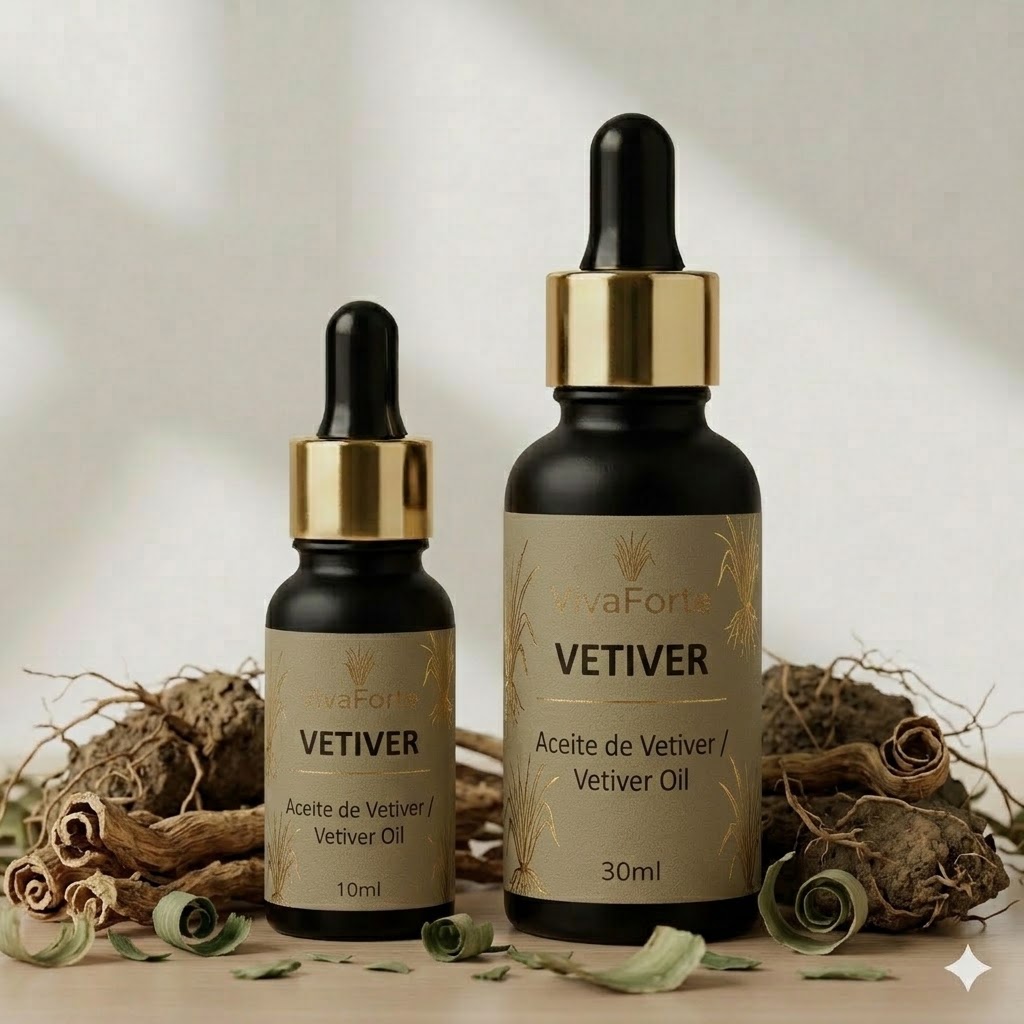
Vetiver essential oil is a deep, smoky and richly earthy oil steam-distilled from the roots of a tall tropical grass, loved for its grounding, soil-after-rain scent in evening diffusing and as a classic base note in perfumery.
Botanical name: Chrysopogon zizanioides (also called Vetiveria zizanioides)
Aroma: Deep, smoky, earthy and woody with a sweet balsamic undertone
Note: Base
Main growing region: Tropical regions, with Haiti a renowned source
Typically extracted: Steam-distilled from the roots
Blends well with: Sandalwood, Patchouli, Lavender, Bergamot and Ylang Ylang
Top 3 benefits:
- Grounding scent: a dark, earthy aroma that many people find steadying at the end of a busy day.
- Evening ritual: a slow, smoky base note that suits the hour before bed, meditation and quiet breathing.
- Perfumer’s fixative: one of the great base notes, giving depth and staying power to natural fragrance blends.
Safety first: vetiver is a thick, strongly scented oil, so keep skin use to 1% or less, patch test first, and speak to a healthcare professional if you are pregnant or have a medical condition. Read the full safety information.
What Is Vetiver Essential Oil?
Vetiver essential oil is steam-distilled from the dense, fibrous roots of Chrysopogon zizanioides, a tall tropical grass also known by its older name Vetiveria zizanioides. The roots are dug, washed, dried and then distilled slowly over many hours, which is part of why the oil is prized.
Its aroma is deep, dark and smoky, with an earthy, woody richness and a sweet balsamic undertone that emerges as it settles. It contains many complex compounds, including khusimol, vetiverol and vetivones. The oil is very thick and slow-moving, especially in cool weather, so warm the bottle briefly in your hands before use.
Benefits and Traditional Uses
The science: deep, earthy aromas are traditionally associated with a settled, grounded feeling, and vetiver is a long-standing favourite for evening blends. Research into aromatherapy is limited, so enjoy it as part of your wind-down routine rather than a treatment for stress or sleep.
How to use (the evening anchor): diffuse 2 drops of vetiver with 3 drops of Bergamot in a ventilated room for 30 to 60 minutes in the hour before bed.
The science: vetiver is a traditional ingredient in rich body oils, where its smoky, earthy scent is appreciated. Research on its effects on skin is limited, so treat it as a fragrant addition to a routine.
How to use (the grounding body oil): add 6 drops of vetiver to 30ml of jojoba or sweet almond oil (1%), patch test on your inner arm first, and massage into the feet or shoulders in the evening, avoiding the face.
The science: vetiver is one of the classic base notes and fixatives in natural perfumery, giving depth and tenacity to blends. Alone it can feel heavy, so it is usually used in small amounts and softened with a citrus or floral oil.
How to use (the woodland blend): combine 1 drop of vetiver, 2 drops of Sandalwood and 3 drops of Lavender in a diffuser for a warm, earthy and floral atmosphere.
How to Use Vetiver Essential Oil
| Method | Instructions | VivaForte tip |
|---|---|---|
| Diffusion | 2 to 3 drops in an ultrasonic diffuser, in short sessions in a ventilated room. | Best blended with a citrus oil, as vetiver alone can feel heavy. Keep pets out. |
| Inhalation | 1 drop on a tissue or cotton ball, breathed slowly from a comfortable distance. | Keep it off your skin and away from young children. |
| Topical | Maximum 1% dilution (about 3 drops per 15ml of carrier oil, or 2 drops per 10ml). | Patch test first and avoid the face and broken skin. |
| Massage | 6 drops in 30ml of jojoba or sweet almond oil (1%) for the feet or shoulders. | Warm the bottle briefly in your hands, as the oil is thick. |
| Blending | 1 drop added to a diffuser blend as a deep, smoky base note. | Pair with sandalwood, patchouli or lavender. |
Vetiver Safety Information
- Dilute and patch test. Use no more than 1% on the skin (about 3 drops per 15ml of carrier oil, or 2 drops per 10ml). Patch test first, avoid the face and damaged skin, and stop using it if irritation occurs.
- External and aromatic use only. Do not swallow essential oils.
- Pregnancy, breastfeeding and health conditions. Speak to a healthcare professional before use if you are pregnant, breastfeeding, have a medical condition or take regular medication.
- Children. Keep out of reach of children, and do not use on or near the face of babies or young children.
- Pets. Ventilate the room when diffusing, let animals leave freely, and do not apply the oil to or near them. Take particular care around cats, which are sensitive to essential oils.
- Chemical profile. A complex mix rich in sesquiterpenes, including khusimol, vetiverol and vetivones.
For general guidance on dilution, patch testing and sun safety, read our Essential Oil Safety guide.
History and Heritage
Vetiver is a perennial grass native to India and widely grown across the tropics. Its roots grow deep and dense, and the plant is also used to hold soil in place on slopes. In parts of India the roots have traditionally been woven into mats and screens that are dampened to scent and cool the air in hot weather.
The distilled oil is known in perfumery as one of the great base notes and fixatives, and it features in many classic fragrances. Haiti is renowned as a source of fine vetiver oil, alongside other tropical regions. The long hand-harvesting and slow distillation of the roots are part of what makes the oil precious.
Vetiver Essential Oil FAQs
Is vetiver essential oil safe to use on the skin?
Yes, when diluted and patch tested. Keep skin use to 1% or less (about 3 drops per 15ml of carrier oil), avoid the face and broken skin, and stop using it if any irritation appears.
Can I use vetiver during pregnancy or around pets?
Please speak to a healthcare professional before using any essential oil if you are pregnant or breastfeeding. Around pets, diffuse briefly in a ventilated room, let them leave freely, and take particular care with cats.
What does vetiver smell like and what blends with it?
It smells deep, smoky and earthy, like soil after rain, with a sweet balsamic undertone. It blends well with Sandalwood, Patchouli, Lavender and Bergamot.
Why is vetiver oil so thick?
Vetiver oil is rich in heavy sesquiterpene compounds, which make it viscous and slow to pour, especially in cool weather. Warm the closed bottle briefly in your hands before use to help it flow.
How much vetiver should I use in a diffuser?
Start with 2 to 3 drops, ideally with a citrus oil such as Bergamot, as vetiver alone can feel heavy in a small room. Diffuse in short sessions in a ventilated space.
Continue Exploring
- Sandalwood: a creamy, woody base note that softens vetiver’s smokiness.
- Patchouli: another earthy base oil that deepens woody blends.
- Cedarwood: a dry, woody partner for grounding diffuser mixes.
- Essential Oil Safety: dilution, patch testing and sun safety explained.
- All Single Essential Oils: browse the full VivaForte botanical range.