
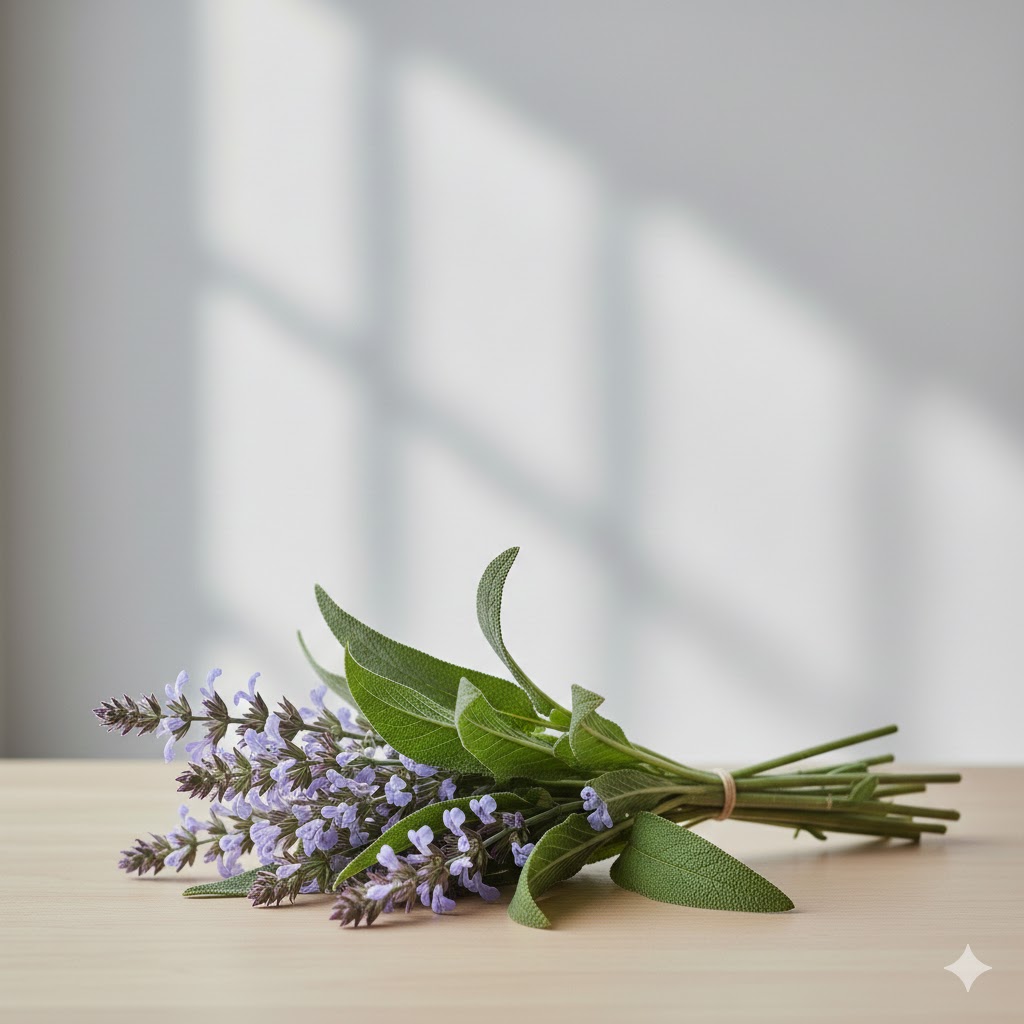
Clary Sage
The Oil of Inner Vision and Equilibrium
Botanical Name: Salvia sclarea
Note: Middle
Scent: Bittersweet, Herbaceous, Tea-like, Earthy
Top 3 Benefits:
- Hormonal Support: Contains sclareol, a rare constituent that mimics the effects of estrogen, making it a premier choice for balancing the female reproductive system.
- Euphoric Relaxant: Known to lower cortisol levels, it provides a unique “euphoric” calm that lifts the spirit while grounding the body.
- Creative Sleep: Often used to enhance dream recall and promote a heavy, restful sleep state free from mental “chatter.”
The Sacred Herb of Clarity
Clary Sage derives its name from the Latin clarus, meaning “clear.” In the Middle Ages, it was known as “Oculus Christi” (the Eye of Christ) for its traditional use in soothing the eyes, but today its “clearing” power is most felt in the mind and the endocrine system. Unlike common Garden Sage, Clary Sage is low in thujone, making it a much safer and more versatile tool for emotional regulation. Its aroma is complex—almost like a fine tobacco or high-grade Earl Grey tea—providing a sophisticated olfactory experience that signals the nervous system to let go of tension.
The Science: Clinical studies have shown that inhaling Clary Sage oil can reduce cortisol levels by up to 36%, significantly improving 5-HT (serotonin) levels.
How to Use (The De-Stress Blend): Diffuse 3 drops of Clary Sage with 3 drops of Bergamot after a high-pressure workday.
The Science: Its antispasmodic properties help soothe the smooth muscle tissues of the uterus, reducing the intensity of cramps and physical discomfort.
How to Use (The Comfort Rub): Mix 2 drops with 10ml of Evening Primrose oil and massage onto the lower abdomen in clockwise circles.
The Science: Linalyl acetate, found abundantly in Clary Sage, helps regulate sebum production, making it effective for both oily and dry hair types.
How to Use (The Luminous Rinse): Add 2 drops to your final hair rinse or a dollop of shampoo to encourage shine and scalp health.
Methods of Use
| Method | Instructions | VivaForte Tip |
| Diffusion | 4–5 drops in an ultrasonic diffuser. | Pair with Lavender and Frankincense for a deep meditation sanctuary. |
| Topical | 2% dilution in a carrier oil. | Apply to the pulse points (wrists and temples) to maintain emotional steadying throughout the day. |
| Bath | Mix 3 drops into 1 tbsp of carrier oil/honey before adding to water. | The ultimate ritual for relieving PMS or menopausal hot flashes. |
| Pillow Mist | Mix 5 drops with 30ml of water in a spray bottle. | Lightly mist your linens 10 minutes before bed to encourage vivid, creative dreams. |
History & Heritage
Clary Sage derives its name from the Latin Sclarea, coming from clarus, meaning “clear.” In the medieval era, it was known throughout Europe as “Oculus Christi,” or the “Eye of Christ,” because its mucilaginous seeds were famously used to clear dust and irritation from the eyes. Beyond its physical uses, it was a staple in the “Physic Gardens” of monasteries, where monks brewed it into ales—sometimes called “Muscatel Sage”—to induce a state of euphoria and creative vision (and occasionally to make the beer more intoxicating). In traditional European folk medicine, it was the “Woman’s Herb,” whispered among midwives to ease the transition into motherhood and soothe the “heavy moon” of the cycle. A plant of profound emotional release, Clary Sage has spent centuries as the bridge between the physical sight and the intuitive “inner eye,” renowned for its ability to scatter the clouds of the mind and invite a state of vivid, tranquil dreaming.
Safety & Technical Data
Chemical Profile: High in Linalyl Acetate, Linalool, and Sclareol.
Safety: Avoid during pregnancy, as it may stimulate uterine contractions (though it is often used by mid-wives during active labor). Avoid alcohol consumption when using Clary Sage, as it can induce extreme drowsiness or a “heavy” feeling. Keep out of reach of children.
WARNING: May cause an allergic skin reaction. Keep out of reach of children.