
Academy › Single Essential Oils › Myrrh
Myrrh Essential Oil
The Ancient Resin of Sacred Stillness
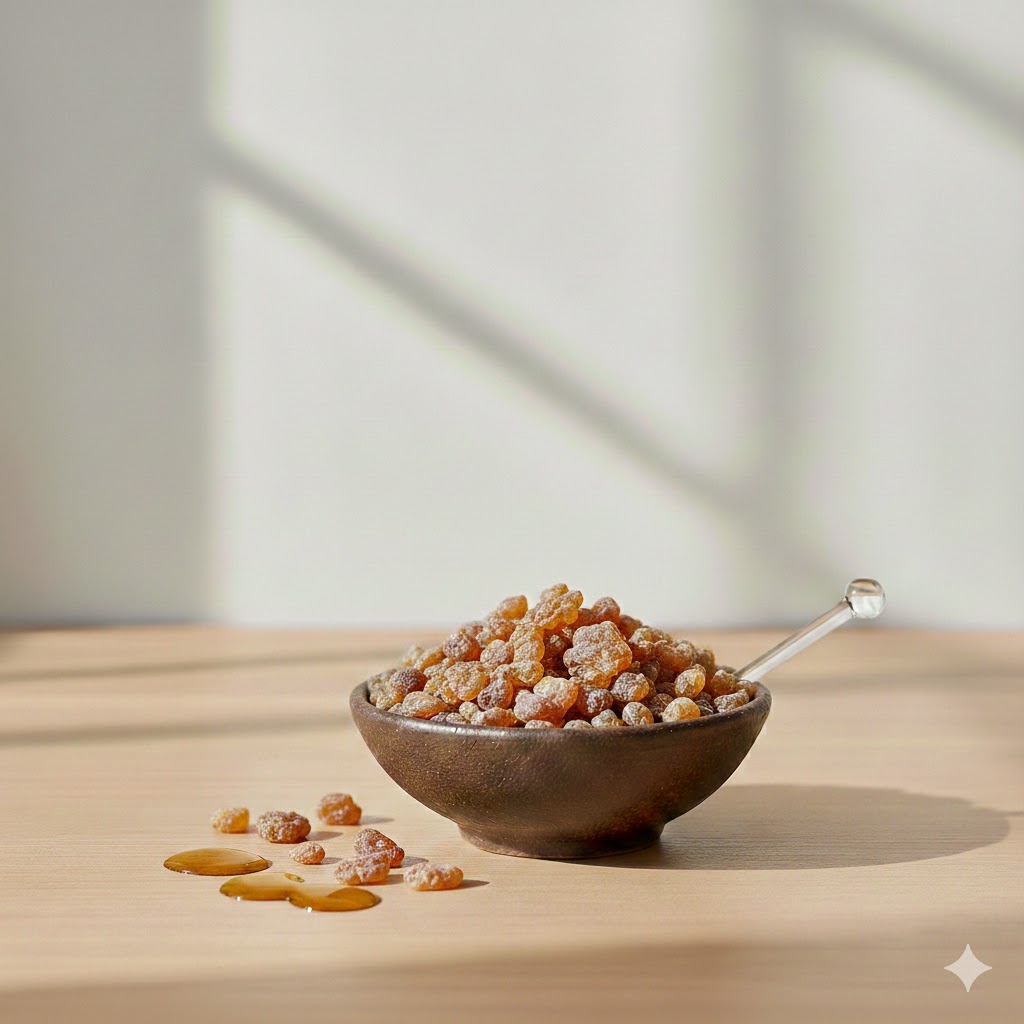
Myrrh essential oil is a deep, warm and resinous oil steam-distilled from the golden resin of the myrrh tree, loved for its earthy, balsamic scent in meditation blends, home fragrance and natural perfumery.
Botanical name: Commiphora myrrha
Aroma: Warm, earthy, balsamic and softly smoky-sweet
Note: Base
Main growing region: Northeast Africa and the Arabian Peninsula
Typically extracted: Steam-distilled from the resin
Blends well with: Frankincense, Sandalwood, Cedarwood, Patchouli and Lavender
Top 3 benefits:
- Grounding atmosphere: its deep, resinous warmth is a traditional favourite for quiet evenings and meditation.
- Rich home fragrance: a smoky-sweet base note that gives diffuser blends depth and staying power.
- Perfumer’s base note: it adds an ancient, incense-like richness to natural perfume and balm blends.
Safety first: myrrh oil should be avoided during pregnancy and breastfeeding, kept to about 0.3% on the skin (1 drop per 15ml of carrier oil), and patch tested first. Read the full safety information.
What Is Myrrh Essential Oil?
Myrrh essential oil is steam-distilled from the dried resin, or gum, that seeps from the bark of Commiphora myrrha, a small, thorny tree of the dry landscapes of northeast Africa and the Arabian Peninsula. The resin is collected from the trunk, then dried before distillation.
The oil is thick, amber-coloured and slow-moving, with a warm, earthy, balsamic scent and a faint smoky sweetness. Its character comes from sesquiterpene compounds such as furanoeudesma-1,3-diene and curzerene, which also make it a long-lasting base note in blends.
Benefits and Traditional Uses
The science: myrrh has been burned as incense for thousands of years, and its deep, resinous aroma is traditionally associated with calm, stillness and reflection. Research into its aromatherapy effects is limited, so enjoy it for its atmosphere rather than as a treatment.
How to use (the quiet evening): diffuse 2 drops of myrrh with 3 drops of Frankincense in a ventilated room for 30 to 60 minutes.
The science: as a heavy base note, myrrh gives warmth and depth to blends and helps lighter oils last longer. It pairs well with woods, citrus and spice for a cosy, spa-like feel.
How to use (the warm room): add 2 drops of myrrh, 2 drops of Sandalwood and 3 drops of Sweet Orange to a diffuser, and open a window for a few minutes afterwards.
The science: myrrh resin has a long history in traditional balms and ointments, but modern research on the essential oil is limited. Used in a gentle, well-diluted body oil, it is mainly a scent experience.
How to use (the hand ritual): mix 1 drop of myrrh with 15ml of carrier oil (about 0.3%) and massage a little into the hands or forearms. Patch test first, and avoid the face and broken skin.
How to Use Myrrh Essential Oil
| Method | Instructions | VivaForte tip |
|---|---|---|
| Diffusion | 2 to 4 drops in an ultrasonic diffuser, in short sessions in a well-ventilated room. | Blends beautifully with frankincense and sandalwood. Warm the bottle gently if the oil is slow to drop. |
| Inhalation | 1 drop on a tissue or cotton ball, inhaled gently. | A calm moment before meditation or at the end of the day. |
| Topical | About 0.3% dilution (1 drop per 15ml of carrier oil). | Patch test first and avoid the face and broken skin. |
| Blending | 1 to 2 drops added to a diffuser or perfume blend as a deep base note. | Pair with frankincense, sandalwood, cedarwood or patchouli. |
Myrrh Safety Information
- Dilute and patch test. Use no more than about 0.3% on the skin (1 drop per 15ml of carrier oil). Myrrh may cause skin irritation or an allergic reaction in sensitive people, so patch test first and stop using it if irritation occurs.
- External and aromatic use only. Do not swallow essential oils.
- Pregnancy, breastfeeding and health conditions. Avoid myrrh oil during pregnancy and while breastfeeding, as published safety guidance advises against it. Speak to a healthcare professional before use if you have a medical condition or take medication.
- Children. Keep out of reach of children, and do not use it on or near the face of babies and young children.
- Pets. Essential oils can be harmful to pets. Ventilate the room, let animals leave freely when diffusing, and do not apply myrrh oil to them.
- Chemical profile. Rich in sesquiterpenes, including furanoeudesma-1,3-diene, curzerene and lindestrene.
For general guidance on dilution, patch testing and sun safety, read our Essential Oil Safety guide.
History and Heritage
Myrrh is one of the oldest aromatic resins in the world. The word is thought to come from an ancient Semitic root meaning bitter, and the resin has been traded for thousands of years from the lands where the tree grows to the great markets of the ancient world.
It was burned as incense and used in perfumes and ointments in ancient Egypt and across the Mediterranean and Middle East. In the Christian tradition, myrrh is named as one of the three gifts, with gold and frankincense, brought to the infant Jesus.
Today myrrh remains a treasured base note in perfumery and incense-style blends.
Myrrh Essential Oil FAQs
Is myrrh essential oil safe to use on the skin?
Only when well diluted. We suggest about 0.3% (1 drop per 15ml of carrier oil), a patch test first, and avoiding the face and broken skin. Stop using it if irritation occurs.
Can I use myrrh oil during pregnancy?
No. Published safety guidance advises avoiding myrrh oil during pregnancy and breastfeeding. Speak to a midwife or doctor before using any essential oil at these times.
Is myrrh oil safe around pets?
Take care. Essential oils can be harmful to pets, especially cats. Diffuse in a ventilated room, let animals leave freely, and never apply myrrh oil to their skin or fur.
What does myrrh smell like and what blends with it?
It smells warm, earthy, balsamic and softly smoky-sweet. It blends well with Frankincense, Sandalwood, Cedarwood and Patchouli.
Why is myrrh oil so thick?
Myrrh oil is distilled from a resin, so it is naturally viscous and can drop slowly, especially when cool. Warm the closed bottle briefly in your hands, then add drops carefully to your diffuser or carrier oil.
Continue Exploring
- Frankincense: the classic partner to myrrh in resinous, meditative blends.
- Sandalwood: a creamy, woody base that softens myrrh’s earthiness.
- Elemi: a lighter, fresher resin oil with a lemony-peppery lift.
- Essential Oil Safety: dilution, patch testing and sun safety explained.
- All Single Essential Oils: browse the full VivaForte botanical range.