
Academy › Single Essential Oils › Angelica Root
Angelica Root Essential Oil
The Sacred Root of Protection
Angelica root essential oil is a rare, earthy and peppery oil steam-distilled from the roots of a tall northern herb, prized for its deep, musk-like warmth in grounding blends and natural perfumery.
Botanical name: Angelica archangelica
Aroma: Earthy, musky, peppery and woody
Note: Base
Main growing region: Northern Europe, including France and Belgium
Typically extracted: Steam-distilled from the roots
Blends well with: Bergamot, Cedarwood, Juniper Berry, Sweet Orange and Black Pepper
Top 3 benefits:
- Grounding scent: its deep, earthy aroma is traditionally enjoyed during busy or uncertain times, when a steady, rooted fragrance feels welcome.
- Natural perfumery: a tenacious, musk-like base note that adds depth and staying power to artisan blends.
- Warm, peppery character: a little goes a long way, adding a spicy, herbal warmth to diffuser blends.
Safety first: angelica root oil is phototoxic, so keep skin use to 0.8% or less, patch test first, and avoid sun and UV exposure on treated skin for at least 12 to 24 hours. Read the full safety information.
What Is Angelica Root Essential Oil?
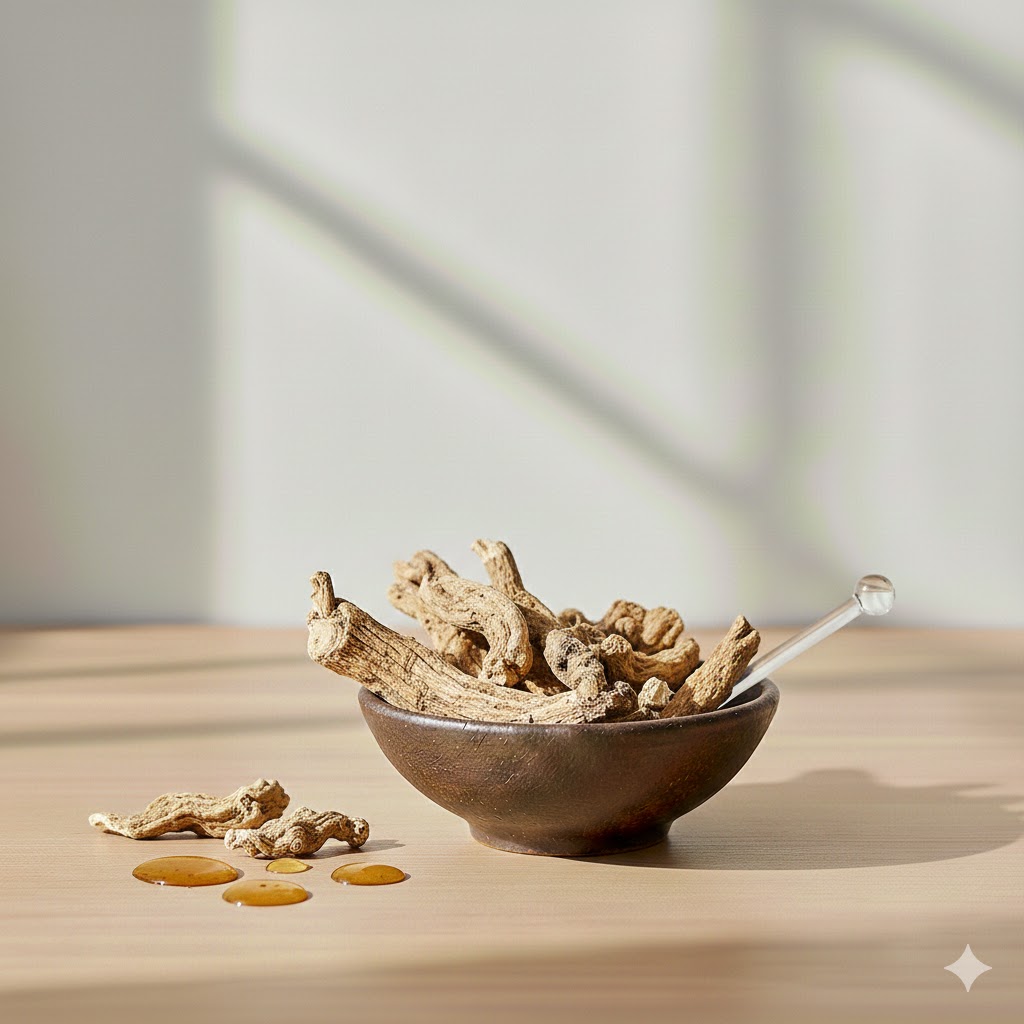
Angelica root essential oil is steam-distilled from the roots of Angelica archangelica, a tall, aromatic plant in the carrot family that grows in the cooler regions of Europe. The roots are the part used for this oil, and they give a scent quite unlike most herbal oils: earthy, peppery and woody, with a soft, musky depth.
Its aroma is shaped by terpenes such as alpha-pinene and limonene, together with trace compounds that are thought to contribute to the musk-like quality. Because it is concentrated and tenacious, perfumers use it sparingly as a base note, and it pairs well with citrus, spice and woody oils.
Benefits and Traditional Uses
The science: angelica root has a deep, earthy scent that many people find steadying and comforting, and it is traditionally associated with times of transition or tiredness. Research into its aroma is limited, so enjoy it as a pleasant ritual rather than a treatment.
How to use (the quiet desk): add 2 drops of angelica root and 4 drops of Bergamot to a diffuser in a ventilated room, for a 30 to 60 minute session while you work.
The science: angelica root is valued by perfumers as a rare, earthy base note with musky undertones. It fixes and deepens lighter scents, which is why a single drop can be enough to anchor a blend.
How to use (the roll-on): add 1 drop of angelica root, 2 drops of Sweet Orange and 2 drops of Cedarwood to a 10ml roller bottle filled with carrier oil. Keep angelica root at 0.8% or less overall (1 drop in 10ml is about 0.5%), patch test, and keep the area covered from the sun.
The science: with its warm, peppery character, angelica root brings a woody, herbal note to rooms, particularly in cooler months. It is strong, so use a light hand.
How to use (the cosy evening): diffuse 2 drops of angelica root with 3 drops of Juniper Berry and 2 drops of Black Pepper, in a ventilated room and in short sessions.
How to Use Angelica Root Essential Oil
| Method | Instructions | VivaForte tip |
|---|---|---|
| Diffusion | 2 to 4 drops in an ultrasonic diffuser, in short sessions in a ventilated room. | Its aroma is strong and lingering, so start with less. |
| Inhalation | 1 drop on a tissue or cotton ball kept nearby. | Keep it off your skin and out of the sun’s reach if it spills. |
| Topical | Maximum 0.8% dilution (about 2 drops per 15ml of carrier oil). | Phototoxic: patch test, and avoid sun and UV exposure on treated skin for at least 12 to 24 hours. |
| Blending | 1 drop added to a diffuser or perfume blend as a base note. | Pair with bergamot, cedarwood or juniper berry. |
Angelica Root Safety Information
- Phototoxic. Angelica root oil can cause skin reactions in sunlight. Avoid sun and UV exposure, including sunbeds, on treated skin for at least 12 to 24 hours after use.
- Dilute and patch test. Use no more than 0.8% on the skin (about 2 drops per 15ml of carrier oil). It may cause an allergic skin reaction, so patch test first and stop using it if irritation occurs. Avoid sensitive or damaged skin.
- External and aromatic use only. Do not swallow essential oils.
- Pregnancy, breastfeeding and health conditions. Published aromatherapy guidance advises avoiding angelica root oil during pregnancy and with diabetes. Speak to a healthcare professional before use if you are breastfeeding, have a medical condition or take medication.
- Children and pets. Keep out of reach of children, and do not use on or near the face of babies or young children. Ventilate the room when diffusing, let pets leave freely, and do not apply it to animals.
- Chemical profile. Rich in terpenes such as alpha-pinene and limonene, with furanocoumarins that account for its phototoxicity.
For general guidance on dilution, patch testing and sun safety, read our Essential Oil Safety guide.
History and Heritage
Angelica has a long place in European herbal tradition. Its species name, archangelica, reflects a legend in which an angel revealed the plant to a monk as a protection during a time of plague. Whatever the truth of the story, the plant was widely valued in northern Europe, where it was grown in monastery and kitchen gardens.
Angelica has also been used as a flavouring, with its candied stems a familiar confectionery ingredient and its roots and seeds used in some herbal drinks and liqueurs. In aromatherapy and perfumery, the root oil is appreciated today as a rare, earthy base note.
Angelica Root Essential Oil FAQs
Is angelica root essential oil safe to use on the skin?
Only when it is well diluted. Keep skin use to 0.8% or less (about 2 drops per 15ml of carrier oil), patch test first, avoid the face and broken skin, and stop if irritation occurs.
Is angelica root oil phototoxic?
Yes. It contains furanocoumarins that can make skin react to sunlight. Avoid sun and UV exposure, including sunbeds, on treated skin for at least 12 to 24 hours after use.
Can I use angelica root oil during pregnancy?
Published aromatherapy guidance advises avoiding it during pregnancy. If you are pregnant, breastfeeding or have a health condition such as diabetes, speak to a healthcare professional before using any essential oil.
What does angelica root smell like and what blends with it?
It smells earthy, peppery, woody and softly musky. It blends well with Bergamot, Cedarwood, Juniper Berry and Sweet Orange.
Can I diffuse angelica root essential oil?
Yes, in small amounts. Use 2 to 4 drops for a 30 to 60 minute session in a ventilated room. Its scent is strong and lingering, and pets and young children should be kept away from the diffuser.
Continue Exploring
- Cedarwood: a soft, woody base note that sits well beside angelica’s earthiness.
- Juniper Berry: a fresh, forest-like oil with a similar herbal depth.
- Bergamot: a bright citrus lift to balance the root’s deep tones.
- Essential Oil Safety: dilution, patch testing and sun safety explained.
- All Single Essential Oils: browse the full VivaForte botanical range.