
Academy › Single Essential Oils › Petitgrain
Petitgrain Essential Oil
The Oil of Composure
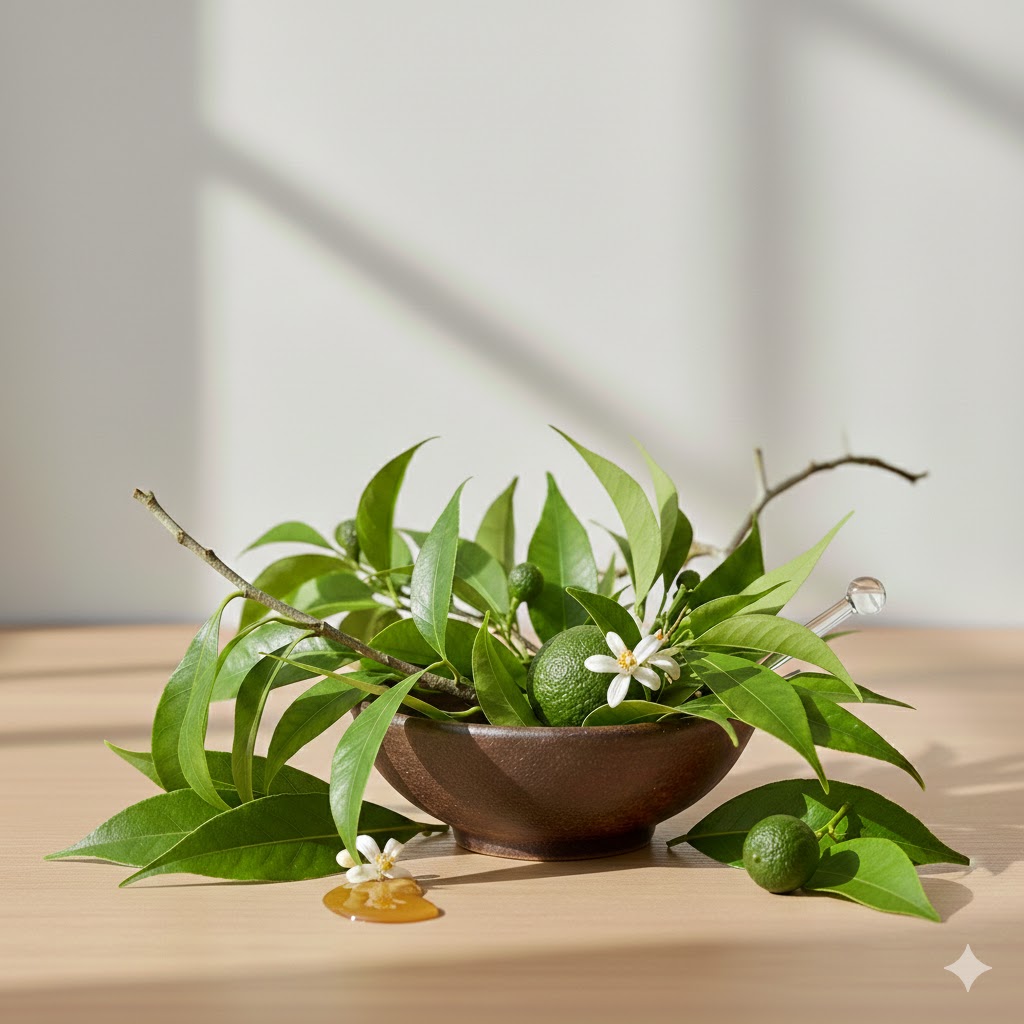
Petitgrain essential oil is a crisp, green and softly floral oil steam-distilled from the leaves and young twigs of the bitter orange tree, loved for its calm, fresh scent in evening diffusing and classic cologne-style blends.
Botanical name: Citrus aurantium (bitter orange)
Aroma: Crisp, green and woody with a soft floral sweetness
Note: Top to middle
Main growing region: Paraguay, a leading producer, and other warm regions
Typically extracted: Steam-distilled from the leaves and young twigs
Blends well with: Neroli, Lavender, Bergamot, Clary Sage and Geranium
Top 3 benefits:
- Calm, green scent: a crisp, floral and slightly woody aroma that many people find settling at the end of a busy day.
- Evening wind-down: a gentle, unsugary citrus-family fragrance that suits the hour before bed.
- Perfumer’s favourite: the classic backbone of eau de cologne accords, bridging bright citrus tops and floral or woody hearts.
Safety first: petitgrain is gentle for a citrus-family oil, but keep skin use to 1% or less, patch test first, and speak to a healthcare professional if you are pregnant or have a medical condition. Read the full safety information.
What Is Petitgrain Essential Oil?
Petitgrain essential oil is steam-distilled from the leaves and young twigs of the bitter orange tree, Citrus aurantium. It comes from the same tree that gives us Neroli from its blossom and bitter orange oil from its peel, but its scent is quite different: crisp, green and woody, with a soft floral sweetness that never feels sugary.
Its character comes mainly from linalyl acetate and linalool, the same two compounds that give lavender its soft, floral freshness, along with smaller amounts of geranyl acetate and limonene. Because it is distilled from leaves rather than pressed from peel, it is a very different oil from the cold-pressed citrus oils.
Benefits and Traditional Uses
The science: linalyl acetate and linalool are associated with soft, relaxing aromas, and petitgrain is traditionally used in evening blends. Research into aromatherapy is limited, so enjoy it as a comforting part of your wind-down routine rather than a treatment for sleep or stress.
How to use (the evening wind-down): diffuse 3 drops of petitgrain with 2 drops of Lavender in a ventilated room for 30 to 60 minutes in the hour before bed.
The science: petitgrain is a long-standing ingredient in natural facial oils and toners, where its clean, green scent is appreciated. Evidence for effects on the skin is limited, so treat it as a fragrant addition to a routine.
How to use (the fresh face oil): add 2 drops of petitgrain to 10ml of jojoba oil (1%), patch test on your inner arm first, and smooth a small amount over clean skin in the evening, avoiding the eye area.
The science: petitgrain is a versatile top-to-middle note that bridges citrus and floral oils. It is the classic base of eau de cologne accords and adds a clean, leafy freshness to blends.
How to use (the cologne blend): combine 3 drops of petitgrain, 2 drops of Bergamot and 1 drop of Neroli in a diffuser for a fresh, floral and green atmosphere.
How to Use Petitgrain Essential Oil
| Method | Instructions | VivaForte tip |
|---|---|---|
| Diffusion | 3 to 5 drops in an ultrasonic diffuser, in short sessions in a ventilated room. | Lovely in the hour before bed. Keep pets out of the room. |
| Inhalation | 1 drop on a tissue or cotton ball, breathed slowly from a comfortable distance. | Keep it off your skin and away from young children. |
| Topical | Maximum 1% dilution (about 3 drops per 15ml of carrier oil, or 2 drops per 10ml). | Patch test first and avoid the eye area and broken skin. |
| Massage | 6 drops in 30ml of jojoba or grapeseed oil (1%) for the neck and shoulders. | Warm the oil in your hands before smoothing it in. |
| Blending | 1 to 2 drops added to a diffuser blend as a green, floral middle note. | Pair with neroli, lavender or bergamot. |
Petitgrain Safety Information
- Dilute and patch test. Use no more than 1% on the skin (about 3 drops per 15ml of carrier oil, or 2 drops per 10ml). Patch test first, avoid the eye area and damaged skin, and stop using it if irritation occurs.
- Sun exposure. Petitgrain is distilled from leaves and twigs and is not generally regarded as phototoxic, unlike cold-pressed citrus peel oils. If you blend it with expressed citrus oils, follow the sun safety advice for those oils.
- External and aromatic use only. Do not swallow essential oils.
- Pregnancy, breastfeeding and health conditions. Speak to a healthcare professional before use if you are pregnant, breastfeeding, have a medical condition or take regular medication.
- Children. Keep out of reach of children, and do not use on or near the face of babies or young children.
- Pets. Diffuse in a ventilated room, let animals leave freely, and do not apply the oil to or near them. Take particular care around cats, which are sensitive to essential oils.
- Chemical profile. High in linalyl acetate and linalool, with geranyl acetate and limonene.
For general guidance on dilution, patch testing and sun safety, read our Essential Oil Safety guide.
History and Heritage
The name petitgrain is French for “little grain”. The oil was originally distilled from the small, unripe green fruits of the bitter orange tree, which were about the size of a cherry, and over time producers moved to distilling the leaves and young twigs, which are more plentiful and are what is used today.
Petitgrain became a cornerstone of classic perfumery, particularly in eau de cologne, where its fresh, green character links the bright citrus opening to the floral and woody heart. Paraguay is today one of the leading sources of the oil, and it remains a favourite for natural fragrance, soaps and calming diffuser blends.
Petitgrain Essential Oil FAQs
Is petitgrain essential oil safe to use on the skin?
Yes, when diluted and patch tested. Keep skin use to 1% or less (about 3 drops per 15ml of carrier oil), avoid the eye area and broken skin, and stop using it if any irritation appears.
Is petitgrain phototoxic like other citrus oils?
It is not generally regarded as phototoxic, because it is distilled from leaves and twigs rather than pressed from citrus peel. If you blend it with cold-pressed citrus oils, follow the sun safety advice for those.
Can I use petitgrain during pregnancy or around pets?
Please speak to a healthcare professional before using any essential oil if you are pregnant or breastfeeding. Around pets, diffuse briefly in a ventilated room, let them leave freely, and take particular care with cats.
What does petitgrain smell like and what blends with it?
It smells crisp, green and woody, with a soft floral sweetness. It blends well with Neroli, Lavender, Bergamot and Clary Sage.
What is the difference between petitgrain and neroli?
Both come from the bitter orange tree. Neroli is distilled from the blossom and smells rich and floral, while petitgrain is distilled from leaves and twigs and smells greener, lighter and more woody.
Continue Exploring
- Neroli: the blossom oil from the same tree, richer and more floral.
- Lavender: shares linalyl acetate and makes a classic evening partner.
- Bergamot: a bright citrus that completes a cologne-style blend.
- Essential Oil Safety: dilution, patch testing and sun safety explained.
- All Single Essential Oils: browse the full VivaForte botanical range.