
Academy › Single Essential Oils › Ginger
Ginger Essential Oil
The Warm Spark of the Spice Routes
Ginger essential oil is a warm, spicy and earthy oil steam-distilled from dried ginger rhizomes, loved for its cosy, energising scent in diffusers, massage blends and winter rituals.
Botanical name: Zingiber officinale
Aroma: Warm, spicy, earthy and woody, with a sharp citrusy lift
Note: Middle to base
Main growing region: Madagascar
Typically extracted: Steam-distilled from the dried rhizomes
Blends well with: Sweet Orange, Grapefruit, Cardamom, Frankincense and Cinnamon
Top 3 benefits:
- Cosy warmth: a rich, spicy aroma that many people find comforting on cold, grey days.
- Motivating scent: its lively, peppery notes are traditionally associated with energy and getting started.
- Warming massage blends: a long-loved choice for warming massage oils, well diluted in a carrier oil.
Safety first: ginger oil is warming and can irritate the skin, so keep skin use to 1% or less, patch test first, and keep it away from the face and from young children. Read the full safety information.
What Is Ginger Essential Oil?
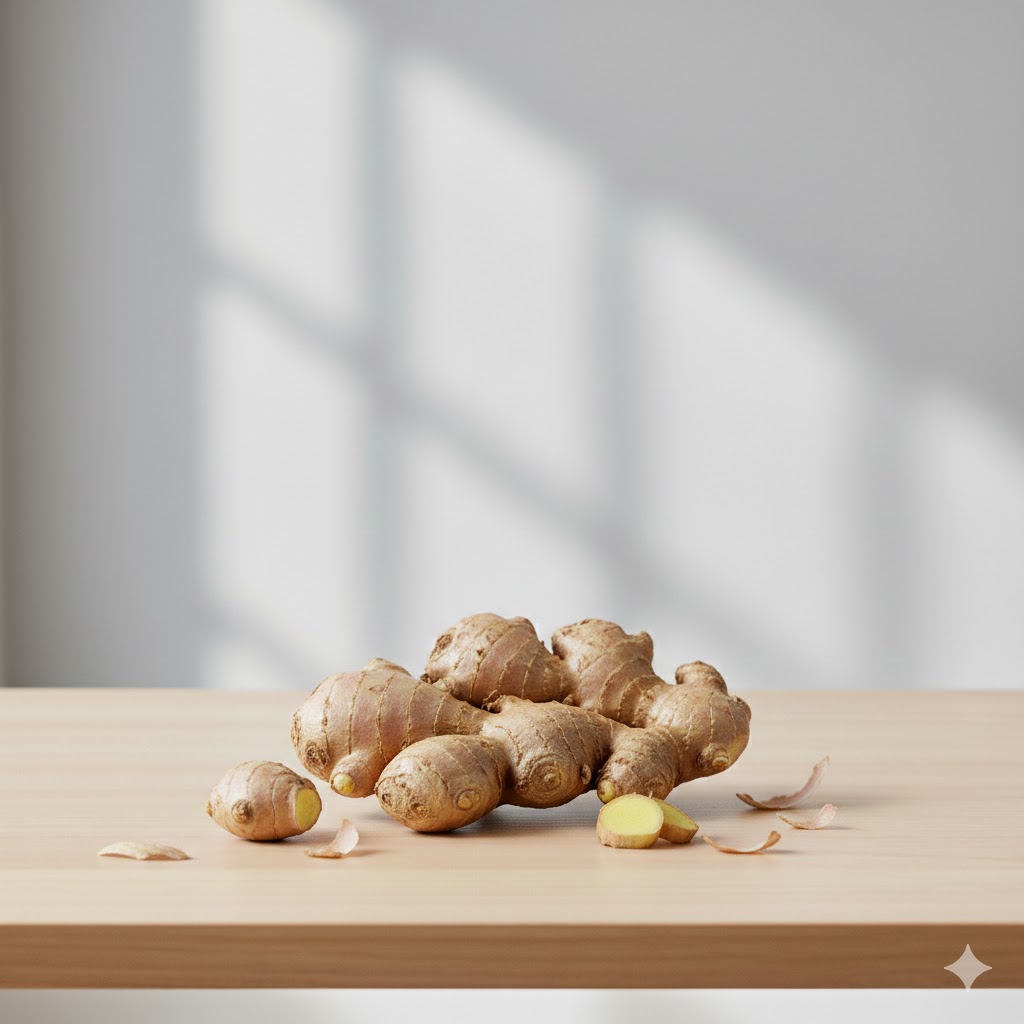
Ginger essential oil is steam-distilled from the dried rhizomes, the knobbly underground stems, of Zingiber officinale, the same plant that gives us the familiar kitchen spice. Our product page describes the oil as coming from Madagascar. It is a warm, golden-toned oil, and its aroma is richer and more rounded than the fresh root, with a bright, almost citrusy opening.
Its character comes mainly from sesquiterpenes, especially zingiberene, with ar-curcumene and beta-phellandrene adding earthy depth and a fresh edge. It is a lovely middle to base note that adds warmth to citrus, wood and spice blends, and a little goes a long way.
Benefits and Traditional Uses
The science: ginger oil has a long tradition in warming massage oils, where its spicy scent and mild warming feel on the skin are part of the appeal. Because that warming sensation can become irritating, it is always used well diluted.
How to use (the warming ritual): mix 3 drops of ginger into 15ml of a carrier oil such as sweet almond or sesame (about 1%). Patch test first, then massage into the lower back or feet after a long, chilly day, avoiding the face and broken skin.
The science: spicy, peppery aromas are traditionally associated with a feeling of energy and drive. Research into aromatherapy is limited, so think of ginger as a pleasant way to set the scene for a busy day rather than a treatment for tiredness or low mood.
How to use (the action diffusion): diffuse 2 drops of ginger with 3 drops of Sweet Orange in a ventilated room for 30 to 60 minutes when you have a challenging task ahead.
The science: ginger root has a long history in food and drink as a warming spice, and its aroma is a familiar, comforting one. Research on the scent of the essential oil is limited, so enjoy it as a comforting aroma and speak to a healthcare professional about any digestive symptoms.
How to use (the travel tissue): put 1 drop of ginger on a tissue and hold it a little way from your face on a long journey. Keep it off your skin and away from young children.
How to Use Ginger Essential Oil
| Method | Instructions | VivaForte tip |
|---|---|---|
| Diffusion | 2 to 3 drops in an ultrasonic diffuser, in sessions of 30 to 60 minutes in a ventilated room. | Blends well with sweet orange or cinnamon for a cosy winter aroma. Keep pets out of the room. |
| Inhalation | 1 drop on a tissue or cotton ball, held a little way from the face. | Handy in a travel bag. Not for young children. |
| Topical | Maximum 1% dilution (about 3 drops per 15ml of carrier oil). | Patch test first and avoid the face, sensitive areas and broken skin. |
| Massage | Use the same 1% blend (3 drops per 15ml) on the lower back, shoulders or feet. | Warm the oil between your palms first, and stop if the skin feels hot or tingly. |
| Blending | 1 to 2 drops added to a diffuser blend as a warm, spicy middle note. | Pair with citrus oils for brightness, or with frankincense and cardamom for depth. |
Ginger Safety Information
- Dilute and patch test. Use no more than 1% on the skin (about 3 drops per 15ml of carrier oil). Ginger oil is warming and may cause skin irritation or an allergic skin reaction in some people, so patch test first and stop using it if irritation occurs. Avoid sensitive or damaged skin.
- External and aromatic use only. Do not swallow essential oils.
- Pregnancy, breastfeeding and health conditions. Speak to a healthcare professional before use if you are pregnant or breastfeeding, have a medical condition, or take regular medication, including blood-thinning medicines.
- Children. Not recommended for young children. Keep it out of their reach, and do not use it on or near the face of babies or young children.
- Pets. Essential oils can be harmful to pets, particularly cats. Ventilate the room, let animals leave when diffusing, and do not apply it to or near them.
- Chemical profile. High in zingiberene, ar-curcumene and beta-phellandrene.
For general guidance on dilution, patch testing and sun safety, read our Essential Oil Safety guide.
History and Heritage
Ginger is native to tropical Asia and is one of the world’s oldest cultivated spices. It has long been grown and used in India and China, both in cooking and in traditional medicine systems such as Ayurveda and traditional Chinese medicine.
Dried ginger travelled west along the ancient spice routes and was known in the Mediterranean world in antiquity. In medieval Europe it was a prized and widely traded spice, used to flavour food and drink. Today the oil is steam-distilled from the dried rhizomes and is used in aromatherapy, perfumery and flavouring.
Ginger Essential Oil FAQs
Is ginger essential oil safe to use on the skin?
Only when well diluted. Keep skin use to 1% or less (about 3 drops per 15ml of carrier oil), patch test first, avoid the face and broken skin, and stop if the skin feels irritated, hot or itchy.
Is ginger oil safe around pets?
Take care, especially around cats. If you diffuse it, use a ventilated room, let animals leave freely, and never apply it to their skin or fur. Speak to your vet if you are unsure.
Is ginger oil safe during pregnancy?
Speak to your midwife, doctor or a qualified aromatherapist before using ginger oil while pregnant or breastfeeding. Guidance varies, so it is best to check before using any essential oil at this time.
What does ginger oil smell like and what blends with it?
It smells warm, spicy and earthy, with a sharp citrusy lift. It blends well with Sweet Orange, Grapefruit, Cardamom and Frankincense.
Is ginger essential oil the same as fresh ginger?
No. The oil is a concentrated extract steam-distilled from dried rhizomes and lacks some of the pungent compounds of the fresh root. It is for aromatic and diluted external use only, never for cooking or swallowing.
Continue Exploring
- Cardamom: another warm spice oil from the ginger family, with a sweeter, more aromatic edge.
- Sweet Orange: a sunny citrus that brightens ginger’s spicy warmth.
- Cinnamon: a rich, sweet spice for cosy diffuser blends, to be used with care.
- Essential Oil Safety: dilution, patch testing and sun safety explained.
- All Single Essential Oils: browse the full VivaForte botanical range.