
Academy › Single Essential Oils › Geranium
Geranium Essential Oil
The Rosy Green Heart of the Garden
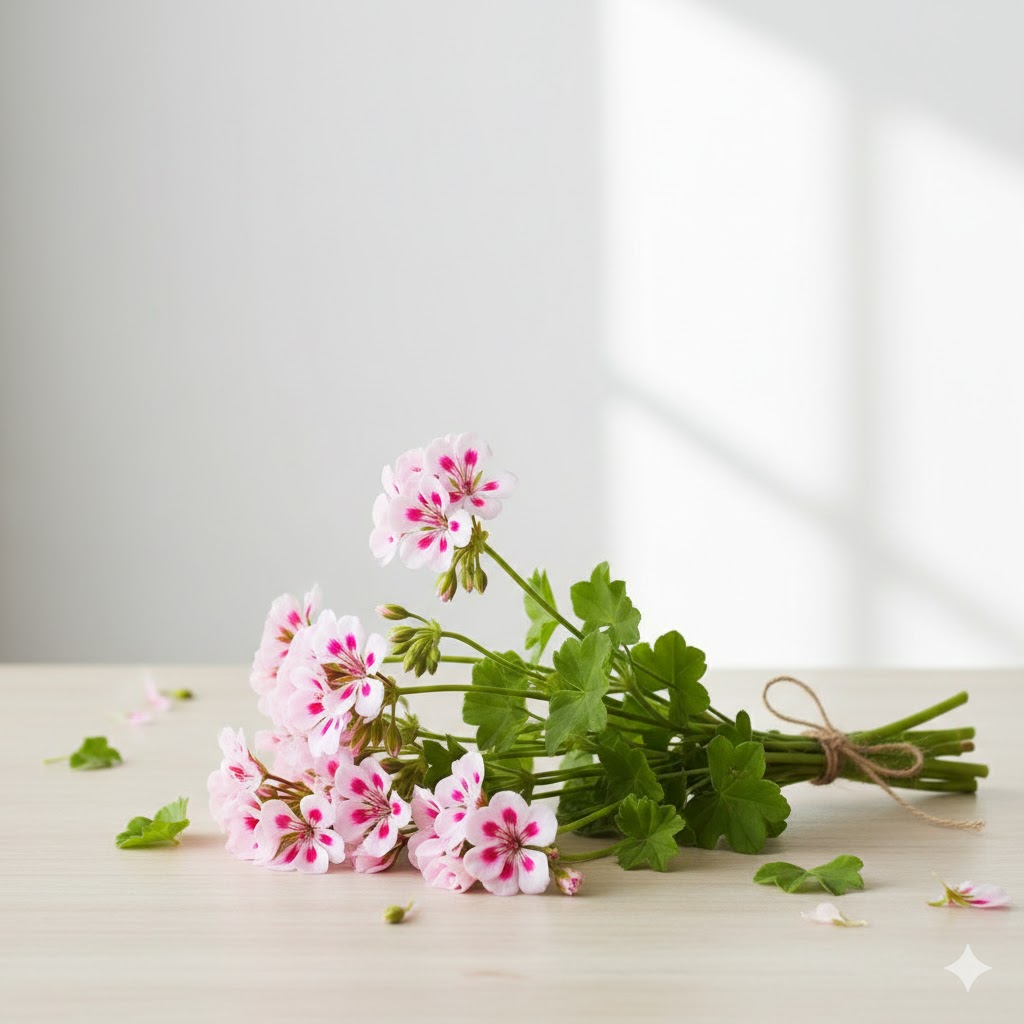
Geranium essential oil is a sweet, rosy and green-herbaceous oil steam-distilled from the leaves and stems of a fragrant pelargonium, loved for its balanced floral aroma in skincare blends, diffuser mixes and natural perfumery.
Botanical name: Pelargonium graveolens
Aroma: Sweet, rosy, herbaceous and crisp green
Note: Middle
Main growing region: Africa
Typically extracted: Steam-distilled from the leaves and stems
Blends well with: Bergamot, Lavender, Rose, Clary Sage and Patchouli
Top 3 benefits:
- A balanced floral scent: its sweet, rosy and green aroma is a favourite for creating a calm, welcoming atmosphere.
- Skincare blends: traditionally added in small amounts to well-diluted facial oils and creams.
- Perfumery bridge: a middle note that joins floral, citrus and woody oils into one smooth blend.
Safety first: geranium is a gentle oil for most adults, but keep skin use to 1% or less, patch test first, and keep it away from cats and young children. Read the full safety information.
What Is Geranium Essential Oil?
Geranium essential oil is steam-distilled from the leaves and stems of Pelargonium graveolens, a scented pelargonium sometimes called rose geranium. It is not the same plant as the true geraniums (Geranium) of the garden border. Pelargoniums are native to southern Africa, and the oil is best known for its sweet, rosy fragrance with a fresh green edge.
Its aroma comes mainly from citronellol and geraniol, with linalool and other compounds adding floral and minty-green nuances. The balance varies with where the plant is grown. Because it sits so comfortably between floral, citrus and woody oils, it is often called a bridge or connector in blends, and is a staple of natural perfumery.
Benefits and Traditional Uses
The science: geranium is traditionally prized in natural skincare for its rosy scent and gentle character, and its main constituents, geraniol and citronellol, have shown antimicrobial activity in laboratory studies. Research on the oil itself on human skin is limited, so treat it as a pleasant addition to your routine rather than a treatment for any skin condition.
How to use (the radiant glow): add 3 drops of geranium to 15ml of jojoba or rosehip oil (about 1%) and smooth a small amount over clean skin in the evening. Patch test first and keep away from the eyes.
The science: many people find geranium’s sweet, green-floral aroma soothing and balancing at the end of a tense day. Aromatherapy research is limited, so enjoy it as part of a relaxing routine rather than a treatment.
How to use (the harmony diffusion): diffuse 3 drops of geranium with 3 drops of Bergamot in a ventilated room for 30 to 60 minutes when the house feels busy and you want to slow things down.
The science: geranium is one of the classic floral notes in natural perfumery, valued for its rose-like sweetness and fresh green lift. It also gives a pleasant, clean fragrance to room sprays and linen mists.
How to use (the linen mist): mix 10 drops of geranium with 100ml of distilled water and a tablespoon of witch hazel in a glass spray bottle (about 0.5%). Shake well, mist lightly over bedding or curtains, and test on a hidden patch of fabric first.
How to Use Geranium Essential Oil
| Method | Instructions | VivaForte tip |
|---|---|---|
| Diffusion | 3 to 5 drops in an ultrasonic diffuser, in short sessions in a well-ventilated room. | Lovely in the late afternoon as the day winds down. Keep pets out of the room. |
| Inhalation | 1 drop on a tissue or cotton ball kept nearby. | Tuck it into a bag for a quick floral moment on a busy day. |
| Topical | Maximum 1% dilution (about 3 drops per 15ml, or 2 drops per 10ml, of carrier oil). | Patch test first and avoid broken skin and the eye area. |
| Skincare | 3 drops in 15ml of jojoba or rosehip oil (about 1%) as an evening facial oil. | Use a small amount and keep it away from the eyes. |
| Home and surfaces | 10 drops in 100ml of distilled water with a tablespoon of witch hazel (about 0.5%). | Shake before each use and test a hidden area of fabric first. |
| Blending | 1 to 2 drops added to a diffuser or perfume blend as a floral middle note. | Pair with bergamot, lavender, rose or patchouli. |
Geranium Safety Information
- Dilute and patch test. Use no more than 1% on the skin (about 3 drops per 15ml of carrier oil). Geranium is generally well tolerated, but it can cause an allergic skin reaction in some people, particularly if the oil is old or oxidised. Patch test first and stop using it if irritation occurs. Avoid broken or sensitive skin.
- External and aromatic use only. Do not swallow essential oils.
- Pregnancy, breastfeeding and health conditions. Speak to a healthcare professional before use, particularly if you are pregnant or breastfeeding, have a medical condition or take regular medication.
- Children. Keep out of reach of children, and do not use on or near the face of babies or young children.
- Pets. Essential oils can be harmful to pets, particularly cats. Ventilate the room, let animals leave freely when diffusing, and do not apply the oil to or near them.
- Store well. Keep the bottle tightly closed, cool and away from light. Oxidised oils are more likely to cause skin reactions.
- Chemical profile. High in citronellol and geraniol, with linalool.
For general guidance on dilution, patch testing and sun safety, read our Essential Oil Safety guide.
History and Heritage
The pelargoniums behind geranium oil are native to South Africa. They reached Europe in the 17th century, and the oil was first distilled commercially in France. From there the plants were taken to French colonies and other warm regions, and a worldwide industry grew up around them.
Early production was centred on places such as Réunion and Algeria. Today, Egypt and China produce most of the world’s geranium oil. Its rose-like sweetness has long made it a popular and more affordable partner to rose in perfumery, soaps and home fragrance, which is why it is sometimes called rose geranium.
Geranium Essential Oil FAQs
Is geranium essential oil safe to use on the skin?
Yes, when diluted. Keep skin use to 1% or less (about 3 drops per 15ml of carrier oil), patch test first, avoid the eyes and broken skin, and stop if irritation occurs. Store the bottle well, as old oils are more likely to irritate.
Is geranium oil safe in pregnancy or around pets?
Speak to a healthcare professional before using any essential oil in pregnancy or while breastfeeding. Around pets, especially cats, keep diffusing short in a ventilated room, let animals leave freely, and never apply it to them.
What does geranium essential oil smell like?
It smells sweet, rosy and floral with a fresh, green, slightly minty edge. Many people describe it as a rose-like scent with more crispness and less heaviness. Its aroma is balanced and easy to live with.
What blends well with geranium essential oil?
It blends beautifully with Bergamot, Lavender, Rose, Clary Sage and Patchouli. Its floral-green character bridges citrus, floral and woody oils.
Is geranium oil the same as the geranium in my garden?
No. The oil comes from scented pelargoniums, especially Pelargonium graveolens, not the hardy garden Geranium plants. The common name has caused confusion for centuries, but the two are different genera.
Continue Exploring
- Rose: the classic floral that geranium’s rosy sweetness echoes.
- Lavender: a calming partner for evening diffuser blends.
- Palmarosa: another rose-like oil rich in geraniol, with a fresher grassy note.
- Essential Oil Safety: dilution, patch testing and sun safety explained.
- All Single Essential Oils: browse the full VivaForte botanical range.