
Academy › Single Essential Oils › Benzoin Resinoid
Benzoin Resinoid (Diluted)
The Vanilla-Scented Shield of Deep Solace
Benzoin resinoid (diluted) is a rich, sweet and vanilla-like balsamic resin, supplied in a pourable dilution so it is easy to drop into diffusers, carrier oils and natural perfume blends.
Botanical name: Styrax benzoin
Aroma: Rich, warm, sweet, vanilla-like and balsamic
Note: Base
Main growing region: Tropical Southeast Asia, including Sumatra
Typically extracted: Resinoid from the tree resin, supplied pre-diluted (check the strength on your label)
Blends well with: Frankincense, Sweet Orange, Lavender, Sandalwood and Myrrh
Top 3 benefits:
- Cosy comfort: its sweet, vanilla-like warmth is often described as a soft blanket for the senses.
- Skin-friendly feel: traditionally added to hand and heel balms for its rich, protective, balsamic character.
- Natural fixative: its slow-evaporating base note helps anchor lighter citrus and floral oils in perfume blends.
Safety first: benzoin can cause allergic skin reactions in some people, so check the strength on your label, keep skin use to 1% or less of the bottle contents, and always patch test first. Read the full safety information.
What Is Benzoin Resinoid?
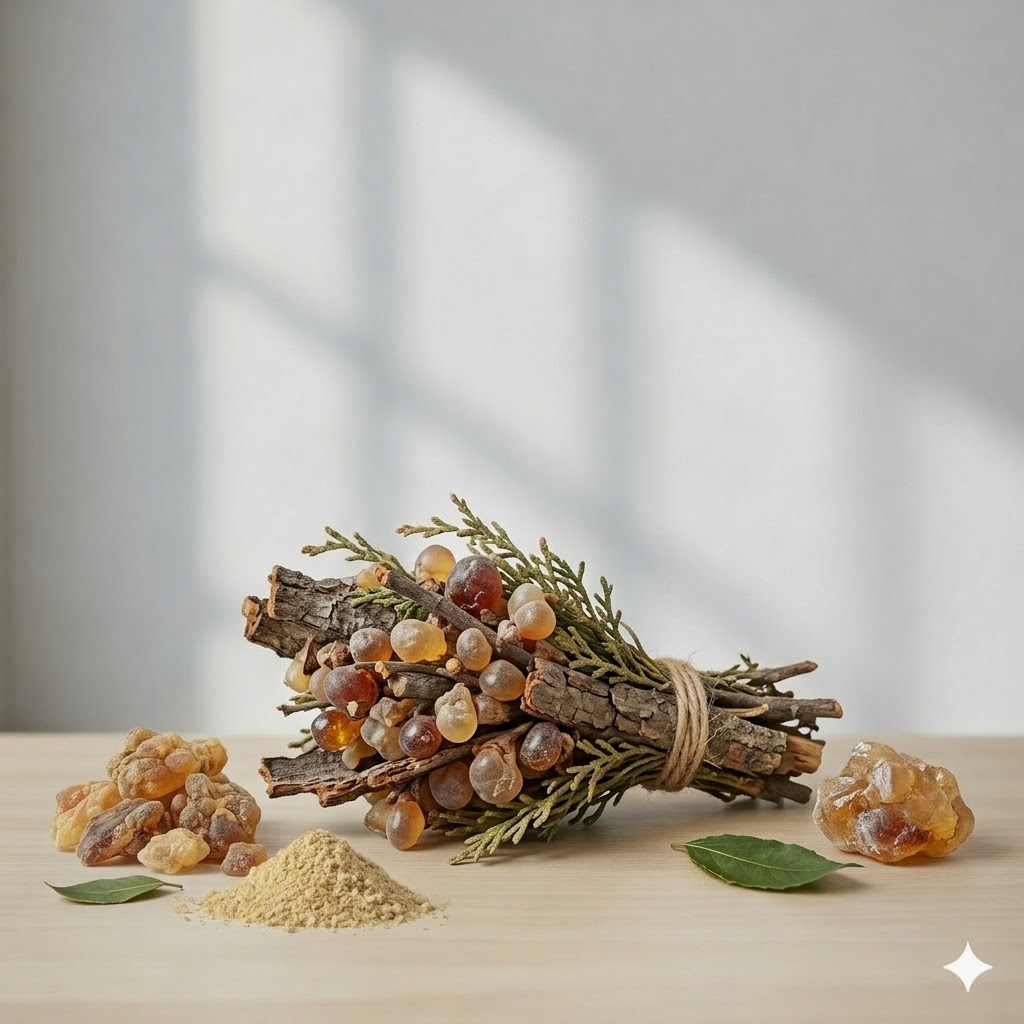
Benzoin is a balsamic resin that is tapped from the bark of trees in the Styrax family. The Sumatra type comes from Styrax benzoin, while the Siam type comes from a related species, Styrax tonkinensis. The hardened resin is dissolved to make a resinoid, which on its own is extremely thick, sticky and honey-like.
Because the pure resinoid is so viscous, the oil in this bottle is supplied as a pourable dilution. The exact strength is shown on the product label, so always check it before you blend. The aroma is sweet, warm and vanilla-like, with a soft balsamic depth. Its aromatic character comes mainly from benzoic acid, cinnamic acid and their esters, and it works beautifully as a base note that holds lighter scents in place.
Benefits and Traditional Uses
The science: benzoin has a long tradition in balms and skin-care recipes, valued for its rich, protective feel. Scientific evidence for skin benefits is limited, so think of it as a comforting ingredient rather than a treatment.
How to use (the winter hand balm): add 2 drops of the dilute to 10ml of a rich carrier oil such as avocado or argan (about 1%). Patch test first, then massage into dry hands or heels. Stop if any irritation appears.
The science: sweet, vanilla-like scents are traditionally associated with comfort and a feeling of home. Many people find benzoin soothing at the end of a long day, though research into aromatherapy is limited.
How to use (the cosy evening): diffuse 2 drops of benzoin dilute with 3 drops of Sweet Orange in a ventilated room while you wind down.
The science: benzoin evaporates slowly and has long been used as a fixative in perfumery. In a blend it helps lighter top notes such as citrus linger for longer on the skin.
How to use (the lasting roller-ball): when making a roller-ball perfume in a carrier oil, add the benzoin dilute first as the base note, then your floral and citrus oils. Keep the total dilution at 1% or less and patch test.
How to Use Benzoin Resinoid
| Method | Instructions | VivaForte tip |
|---|---|---|
| Diffusion | 2 to 3 drops in an ultrasonic diffuser, in short sessions in a ventilated room. | Clean your diffuser straight after use, as the resin can leave a sticky film. |
| Inhalation | 1 drop on a tissue or cotton ball kept nearby. | Keep it off your skin and away from children. |
| Topical | Maximum 1% dilution of the bottle contents (about 2 drops per 10ml of carrier oil). | Patch test first and avoid the face and broken skin. |
| Skincare | 1 drop stirred into a spoonful of unscented hand cream (well under 1%). | Helpful for dry, weathered hands. Stop if any redness or itching appears. |
| Blending | 1 to 2 drops as a base note in diffuser or roller-ball blends. | Pair with frankincense, sweet orange or sandalwood. |
Benzoin Resinoid Safety Information
- Dilute and patch test. Benzoin may cause an allergic skin reaction. This product is already diluted, so check the strength on your label, then keep skin use to 1% or less of the bottle contents (about 2 drops per 10ml of carrier oil). Patch test first, avoid broken or sensitive skin and stop if irritation occurs. Do not apply it undiluted.
- Allergies. People who react to balsams, fragrances or cinnamates should take extra care, or avoid benzoin.
- External and aromatic use only. Do not swallow essential oils or resinoids.
- Pregnancy, breastfeeding and health conditions. Speak to a healthcare professional before use, especially if you are pregnant, breastfeeding, have asthma or sensitive skin, or take regular medication.
- Children. Keep out of reach of children, and do not use on or near the face of babies or young children.
- Pets. Published guidance on pets is limited, so be cautious. Ventilate the room, let animals leave freely and never apply it to them, particularly cats.
- Chemical profile. Predominantly benzoic acid, cinnamic acid and their esters, such as benzyl benzoate.
For general guidance on dilution, patch testing and sun safety, read our Essential Oil Safety guide.
History and Heritage
Benzoin resin has been traded for centuries from the forests of Southeast Asia. It is thought to have reached Europe along maritime trade routes, where it was known in older texts as “gum benjamin”, a name believed to derive from an Arabic term for “incense of Java”.
The resin has traditionally been burned as incense in many cultures, and it has long been used in perfumery as a fixative. In Europe, benzoin became one of the ingredients in the old preparation known as Friar’s Balsam, a compound tincture that was traditionally used in the home. Today benzoin remains a favourite base note in natural fragrance and home-apothecary blends.
Benzoin Resinoid FAQs
Is benzoin resinoid safe to use on the skin?
Only when diluted and used with care. Check the strength on your label, keep skin use to 1% or less of the bottle contents (about 2 drops per 10ml of carrier oil), patch test first and stop if irritation occurs.
Is benzoin safe in pregnancy or around pets?
Speak to a healthcare professional before using it in pregnancy or while breastfeeding. For pets, guidance is limited, so ventilate the room, let animals leave freely, and never apply it to them.
What does benzoin smell like and what blends with it?
It smells rich, sweet and vanilla-like with a warm balsamic depth. It blends well with Frankincense, Sweet Orange, Lavender and Sandalwood.
Why is this benzoin supplied as a dilution?
Pure benzoin resinoid is extremely thick and sticky, which makes it hard to measure. A pourable dilution is easier to drop from the bottle. Always check the strength printed on your label before blending.
Can I diffuse benzoin resinoid?
Yes, 2 to 3 drops in an ultrasonic diffuser for short sessions in a ventilated room. Clean the diffuser straight afterwards, because the resin can leave a sticky residue if it is left to dry.
Continue Exploring
- Frankincense: another warm resin, a classic partner for calm, meditative blends.
- Sandalwood: a creamy, woody base note that deepens benzoin’s sweetness.
- Myrrh: a smoky, balsamic resin with a long heritage in incense.
- Essential Oil Safety: dilution, patch testing and sun safety explained.
- All Single Essential Oils: browse the full VivaForte botanical range.