
Academy › Single Essential Oils › Clove
Clove Essential Oil
The Ancient Guardian of Resilience
Clove essential oil is an intense, spicy and sweetly woody oil steam-distilled from dried flower buds, treasured for centuries for its warm, festive aroma and used in tiny amounts.
Botanical name: Eugenia caryophyllata (syn. Syzygium aromaticum)
Aroma: Intense, spicy, sweet, woody and warm
Note: Base
Main growing region: Indonesia (native to the Maluku Islands) and Madagascar
Typically extracted: Steam-distilled from the dried flower buds
Blends well with: Sweet Orange, Cinnamon, Ginger, Cardamom and Lemon
Top 3 benefits:
- Festive warmth: its rich, spicy scent is a traditional favourite for cosy, hearth-like home fragrance.
- Powerful base note: a little goes a long way, adding depth and warmth to diffuser and perfume blends.
- Lively mood: many people find its bold, spicy character stimulating when the day feels flat or cold.
Safety first: clove is a strong skin irritant and sensitiser, so keep skin use to 0.5% or less, never use it near the mouth or face, and keep it away from cats. Read the full safety information.
What Is Clove Essential Oil?
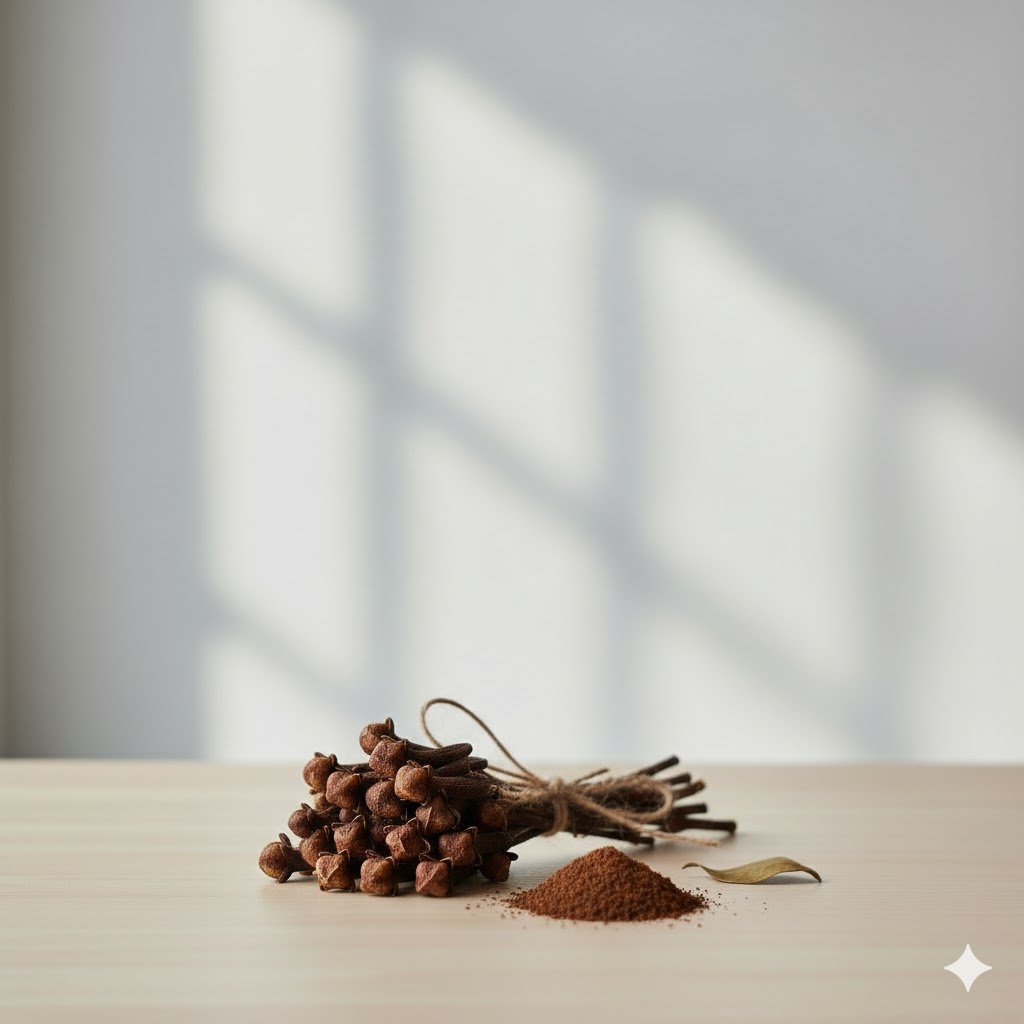
Clove essential oil is steam-distilled from the dried, unopened flower buds of the clove tree, which is native to the Maluku Islands of Indonesia and is now also grown in places such as Madagascar. Oils can also be distilled from the leaf and stem, but the bud oil is the one with the more rounded, sweeter aroma.
Its character comes mainly from eugenol, which gives clove its unmistakable spicy, almost medicinal warmth, along with eugenyl acetate and beta-caryophyllene, which soften and sweeten it. Because eugenol is strong, clove is best treated as a powerful accent in a blend rather than a main note, and it needs more care on the skin than most oils.
Benefits and Traditional Uses
The science: eugenol has shown antimicrobial activity in laboratory studies, and clove has a long history in home fragrance and household recipes. Its aroma is strong, so a very small amount is plenty.
How to use (the holiday hearth): diffuse 1 drop of clove with 4 drops of Sweet Orange in a well-ventilated room, in short sessions, with pets kept out of the room.
The science: clove is traditionally described as a warming oil, and its eugenol content can make skin feel hot or tingly, which is also why it must be used so sparingly. Research into its use in massage is limited.
How to use (the cosy rub): mix 1 drop of clove into 20ml of carrier oil (about 0.25%), patch test first, and massage a small area of the legs or lower back. Never use it on the face or near the eyes.
The science: bold, spicy aromas like clove are traditionally associated with a stimulating, fortifying effect. Evidence for aromatherapy is limited, so enjoy it as part of a pleasant routine rather than a treatment.
How to use (the winter lift): put 1 drop on a tissue and inhale from a comfortable distance, or diffuse 1 drop with a drop of Ginger and 3 drops of Lemon for a short session.
How to Use Clove Essential Oil
| Method | Instructions | VivaForte tip |
|---|---|---|
| Diffusion | 1 to 2 drops in an ultrasonic diffuser, in short sessions in a well-ventilated room. | It is very dominant. Pair with sweet orange, cinnamon or lemon for a spiced blend. |
| Inhalation | 1 drop on a tissue, held at a comfortable distance. | Do not hold it close to the nose or put it on the skin. |
| Topical | Maximum 0.5% dilution (about 1 drop per 10ml of carrier oil, or 3 drops per 30ml). | Patch test first. Never use near the face, eyes, mouth or on broken skin. |
| Home and surfaces | 3 drops in 100ml of water with a splash of white vinegar, shaken well (about 0.15%). | Wipe off after use and keep treated surfaces away from pets and food areas. |
| Blending | A single drop is often enough in a diffuser or perfume blend. | Pair with ginger, cardamom and sweet orange. |
Clove Safety Information
- Strong skin irritant. Clove oil can irritate and sensitise skin. Use no more than 0.5% on the skin (about 1 drop per 10ml of carrier oil), patch test first, and never apply it neat. Avoid the face, eyes, mouth and other mucous membranes, and stop using it if irritation occurs.
- External and aromatic use only. Do not swallow clove oil and do not use it as a mouth rinse, gargle or directly on the gums or teeth. If you have dental or gum discomfort, speak to a dentist.
- Medication and bleeding. Eugenol may affect blood clotting. Speak to a healthcare professional before use if you take anticoagulant medication, have a bleeding disorder or have surgery planned.
- Pregnancy, breastfeeding and health conditions. Speak to a healthcare professional before use, particularly if you are pregnant, breastfeeding, have asthma or sensitive skin.
- Children. Not recommended for children under 2, and keep it out of reach of children of all ages. Do not use on or near the face of babies or young children.
- Pets. Clove oil can be harmful to pets, particularly cats. Ventilate the room, let animals leave freely, and do not apply it to them or use it where they groom or sleep.
- Chemical profile. High in eugenol, with eugenyl acetate and beta-caryophyllene.
For general guidance on dilution, patch testing and sun safety, read our Essential Oil Safety guide.
History and Heritage
The clove tree is native to a small group of volcanic islands in the Maluku region of Indonesia. The name comes through the French clou and the Latin clavus, meaning “nail”, after the shape of the dried bud. Cloves were an important item of the spice trade for many centuries, and European powers competed over their supply.
Dried cloves have long been used in cooking, in incense and in traditional medicine across Asia. Accounts from China record that officials were once said to hold cloves in the mouth to sweeten the breath when addressing the emperor. In Europe, cloves were also used in pomanders and in recipes such as the old “four thieves” vinegars, although the stories surrounding these are partly legend.
Clove Essential Oil FAQs
Is clove essential oil safe to use on the skin?
Only in very small amounts. Keep skin use to 0.5% or less (about 1 drop per 10ml of carrier oil), patch test first, and avoid the face, eyes, mouth and broken skin. Clove can irritate and sensitise skin.
Is clove oil safe to put on teeth or gums?
No. Undiluted clove oil can burn the gums and mouth, and essential oils should not be swallowed. For tooth or gum pain, see a dentist. Clove is for diffusing and carefully diluted skin use only.
Is clove oil safe around pets?
Take care. Clove oil can be harmful to pets, especially cats. Diffuse it briefly in a ventilated room, let animals leave freely, and never apply it to them or use it where they sleep or groom.
What does clove smell like and what blends with it?
It smells intensely spicy, sweet and woody. It blends well with Sweet Orange, Cinnamon, Ginger and Cardamom.
Does clove essential oil affect blood clotting?
Eugenol may affect blood clotting, so speak to a healthcare professional before using clove if you take anticoagulants, have a bleeding disorder or have surgery planned. Diffusing small amounts is the lowest-exposure way to enjoy it.
Continue Exploring
- Cinnamon: another warm spice oil that also needs very careful dilution.
- Sweet Orange: a sunny citrus that softens clove’s intensity in diffuser blends.
- Ginger: a warming, spicy partner for cosy seasonal blends.
- Essential Oil Safety: dilution, patch testing and sun safety explained.
- All Single Essential Oils: browse the full VivaForte botanical range.