
Academy › Single Essential Oils › Copaiba
Copaiba Essential Oil
The Soft Balsam of the Amazon
Copaiba essential oil is a smooth, mild and balsamic oil obtained from the oleoresin of Amazonian trees, loved for its soft woody-sweet scent, its use in skincare blends and its gentle, grounding presence in the diffuser.
Botanical name: Copaifera officinalis
Aroma: Mild, woody, balsamic and slightly sweet
Note: Base
Main growing region: The Brazilian Amazon
Typically extracted: Obtained from the oleoresin tapped from the trunk of the tree
Blends well with: Lavender, Frankincense, Sandalwood, Ylang Ylang and Myrrh
Top 3 benefits:
- Gentle and grounding: a soft, creamy balsamic scent that many people find calming at the end of a busy day.
- Skincare blending: traditionally added in small amounts to facial oils and body blends for its smooth, comforting feel.
- Beta-caryophyllene rich: often the largest component of the oil, and part of what gives it a warm, woody depth in blends.
Safety first: copaiba is gentle for an essential oil but can still cause skin reactions, so keep skin use to 2% or less (1% on the face) and patch test first. Read the full safety information.
What Is Copaiba Essential Oil?
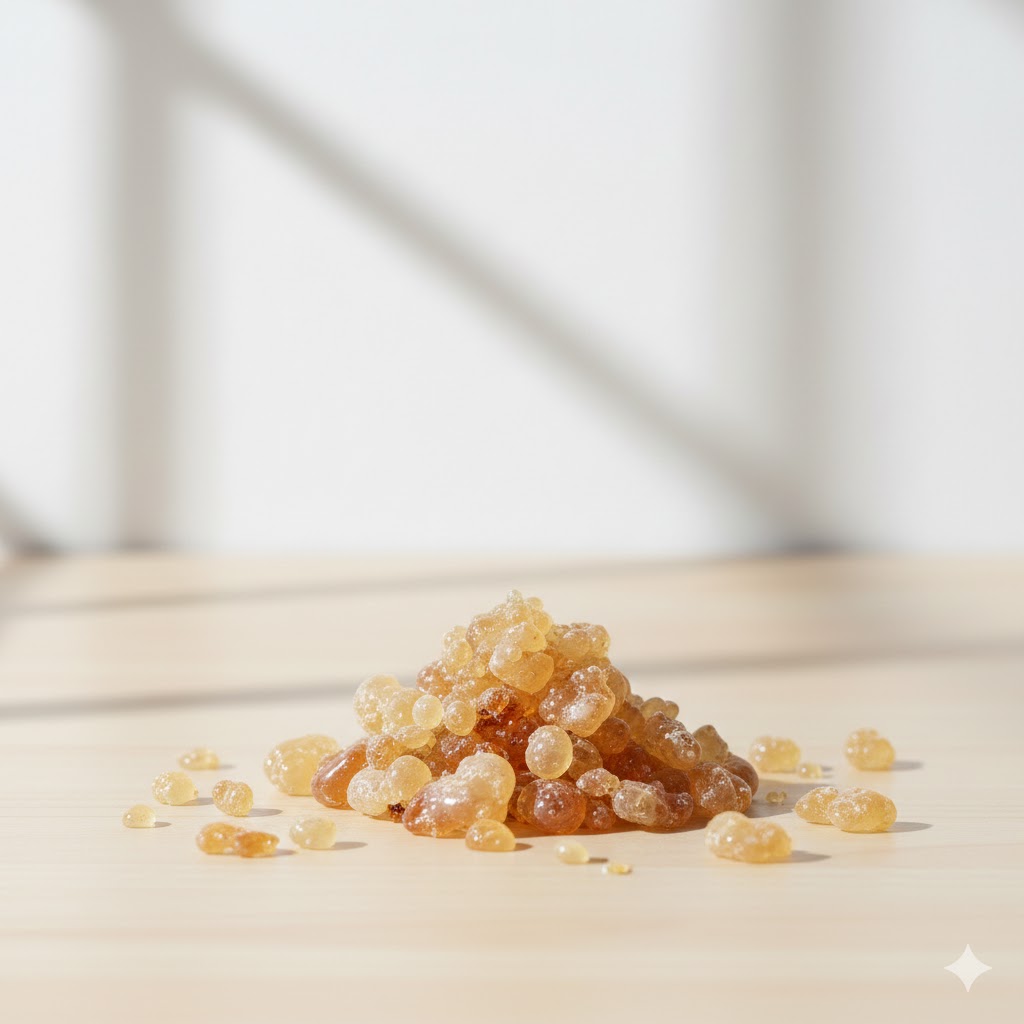
Copaiba essential oil comes from the oleoresin of trees in the Copaifera genus, which grow in the rainforests of the Amazon basin. The resin is tapped from the trunk of the tree, a little like tapping sap, rather than being picked from a plant. The oil sold here is from Copaifera officinalis and has a mild, woody and balsamic scent with a creamy sweetness.
Beta-caryophyllene is often the largest component of copaiba oil, and it is a major reason the oil is so popular in modern wellness blends. Its softer, rounder aroma is a good choice for people who find resins such as frankincense or myrrh too sharp. It is best thought of as a gentle base note that adds smoothness and depth to blends.
Benefits and Traditional Uses
The science: copaiba has a soft, balsamic scent that many people find settling. Aromatherapy research is limited, so enjoy it as a pleasant part of an evening wind-down rather than a treatment for stress or sleep problems.
How to use (the quiet evening): diffuse 3 drops of copaiba with 2 drops of Lavender in a ventilated room for 30 to 60 minutes before you settle down.
The science: copaiba is traditionally added to skincare blends for its smooth, comforting feel, and its main component, beta-caryophyllene, has been studied in the laboratory. Evidence for effects on human skin is limited, so treat it as a soft, aromatic addition to a routine.
How to use (the evening face oil): add 1 drop of copaiba to 5ml of jojoba oil (about 1%), patch test on your inner arm first, and smooth a small amount over clean skin, avoiding the eyes.
The science: its warm, woody aroma makes copaiba a pleasant companion in a slow massage after a busy day on your feet. Research into its effects is limited, so enjoy the ritual rather than expecting a specific result.
How to use (the winding-down rub): blend 6 drops of copaiba and 3 drops of Frankincense in 30ml of carrier oil (about 1.5% in total) and massage into the shoulders or lower legs after a patch test.
How to Use Copaiba Essential Oil
| Method | Instructions | VivaForte tip |
|---|---|---|
| Diffusion | 3 to 5 drops in an ultrasonic diffuser, in sessions of 30 to 60 minutes. | A thick, resinous oil, so clean the diffuser regularly to prevent buildup. |
| Inhalation | 1 drop in the palms, cupped over the nose and breathed in slowly. | Wash your hands afterwards and keep away from the eyes. |
| Topical | Maximum 2% for the body (about 6 drops per 15ml of carrier oil) and 1% for the face (about 3 drops per 15ml). | Patch test first and avoid broken skin and the eyes. |
| Skincare | 1 drop in 5ml of jojoba or rosehip oil (about 1%) as an evening face oil. | Start a few evenings a week and stop if your skin feels irritated. |
| Massage | 6 drops of copaiba in 30ml of carrier oil (about 1%), alone or with frankincense. | Warm the blend between your hands before massaging. |
Copaiba Safety Information
- Dilute and patch test. Use no more than 2% on the body (about 6 drops per 15ml of carrier oil) and 1% on the face. Copaiba may cause an allergic skin reaction, so patch test first, especially if your skin reacts to balsams or resins, and stop if irritation occurs. Avoid broken skin.
- External and aromatic use only. Do not swallow essential oils.
- Pregnancy, breastfeeding and health conditions. Speak to a healthcare professional before use if you are pregnant or breastfeeding, have a medical condition or take prescription medicines.
- Children. Keep out of reach of children, and do not use on or near the face of babies or young children.
- Pets. Essential oils can be harmful to pets, particularly cats. Ventilate the room, let animals leave freely when diffusing, and do not apply the oil to or near them.
- Chemical profile. High in beta-caryophyllene, often with smaller amounts of alpha-humulene and caryophyllene oxide.
For general guidance on dilution, patch testing and sun safety, read our Essential Oil Safety guide.
History and Heritage
Copaiba trees grow across the Amazon basin, and the oleoresin tapped from their trunks has long been used by Indigenous peoples of the region. The name is thought to come from a Tupi word for the tree, and European visitors to Brazil were writing about the resin from the 16th century onwards.
In the following centuries the resin was shipped to Europe as “copaiba balsam” and appeared in apothecary shops and in early perfumery and varnish making. Today the oil is valued mainly for its soft, woody scent and its place in wellness blends, and responsible tapping of living trees is widely seen as a more sustainable way to harvest it than felling them.
Copaiba Essential Oil FAQs
Is copaiba essential oil safe to use on the skin?
Yes when diluted and used with care. Keep skin use to 2% or less on the body (about 6 drops per 15ml of carrier oil) and 1% on the face, patch test first, and stop if irritation occurs.
Is copaiba oil safe during pregnancy?
Guidance is limited, so speak to a midwife or healthcare professional before using it if you are pregnant or breastfeeding. If you have their approval, keep to light diffusion in a ventilated room.
Is copaiba oil safe around pets?
Take care. Essential oils can affect cats and dogs. Diffuse only in a ventilated room, let animals leave freely, and never apply the oil to their skin or fur.
What does copaiba essential oil smell like and what blends with it?
It smells mild, woody and balsamic with a creamy sweetness. It blends well with Lavender, Frankincense, Sandalwood and Ylang Ylang.
Is copaiba oil the same as CBD oil?
No. Copaiba oil contains beta-caryophyllene, a terpene also found in black pepper and cloves, but it comes from a tree resin and contains no cannabis compounds. It is for aromatic and diluted skin use only.
Continue Exploring
- Frankincense: a classic resin oil that pairs well with copaiba in calm, grounding blends.
- Myrrh: another traditional resin with a deeper, earthier balsamic character.
- Sandalwood: a creamy, woody base note that suits the same gentle blends.
- Essential Oil Safety: dilution, patch testing and sun safety explained.
- All Single Essential Oils: browse the full VivaForte botanical range.