
Academy › Single Essential Oils › Basil
Basil Essential Oil
The Bright Herb of the Kitchen Garden
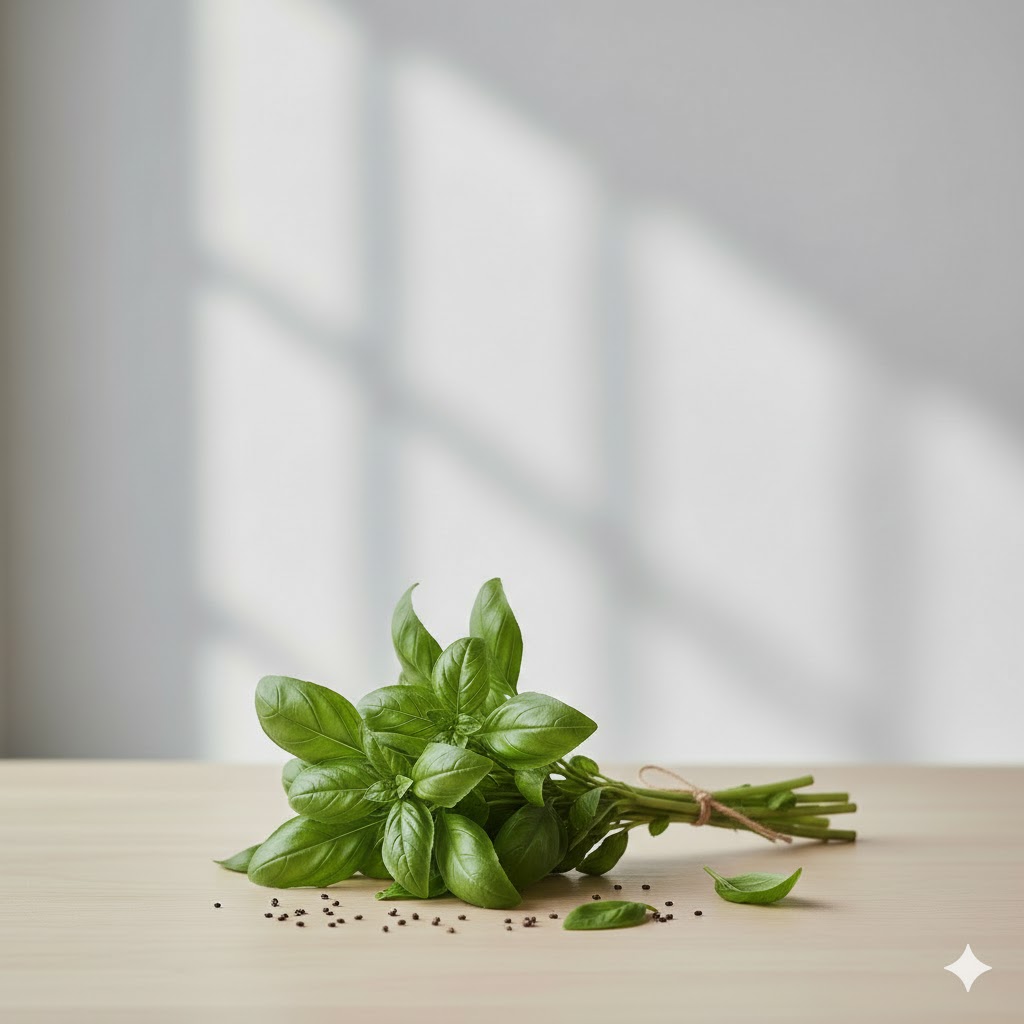
Basil essential oil is a fresh, herbal and gently peppery oil steam-distilled from the leaves of sweet basil, loved for its clean green scent in study spaces, home offices and herbal blends.
Botanical name: Ocimum basilicum
Aroma: Fresh, herbal, sweet and gently peppery
Note: Top to middle
Main growing region: Tropical Asia (this oil is sourced from Egypt)
Typically extracted: Steam-distilled from the leaves
Blends well with: Lemon, Rosemary, Peppermint, Bergamot and Geranium
Top 3 benefits:
- Study companion: its crisp, green scent is a favourite for desks, home offices and revision sessions.
- Fresh herbal air: a clean, slightly sweet aroma that lifts diffuser blends with citrus and mint.
- Bright mood: many people find its sharp, herbal notes refreshing when the afternoon slump arrives.
Safety first: basil oil can contain methyl chavicol (estragole), so keep skin use to 0.5% or less, patch test first, and avoid it during pregnancy and breastfeeding. Read the full safety information.
What Is Basil Essential Oil?
Basil essential oil is steam-distilled from the leaves and flowering tops of sweet basil, Ocimum basilicum, the same plant that flavours so many Mediterranean kitchens. The plant is thought to have originated in tropical Asia and is now grown in many warm regions. This oil is sourced from Egypt.
Basil oils differ a good deal between growing regions. Some are richer in linalool, which has a soft, floral-sweet character, while others are rich in methyl chavicol (also called estragole), which gives a sweet, anise-like and peppery edge. Because the balance varies from batch to batch, we apply the more cautious safety guidance throughout this page.
Benefits and Traditional Uses
The science: basil oil is traditionally associated with a clear, alert atmosphere, and its sharp herbal scent is a common choice for study and work spaces. Research into its effect on concentration is limited, so enjoy it as a pleasant part of your routine rather than a treatment.
How to use (the deep work blend): diffuse 3 drops of basil with 3 drops of Lemon and 2 drops of Rosemary in a ventilated room, in sessions of 30 to 60 minutes.
The science: basil has a clean, green aroma that freshens a room without being heavy. It has shown antimicrobial activity in laboratory studies, but that does not make it a substitute for proper cleaning.
How to use (the fresh room): add 3 drops of basil and 3 drops of Bergamot to a diffuser after a long day to freshen a living room or study, and open a window for a few minutes afterwards.
The science: bright, herbal oils like basil are traditionally used to add a lift to the day. Many people find the scent refreshing and mentally clearing, though aromatherapy research is limited and individual responses vary.
How to use (the afternoon reset): put 1 drop on a tissue and inhale gently for a few breaths at your desk, or diffuse 2 drops with a drop of Peppermint.
How to Use Basil Essential Oil
| Method | Instructions | VivaForte tip |
|---|---|---|
| Diffusion | 3 to 5 drops in an ultrasonic diffuser, in short sessions in a well-ventilated room. | Pairs well with citrus or mint for a morning lift. |
| Inhalation | 1 drop on a tissue or cotton ball, inhaled gently. | Keep it at your desk for when focus starts to fade. Avoid inhaling straight from the bottle. |
| Topical | Maximum 0.5% dilution (about 1.5 drops per 15ml of carrier oil, or 1 drop per 10ml). | Patch test first and avoid the face and broken skin. |
| Blending | 1 to 2 drops added to a diffuser blend as a fresh herbal top note. | Basil can dominate a blend, so start small and build up. |
Basil Safety Information
- Dilute and patch test. Use no more than 0.5% on the skin (about 1.5 drops per 15ml of carrier oil). This is a cautious figure because oils rich in methyl chavicol have a low published dermal limit. Basil may cause an allergic skin reaction, so patch test first and stop using it if irritation occurs.
- External and aromatic use only. Do not swallow essential oils.
- Pregnancy, breastfeeding and health conditions. Basil oil is best avoided during pregnancy and while breastfeeding. Speak to a healthcare professional before use if you have a medical condition or take medication.
- Children. Keep out of reach of children. We do not recommend basil oil on the skin of babies and children, and it should not be used on or near their faces.
- Pets. Essential oils can be harmful to pets. Ventilate the room, let animals leave freely when diffusing, and do not apply basil oil to them.
- Chemical profile. Varies by origin, and often features linalool and methyl chavicol (estragole), with smaller amounts of 1,8-cineole and eugenol.
For general guidance on dilution, patch testing and sun safety, read our Essential Oil Safety guide.
History and Heritage
The name basil comes from the Greek basilikon, usually translated as “royal” or “kingly”, which is how it came to be called the king of herbs. The plant is thought to have originated in tropical Asia and has been grown for culinary and household use for many centuries.
In India, a close relative known as holy basil, or tulsi, holds a sacred place in Hindu tradition and is grown in many homes. Sweet basil, the plant behind this oil, became a staple of Mediterranean cooking and is still a symbol of summer in kitchen gardens across Southern Europe.
Today basil oil is used in perfumery, flavouring and aromatherapy, where its fresh green character is valued as a top to middle note.
Basil Essential Oil FAQs
Is basil essential oil safe to use on the skin?
Only when well diluted. We recommend 0.5% or less (about 1.5 drops per 15ml of carrier oil), a patch test first, and avoiding the face and broken skin. Stop using it if irritation occurs.
Can I use basil essential oil during pregnancy?
Basil oil is best avoided during pregnancy and while breastfeeding, because of its methyl chavicol content in many oils. Speak to a midwife or doctor before using any essential oil at these times.
Is basil oil safe around pets?
Take care. Essential oils can be harmful to pets, especially cats. Diffuse in a ventilated room for short sessions, let animals leave freely, and never apply basil oil to their skin or fur.
What does basil essential oil smell like?
It smells fresh, herbal, sweet and gently peppery, a little like the leaves rubbed between your fingers. It blends well with Lemon, Rosemary, Peppermint and Bergamot.
How long should I diffuse basil oil for?
Short sessions of 30 to 60 minutes in a ventilated room are plenty, as basil has a strong scent. Take regular breaks, and avoid diffusing in closed rooms with babies or pets.
Continue Exploring
- Rosemary: another herbal favourite for study and work blends.
- Peppermint: a cool, crisp partner for an afternoon diffuser lift.
- Lemon: a bright citrus top note that softens basil’s peppery edge.
- Essential Oil Safety: dilution, patch testing and sun safety explained.
- All Single Essential Oils: browse the full VivaForte botanical range.