
Academy › Single Essential Oils › Neroli
Neroli Essential Oil
The Precious Bloom of Mediterranean Elegance
Neroli essential oil is a luxurious, intensely floral oil with soft citrus and honeyed notes, steam-distilled from the blossoms of the bitter orange tree and treasured in natural perfumery and calming evening rituals.
Botanical name: Citrus aurantium var. amara (INCI: Citrus Aurantium Amara flower oil)
Aroma: Intensely floral, honeyed and softly citrus
Note: Middle
Main growing region: Mediterranean region
Typically extracted: Steam-distilled from the blossoms
Blends well with: Bergamot, Sandalwood, Lavender, Petitgrain and Geranium
Top 3 benefits:
- Calming floral aroma: its soft, honeyed orange-blossom scent is traditionally enjoyed for peaceful evening moments.
- Luxury fragrance: a prized heart note in natural perfumery, home fragrance and spa-style rituals.
- Gentle skin-care scent: its refined perfume suits carefully diluted body oils and facial-style routines when patch tested.
Safety first: neroli is a precious, concentrated oil, so keep skin use to 1% or less, patch test first, and keep it away from the eyes, young children and cats. Read the full safety information.
What Is Neroli Essential Oil?
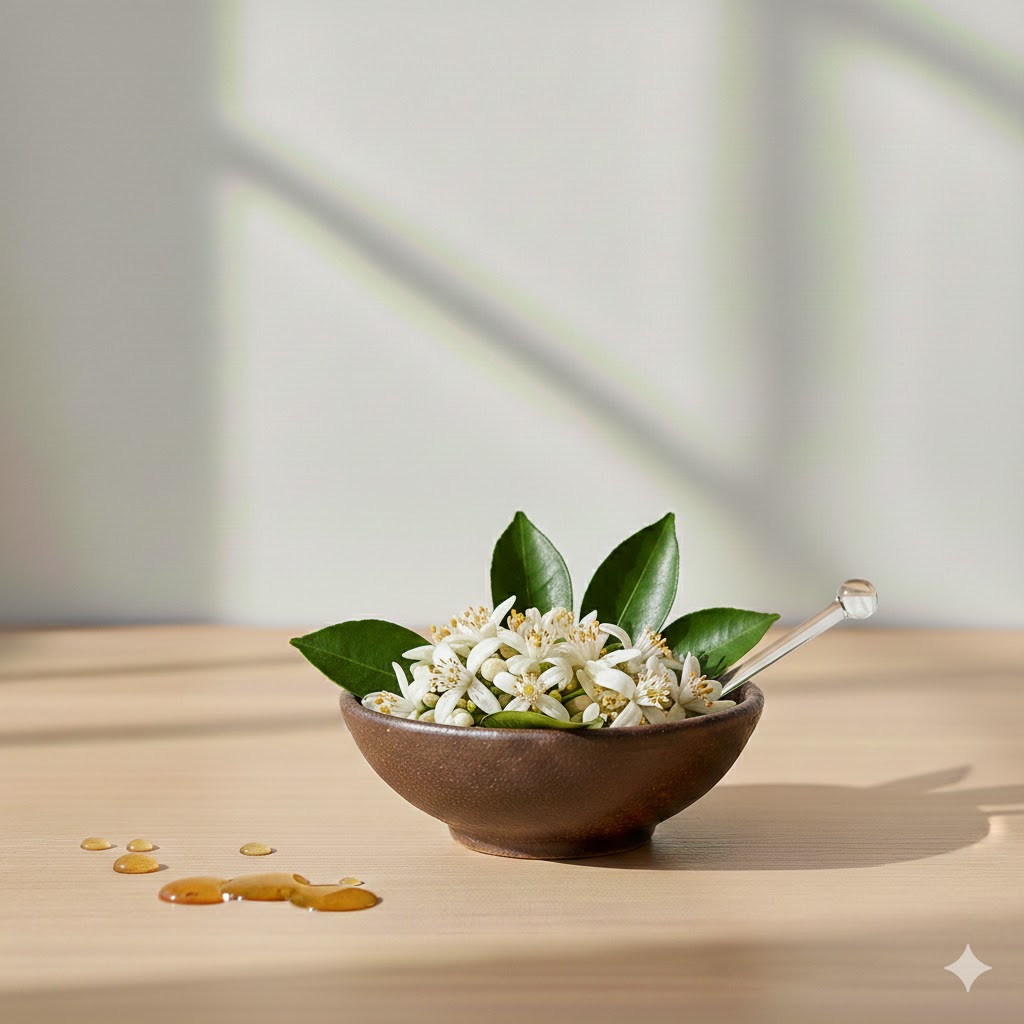
Neroli essential oil is steam-distilled from the fragrant white blossoms of the bitter orange tree, Citrus aurantium var. amara. It takes a very large quantity of blossoms to produce a small amount of oil, which is one reason it is regarded as one of the most precious oils in perfumery. The same blossoms are also used to make orange flower water.
Its scent comes mainly from linalool, limonene, linalyl acetate and nerolidol, along with smaller amounts of other floral compounds. The result is a rich, sweet, slightly bitter floral with a fresh citrus lift. Unlike the peel oils from the same tree, neroli is not known to be phototoxic.
Benefits and Traditional Uses
The science: neroli is rich in linalool and linalyl acetate, fragrant compounds also found in lavender and associated with a soft, soothing scent. Research into its effect on mood is limited, so enjoy it as a luxurious part of your evening routine.
How to use (the evening bloom): diffuse 3 drops of neroli with 2 drops of Lavender in a ventilated room for 30 to 60 minutes before bed.
The science: neroli has a long history in perfumed toilet waters and body oils. Its fragrance makes a body oil feel special, but it is a concentrated oil, so keep the dilution low and always patch test.
How to use (the body oil): add 1 to 3 drops to 15ml of jojoba oil (about 0.3% to 1%), patch test on the inner forearm first, and smooth over the arms, shoulders or neck. Avoid the eyes.
The science: as a heart note, neroli adds an elegant floral depth to blends, and many people use it to make a room feel like a spa. It pairs particularly well with citrus and woods.
How to use (the spa sanctuary): diffuse 2 drops of neroli, 2 drops of Bergamot and 1 drop of Sandalwood for a soft, sophisticated atmosphere.
How to Use Neroli Essential Oil
| Method | Instructions | VivaForte tip |
|---|---|---|
| Diffusion | 3 to 4 drops in an ultrasonic diffuser, in sessions of 30 to 60 minutes. | Blend with bergamot or lavender. Keep pets out of the room. |
| Inhalation | 1 drop on a tissue or cotton ball kept nearby. | A lovely, discreet scent for a calm moment in the day. |
| Topical | Maximum 1% dilution (about 3 drops per 15ml of carrier oil). A gentle start is 1 drop per 15ml. | Patch test first and keep away from the eyes and broken skin. |
| Skincare | 1 to 3 drops in 15ml of jojoba oil, used on the body or neck. | Keep to 1% or less and avoid the eye area. |
| Blending | 1 to 2 drops added to a perfume or diffuser blend as a floral heart note. | Pair with bergamot, sandalwood or petitgrain. |
Neroli Safety Information
- Dilute and patch test. Use no more than 1% on the skin (about 3 drops per 15ml of carrier oil). The product page suggests starting with 1 drop per 15ml. Neroli may cause skin irritation or an allergic skin reaction in sensitive people, so patch test first, stop if irritation occurs, and avoid the eyes and damaged skin.
- External and aromatic use only. Do not swallow essential oils.
- Pregnancy, breastfeeding and health conditions. Speak to a healthcare professional before use if you are pregnant or breastfeeding, have a medical condition, or take regular medication.
- Children. Keep out of reach of children, and do not use on or near the face of babies or young children.
- Pets. Take care around pets, particularly cats. Ventilate the room, let animals leave freely, and never apply it to or near them.
- Chemical profile. High in linalool, limonene and linalyl acetate, with nerolidol.
For general guidance on dilution, patch testing and sun safety, read our Essential Oil Safety guide.
History and Heritage
The bitter orange tree is native to Asia and has been grown around the Mediterranean for centuries. Its blossoms have long been prized for orange flower water and for perfumery, and fragrant orange blossom is still used in bridal flowers in many cultures.
The name neroli is traditionally said to come from Anne Marie Orsini, the 17th-century Princess of Nerola in Italy, who is credited with making the scent fashionable as a perfume for her gloves and bath.
Today neroli is still produced from hand-picked blossoms in several warm regions, and it remains one of the classic ingredients of fine perfumery and eau de cologne.
Neroli Essential Oil FAQs
Is neroli essential oil safe to use on the skin?
Yes, when diluted. Keep skin use to 1% or less (about 3 drops per 15ml of carrier oil), starting with 1 drop per 15ml if you are unsure. Patch test first and keep it away from the eyes and broken skin.
Is neroli oil safe in pregnancy or around pets?
Speak to a healthcare professional before using it during pregnancy or breastfeeding. Take care around pets, particularly cats, so diffuse in a ventilated room with free exit for animals and never apply it to them.
What does neroli smell like?
It smells intensely floral, sweet and honeyed, with a fresh citrus lift and a hint of green bitterness. Many people describe it as the scent of orange blossom, richer than petitgrain.
What blends well with neroli essential oil?
It blends beautifully with Bergamot, Sandalwood, Lavender, Petitgrain and Geranium.
Is neroli phototoxic like other citrus oils?
Neroli is not known to be phototoxic, unlike some cold-pressed citrus peel oils. It is still a concentrated oil, so dilute it, patch test and avoid the eyes.
Continue Exploring
- Petitgrain: from the same bitter orange tree, with a greener, woodier scent.
- Bergamot: a bright citrus partner for neroli’s floral depth.
- Sandalwood: a creamy, woody base that anchors floral blends.
- Essential Oil Safety: dilution, patch testing and sun safety explained.
- All Single Essential Oils: browse the full VivaForte botanical range.
Looking for the diluted version? Check its composition and directions separately from the concentrated oil.