
Academy › Single Essential Oils › Amyris
Amyris Essential Oil
The Candlewood of the Caribbean
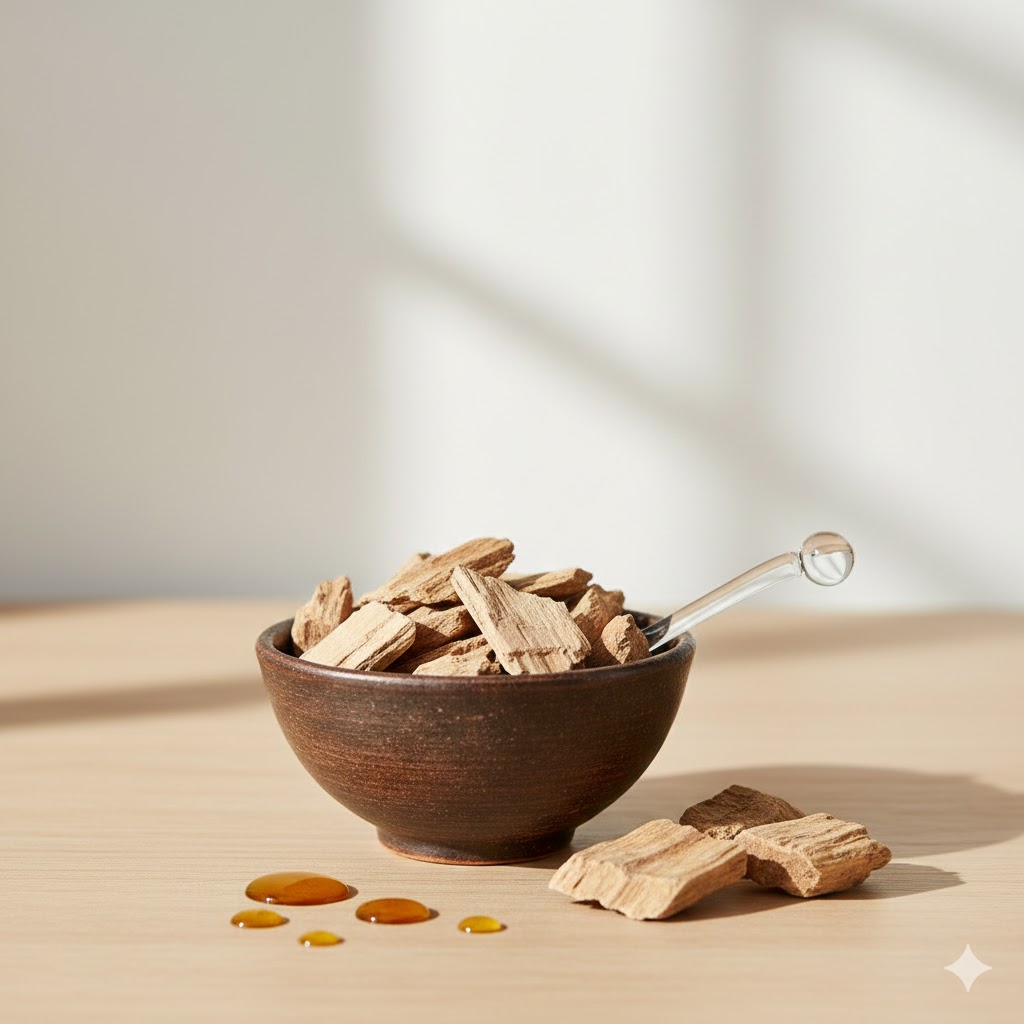
Amyris essential oil is a warm, sweet and softly balsamic wood oil, steam-distilled from the wood of a Caribbean tree and loved for its calm, grounding scent in evening rituals and natural perfumery.
Botanical name: Amyris balsamifera
Aroma: Woody, sweet, balsamic and softly smoky
Note: Base (fixative)
Main growing region: Haiti and the wider Caribbean
Typically extracted: Steam-distilled from the wood
Blends well with: Lavender, Bergamot, Frankincense, Geranium and Sandalwood
Top 3 benefits:
- Evening calm: its soft, balsamic wood scent is a lovely companion for winding down at the end of the day.
- Natural fixative: a thick, slow-fading base note that helps lighter citrus and floral oils linger in blends and perfumes.
- Meditative aroma: many people enjoy its warm, quiet character for stillness, breathing exercises and meditation.
Safety first: amyris has no widely published hazards, but keep skin use to 1% or less, patch test first, and never swallow it. Read the full safety information.
What Is Amyris Essential Oil?
Amyris essential oil is steam-distilled from the wood of Amyris balsamifera, a tree in the citrus family (Rutaceae) that grows in the Caribbean and parts of Central America. It is often sold as “West Indian Sandalwood”, although it is a different plant from true sandalwood, with its own lighter, sweeter character.
Its scent is warm, woody and gently balsamic, with a smooth, slightly vanilla-like softness. The oil is thick and slow to evaporate, which makes it a classic base note and fixative. Its main aroma compounds are the sesquiterpenoids valerianol and eudesmol, and it blends easily with citrus, floral, resin and other woody oils.
Benefits and Traditional Uses
The science: amyris is a warm, grounding wood oil that many people find relaxing, and its soft scent has a natural place in a bedtime routine. Research into its effects is limited, so enjoy it as a pleasant part of your evening rather than a treatment for sleep problems.
How to use (the wind-down diffuser): diffuse 5 drops of amyris with 3 drops of Lavender for 30 to 60 minutes before bed, in a well-ventilated room.
The science: amyris is a gentle-smelling wood oil that is traditionally included in skincare blends, and its thick, balsamic character suits rich night-time routines. Evidence for skin benefits is limited, so treat it as a fragrant extra in a well-diluted blend.
How to use (the night serum): add 2 drops to 10ml of jojoba or rosehip oil (1%), patch test first, then smooth a little onto clean skin in the evening. Keep it away from the eyes.
The science: as a base note and fixative, amyris holds on to lighter, more fleeting scents, so it helps a blend stay fragrant for longer. That makes it a handy anchor for room mists, bath rituals and homemade perfumes.
How to use (the relaxing bath): mix up to 6 drops with a tablespoon of Epsom salts before adding to the water, so the oil disperses instead of floating on the surface. Take care, as the tub can become slippery.
How to Use Amyris Essential Oil
| Method | Instructions | VivaForte tip |
|---|---|---|
| Diffusion | 5 to 8 drops in an ultrasonic diffuser, in sessions of 30 to 60 minutes in a ventilated room. | Pair with bergamot for a bright wood scent. |
| Inhalation | 1 to 2 drops on a tissue or in a personal inhaler. | Keep it in your bag for a quiet moment before meditation. |
| Topical | Maximum 1% dilution (about 3 drops per 15ml of carrier oil, or 2 drops per 10ml). | Patch test first and avoid the eyes and broken skin. |
| Bath | Up to 6 drops mixed into a tablespoon of Epsom salts or a carrier oil before it goes into the water. | Oil does not mix with water, so always use a dispersant. |
| Home and surfaces | 10 drops in a 100ml glass spray bottle of distilled water with a splash of witch hazel (about 0.5%), as a linen mist. | Shake before each use and test a hidden patch of fabric first. |
Amyris Safety Information
- Dilute and patch test. No dermal maximum is widely published for amyris, so keep skin use to 1% or less (about 3 drops per 15ml of carrier oil). Patch test on a small area first, and stop using it if irritation occurs. Avoid sensitive or damaged skin.
- External and aromatic use only. Do not swallow essential oils.
- Pregnancy, breastfeeding and health conditions. Published safety data on amyris is limited, so speak to a healthcare professional before use if you are pregnant, breastfeeding, taking medication or have a medical condition.
- Children. Keep out of reach of children, and do not use on or near the face of babies or young children.
- Pets. Essential oils can be harmful to pets, particularly cats. Ventilate the room, let animals leave freely when diffusing, and do not apply the oil to or near them.
- Chemical profile. Mainly valerianol and eudesmol, sesquiterpenoid compounds typical of wood oils.
For general guidance on dilution, patch testing and sun safety, read our Essential Oil Safety guide.
History and Heritage
Amyris balsamifera is native to the Caribbean region, and its wood is so rich in resin that it burns readily. This is why it is widely known as “candlewood” or “torchwood”, and it is thought to have been used locally as a natural torch.
Because its warm, woody scent recalls sandalwood, amyris became known as “West Indian Sandalwood” and has been used in perfumery as a fixative and as a more affordable woody note. The tree is also valued for its dense wood, and sourcing it responsibly matters, as with any wood oil.
Amyris Essential Oil FAQs
Is amyris essential oil safe to use on the skin?
It has no widely published hazards, but it should still be diluted. Keep skin use to 1% or less (about 3 drops per 15ml of carrier oil), patch test first, avoid the eyes and broken skin, and stop if irritation occurs.
Is amyris essential oil safe in pregnancy or around pets?
Published data is limited, so speak to a healthcare professional before using it in pregnancy or while breastfeeding. For pets, particularly cats, ventilate well, let them leave the room and never apply the oil to them.
What does amyris smell like?
Amyris smells warm, woody, sweet and softly balsamic, with a gentle vanilla-like smoothness. Many people compare it to a lighter, creamier cousin of sandalwood or cedarwood.
What blends well with amyris essential oil?
Its soft wood scent pairs well with Lavender, Bergamot, Frankincense and Geranium. As a base note, a drop or two anchors lighter oils.
Is amyris the same as sandalwood?
No. Amyris (Amyris balsamifera) is a different tree, often called West Indian Sandalwood because the scent is similar. It is lighter and sweeter, and it is generally more affordable than true Sandalwood.
Continue Exploring
- Sandalwood: the creamy wood oil that amyris is often compared with.
- Cedarwood: another dry, grounding wood oil for evening blends.
- Lavender: a classic calming partner for bedtime diffuser blends.
- Essential Oil Safety: dilution, patch testing and sun safety explained.
- All Single Essential Oils: browse the full VivaForte botanical range.