
Academy › Single Essential Oils › Peppermint
Peppermint Essential Oil
The Oil of Clarity
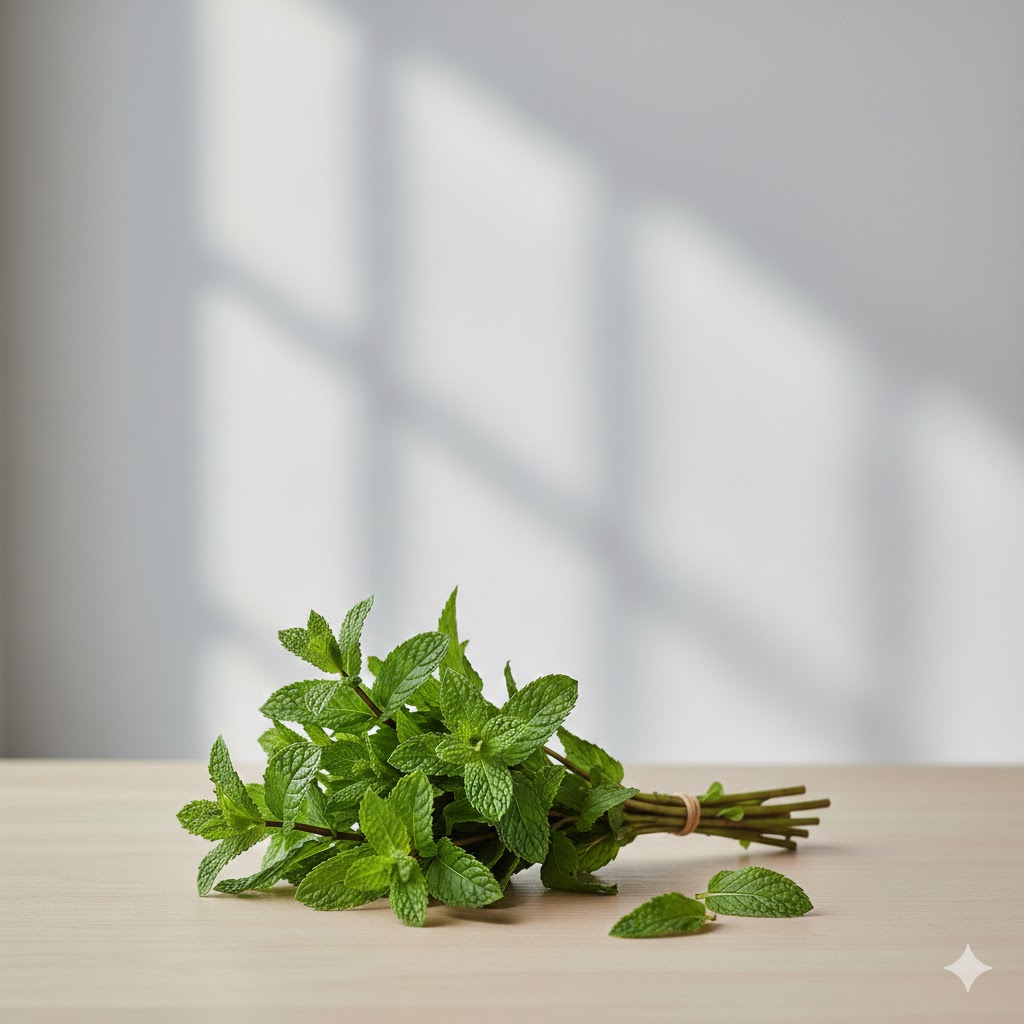
Peppermint essential oil is a sharp, sweet and intensely cooling oil steam-distilled from the leaves and flowering tops of a classic garden mint, loved for its crisp, clearing scent in diffusers, desks and cooling foot rubs.
Botanical name: Mentha piperita
Aroma: Sharp, sweet, minty and intensely cooling
Note: Top
Main growing region: India (as described on our product page)
Typically extracted: Steam-distilled from the leaves and flowering tops
Blends well with: Lavender, Rosemary, Eucalyptus, Lemon and Grapefruit
Top 3 benefits:
- Clear and focused: its icy, minty freshness is a favourite for study sessions and the mid-afternoon slump.
- Cooling and refreshing: a diluted foot or neck rub with peppermint feels wonderfully cool after a long day on your feet.
- Fresh home air: a bright, clean scent that lifts stale rooms and pairs easily with citrus and herbs.
Safety first: peppermint is strong in menthol, so never use it on or near the face of babies and young children, keep skin use to 1% or less, and keep it away from cats and dogs. Read the full safety information.
What Is Peppermint Essential Oil?
Peppermint essential oil is steam-distilled from the leaves and flowering tops of Mentha piperita, a natural hybrid of watermint and spearmint. It is one of the most familiar aromas in the world, found in everything from toothpaste to tea, but the essential oil is far more concentrated than anything in your kitchen, so a single drop goes a long way.
Its cooling power comes mainly from menthol, with menthone and 1,8-cineole adding a fresh, slightly camphorous depth. Menthol triggers the cold-sensing receptors in the skin and nose, which is why peppermint feels icy even though nothing is actually colder. It is a classic top note that is assertive, so it blends best in small amounts.
Benefits and Traditional Uses
The science: peppermint is rich in menthol, and many people find its crisp, cooling aroma alertness-boosting when concentration dips. Research on aroma and focus is limited and results vary, so enjoy it as a pleasant part of your routine rather than a treatment.
How to use (the study desk blend): diffuse 2 drops of peppermint with 3 drops of Lemon in a well-ventilated room, in sessions of 30 minutes.
The science: menthol creates a cooling sensation on the skin, which is why peppermint has long been a favourite in refreshing foot balms and leg rubs after standing or walking all day. The effect is a sensation, not a treatment, and it is best kept to the feet, legs and shoulders.
How to use (the cooling foot rub): mix 2 drops of peppermint into 10ml of carrier oil such as sweet almond (1%), patch test first, then massage into the feet and lower legs. Wash your hands afterwards and keep away from the eyes.
The science: peppermint has a sharp, clean aroma that quickly freshens a room, and many people enjoy it in kitchens, workspaces and entrance halls. Its scent is powerful, so a little goes a long way and it pairs well with softer oils.
How to use (the fresh room spray): mix 10 drops with 100ml of distilled water and a tablespoon of witch hazel in a glass spray bottle (about 0.5%). Shake well and spritz into the air, away from pets, children and faces.
How to Use Peppermint Essential Oil
| Method | Instructions | VivaForte tip |
|---|---|---|
| Diffusion | 2 to 3 drops in an ultrasonic diffuser, in short sessions of 30 minutes. | Blend with lemon or grapefruit to soften the sharpness. Keep pets out of the room. |
| Inhalation | 1 drop on a tissue or cotton ball, inhaled gently. | Hold it a little way from your nose and keep it away from children. |
| Topical | Maximum 1% dilution (about 3 drops per 15ml of carrier oil, or 2 drops per 10ml). | Patch test first. Avoid the face, eyes and broken skin, and wash your hands afterwards. |
| Home and surfaces | 10 drops in 100ml of distilled water with a tablespoon of witch hazel (about 0.5%). | Shake before each use. Use as a room spray, away from pets and children. |
| Blending | 1 to 2 drops added to a diffuser blend as a cooling top note. | Pair with lavender, rosemary, eucalyptus or citrus. |
Peppermint Safety Information
- Dilute and patch test. Use no more than 1% on the skin (about 3 drops per 15ml of carrier oil). Peppermint can irritate and may cause an allergic skin reaction, so patch test first and stop if irritation occurs. Keep it away from the eyes, mucous membranes and broken skin, and wash your hands after handling.
- External and aromatic use only. Do not swallow essential oils. Peppermint tea and culinary mint are different products.
- Pregnancy, breastfeeding and health conditions. Avoid peppermint oil during pregnancy and while breastfeeding unless a healthcare professional advises otherwise. Speak to one before use if you have epilepsy, asthma, G6PD deficiency, heart conditions or take regular medication. Peppermint is not suitable for use alongside homeopathic remedies.
- Children. Do not use peppermint on or near the face of babies and young children, as the menthol can affect breathing. Keep it out of reach of children.
- Pets. Peppermint oil can be harmful to cats, dogs and other pets. Keep animals out of the room when diffusing, and never apply the oil to them.
- Chemical profile. High in menthol and menthone, with 1,8-cineole.
For general guidance on dilution, patch testing and sun safety, read our Essential Oil Safety guide.
History and Heritage
Mint has been prized for thousands of years, and dried mint has been reported in ancient Egyptian tombs, though the exact species are hard to confirm. Peppermint itself is a natural hybrid of watermint and spearmint, and it was formally described as a species in England in the late 17th century.
From the 18th century, peppermint was grown commercially in England, with the area around Mitcham in Surrey becoming especially famous for it. Peppermint cultivation later spread to North America and other regions, and it became a staple flavour in sweets, teas and toothpaste.
Today peppermint is grown in many countries, including India. The essential oil is distilled from the leaves and flowering tops, and it remains one of the best-loved oils for desks, workspaces and cooling blends.
Peppermint Essential Oil FAQs
Is peppermint essential oil safe to use on the skin?
Yes, when well diluted. Keep skin use to 1% or less (about 3 drops per 15ml of carrier oil), patch test first, avoid the face and eyes, and stop if irritation occurs.
Is peppermint oil safe in pregnancy or around children?
It is best avoided during pregnancy and breastfeeding unless a healthcare professional advises otherwise. Never use it on or near the face of babies and young children, as menthol can affect breathing.
Is peppermint essential oil safe around pets?
No, take care. Peppermint oil can be harmful to cats, dogs and other pets. Keep animals out of the room when diffusing, ventilate afterwards, and never apply the oil to their skin or fur.
What does peppermint oil smell like and what blends with it?
It smells sharp, sweet and intensely minty and cooling. It blends well with Lavender, Rosemary, Eucalyptus and Lemon.
Can I put peppermint oil on my temples or chest?
Many people use a well-diluted peppermint oil on the temples or shoulders, but keep it to 1% or less, away from the eyes, and never on children. Avoid chest use on young children, and speak to a healthcare professional about headaches that keep coming back.
Continue Exploring
- Spearmint: a gentler, sweeter mint with a softer cooling effect.
- Eucalyptus: a fresh, camphorous partner for clearing blends.
- Rosemary: a herbal oil that pairs well with peppermint for study and work.
- Essential Oil Safety: dilution, patch testing and sun safety explained.
- All Single Essential Oils: browse the full VivaForte botanical range.