
Academy › Single Essential Oils › Ravintsara
Ravintsara Essential Oil
The Oil of Resilience
Ravintsara essential oil is a clean, fresh and softly camphorous oil steam-distilled from the leaves of a Madagascan camphor tree, brighter and gentler than eucalyptus and popular in winter diffuser blends.
Botanical name: Cinnamomum camphora ct. 1,8-cineole
Aroma: Fresh, clean and softly camphorous
Note: Top
Main growing region: The highlands of Madagascar
Typically extracted: Steam-distilled from the leaves
Blends well with: Eucalyptus, Pine, Lemon, Rosemary and Lavender
Top 3 benefits:
- Fresh, clean air: a crisp, camphorous aroma that is brighter and gentler than eucalyptus.
- Seasonal ritual: traditionally enjoyed through the colder months in diffuser blends.
- Clear-headed scent: many people find its fresh aroma a pleasant lift when the day feels foggy.
Safety first: ravintsara is rich in 1,8-cineole, so keep skin use to 1% or less, never use it on or near the face of babies or young children, and avoid it during pregnancy or if you have asthma unless a healthcare professional advises otherwise. Read the full safety information.
What Is Ravintsara Essential Oil?
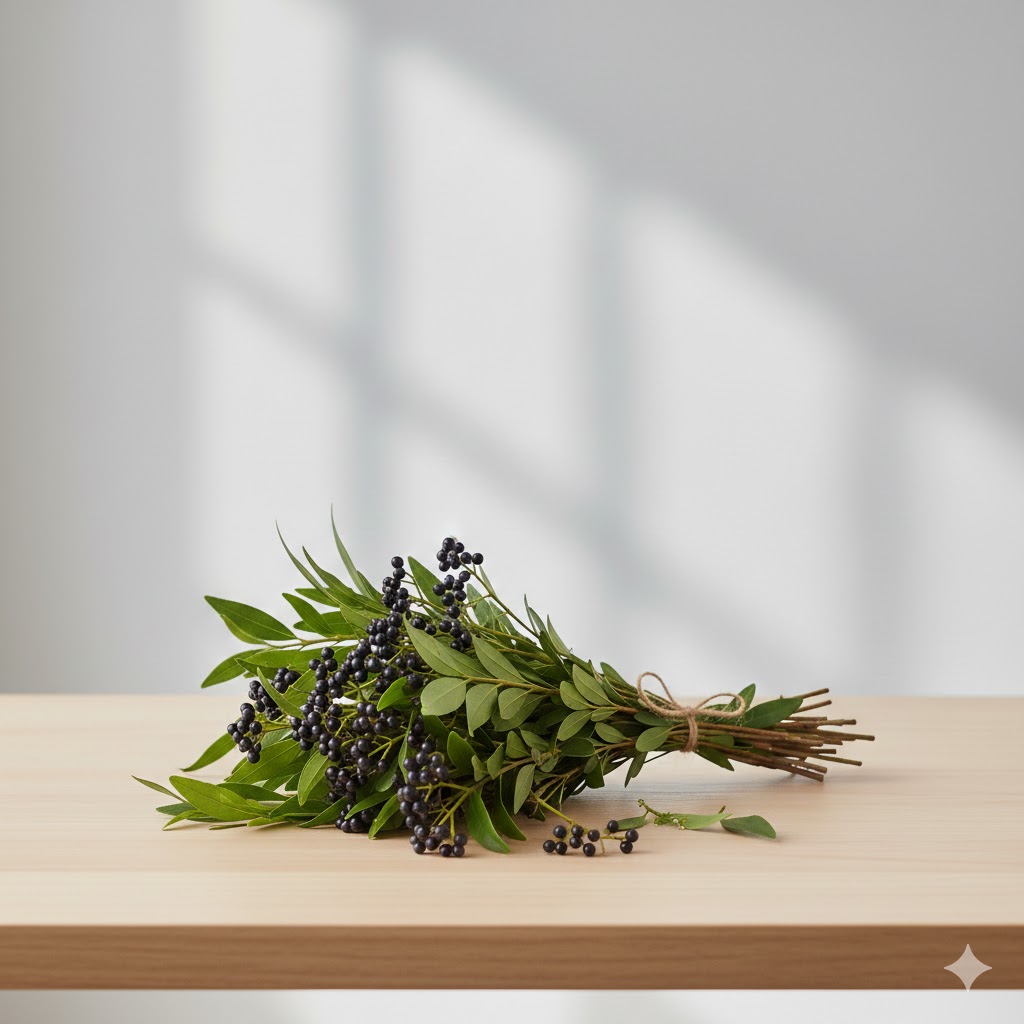
Ravintsara essential oil is steam-distilled from the leaves of the camphor tree, Cinnamomum camphora, grown in Madagascar. In Madagascar this tree has developed a chemotype that is rich in 1,8-cineole and low in camphor itself, which gives the oil a fresher, gentler scent than the camphor oil you may know.
Its aroma is clean, bracing and softly camphorous. It is often compared with eucalyptus, with a rounder, less sharp character. The name ravintsara is often translated from Malagasy as “good leaf”. It is not the same as ravensara, which comes from a different tree.
Benefits and Traditional Uses
The science: ravintsara has a crisp, clean aroma that many people associate with winter and fresh air. Research into aromatherapy is limited, so enjoy it as a pleasant seasonal ritual rather than a treatment.
How to use (the winter room): diffuse 3 drops of ravintsara with 2 drops of Lemon in a ventilated room, in sessions of 30 to 60 minutes.
The science: like many fresh, cineole-rich oils, ravintsara is traditionally associated with a clear, alert feeling. It is gentler than peppermint, which makes it a friendly choice for shared spaces.
How to use (the clear desk): put 1 drop on a tissue and keep it nearby while you work, or diffuse 3 drops with 1 drop of Rosemary in a ventilated room.
The science: ravintsara is a traditional favourite in warming, fresh-smelling massage blends. Evidence for its effects on the body is limited, so think of it as a comforting ritual.
How to use (the shoulder rub): mix 2 drops of ravintsara into 10ml of sweet almond or grapeseed oil (about 1%), patch test, and massage into the shoulders, back or chest, avoiding the face.
How to Use Ravintsara Essential Oil
| Method | Instructions | VivaForte tip |
|---|---|---|
| Diffusion | 3 to 5 drops in an ultrasonic diffuser, in short sessions in a ventilated room. | Keep sessions to 30 to 60 minutes, and keep pets out of the room. |
| Inhalation | 1 drop on a tissue or cotton ball kept nearby. | Keep it away from babies and young children. |
| Topical | Maximum 1% dilution (about 2 drops per 10ml of carrier oil). | Patch test first and avoid the face and broken skin. |
| Massage | 6 drops in 30ml of sweet almond or grapeseed oil for a shoulder, back or chest rub (1%). | Not for use on or near the face of babies or young children. |
| Blending | 1 to 2 drops added to a diffuser blend as a fresh top note. | Pair with eucalyptus, pine or lemon. |
Ravintsara Safety Information
- Dilute and patch test. Use no more than 1% on the skin (about 2 drops per 10ml of carrier oil). Ravintsara may cause an allergic skin reaction, so patch test first and stop using it if irritation occurs. Avoid sensitive or damaged skin.
- External and aromatic use only. Do not swallow essential oils.
- Pregnancy, breastfeeding and health conditions. Avoid during pregnancy and breastfeeding unless a healthcare professional advises otherwise. Use with caution if you have asthma, and speak to a healthcare professional if you have epilepsy, any other medical condition or take medication.
- Children. Do not use on or near the face of babies or young children, as oils rich in 1,8-cineole can affect their breathing. Keep out of reach of children.
- Pets. Ravintsara can be harmful to pets, particularly cats. Ventilate the room, let animals leave freely, and do not apply it to them.
- Chemical profile. High in 1,8-cineole, with sabinene and alpha-terpineol.
For general guidance on dilution, patch testing and sun safety, read our Essential Oil Safety guide.
History and Heritage
Ravintsara is the Malagasy name for the camphor tree grown in Madagascar, where it has been used in traditional household remedies for generations. The tree is native to Asia, and is thought to have been brought to Madagascar long ago, where it developed its own, cineole-rich character.
The oil became better known outside Madagascar in the aromatherapy tradition of France, where it is a popular winter oil. Today it is valued for its fresh, clean scent in diffuser blends and in natural home fragrance.
Ravintsara Essential Oil FAQs
Is ravintsara essential oil safe to use on the skin?
Yes, when diluted. Keep skin use to 1% or less (about 2 drops per 10ml of carrier oil), patch test first, avoid the face and broken skin, and stop if irritation occurs.
Can I use ravintsara oil during pregnancy or if I have asthma?
Avoid it during pregnancy and breastfeeding unless a healthcare professional advises otherwise, and use caution with asthma. Speak to a healthcare professional for personal advice.
Is ravintsara safe for children and pets?
Do not use it on or near the face of babies or young children, and keep it out of reach. It can also be harmful to pets, especially cats, so ventilate rooms and let animals leave freely.
What does ravintsara smell like and what blends with it?
It smells fresh, clean and softly camphorous, gentler than eucalyptus. It blends well with Eucalyptus, Pine, Lemon and Rosemary.
What is the difference between ravintsara and eucalyptus?
Both are rich in 1,8-cineole. Ravintsara is softer, rounder and less sharp than eucalyptus, with a gentle camphorous freshness, and it is often chosen for shared rooms where a milder scent is wanted.
Continue Exploring
- Eucalyptus: a sharper, more bracing relative with a similar cineole character.
- Niaouli: a fresh, camphorous oil often used alongside ravintsara.
- Cajeput: another cool, clean oil for winter diffuser blends.
- Essential Oil Safety: dilution, patch testing and sun safety explained.
- All Single Essential Oils: browse the full VivaForte botanical range.