
Academy › Single Essential Oils › Tea Tree
Tea Tree Essential Oil
The Everyday Essential of the Australian Wetlands
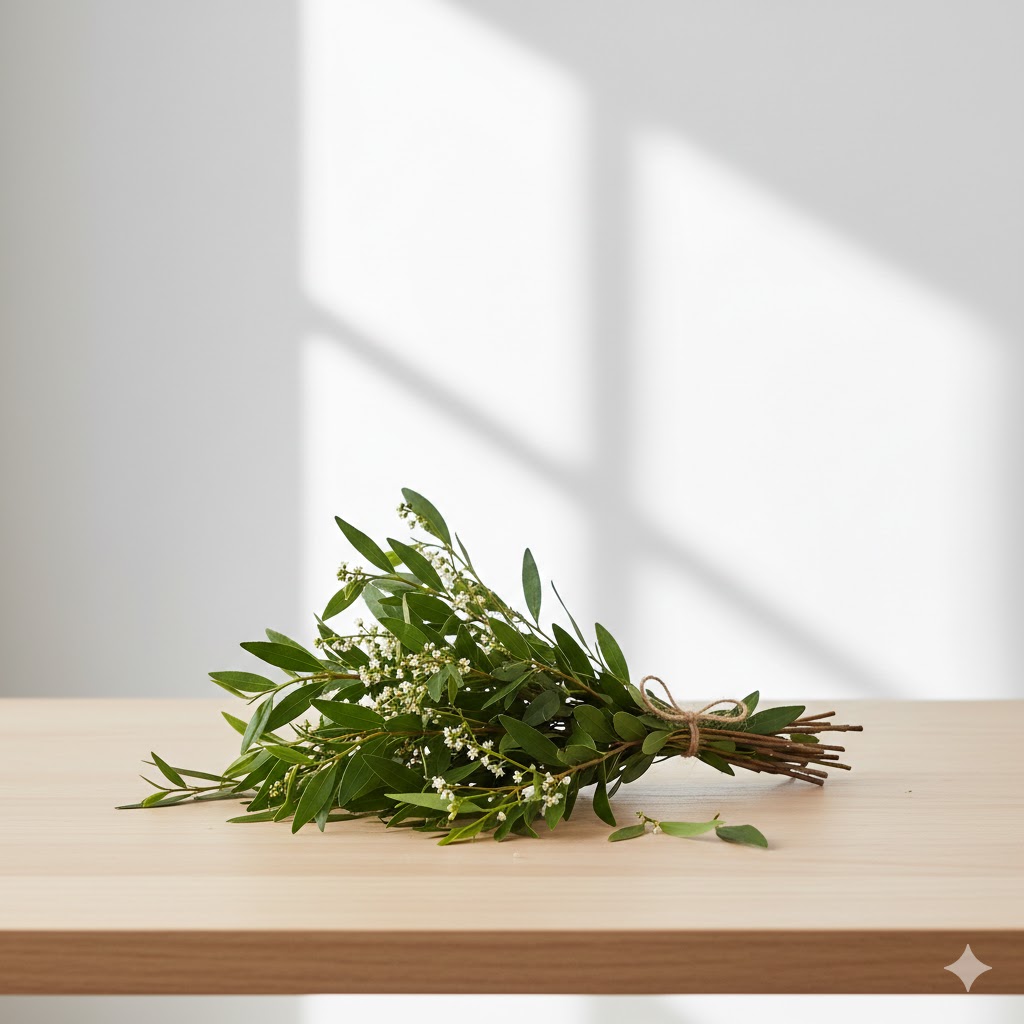
Tea tree essential oil is a fresh, sharp and unmistakably medicinal-smelling oil steam-distilled from the narrow leaves of an Australian tree, loved for its clean scent in skincare routines, home care and diffuser blends.
Botanical name: Melaleuca alternifolia
Aroma: Fresh, sharp, medicinal and camphorous
Note: Top
Main growing region: New South Wales, Australia
Typically extracted: Steam-distilled from the leaves
Blends well with: Lavender, Lemon, Rosemary, Eucalyptus and Peppermint
Top 3 benefits:
- Skincare staple: a popular choice for diluted facial oils and spot blends in routines for oily or blemish-prone skin.
- Home and laundry: a clean, sharp scent that features in natural cleaning blends and for freshening gym kit and trainers.
- Fresh-air scent: its crisp, camphorous aroma is a pleasant addition to diffuser blends in cooler months.
Safety first: tea tree oil is toxic to cats and dogs, can cause skin reactions as it ages, and should be kept to 1% or less on the skin with a patch test first. Read the full safety information.
What Is Tea Tree Essential Oil?
Tea tree essential oil is steam-distilled from the narrow leaves of Melaleuca alternifolia, a tree that grows wild in a small part of Australia. Our product page describes the oil as coming from the coastal wetlands of New South Wales. Despite the name, it has no connection with the tea plant used for drinking tea.
Its sharp, medicinal scent comes mainly from terpinen-4-ol, with gamma-terpinene and alpha-terpinene adding a fresh, citrusy edge. It has been widely studied in laboratory research, but as an aroma it is more practical than romantic, and it is usually chosen for what it does in a routine rather than for its scent.
Benefits and Traditional Uses
The science: tea tree is one of the most widely studied essential oils, and it has shown antimicrobial activity in laboratory studies. It is a popular ingredient in routines for oily or blemish-prone skin, but it can irritate, so it must always be well diluted. Speak to a healthcare professional about skin concerns.
How to use (the gentle facial oil): mix 2 drops of tea tree into 10ml of jojoba or grapeseed oil (about 1%). Patch test first, then apply a small amount to the area you want to care for, avoiding the eyes and broken skin.
The science: because tea tree has shown antimicrobial activity in laboratory studies, it often appears in natural home-care recipes. It is a fresh-smelling addition to a surface spray, a laundry boost or a gym bag freshener, and should not be relied on as a disinfectant.
How to use (the surface spray): add 10 drops to 100ml of water with a splash of white vinegar in a glass spray bottle (about 0.5%). Shake well before each use, test a hidden area first, and keep it away from pets and food surfaces.
The science: tea tree has a sharp, camphorous scent that many people find clean and clearing. Research on aromatherapy is limited, so enjoy it as a fresh fragrance in a ventilated room rather than a treatment.
How to use (the clean-air diffuser): diffuse 2 or 3 drops of tea tree with 2 drops of Lemon in a ventilated room for 30 to 60 minutes, with pets kept out of the room.
How to Use Tea Tree Essential Oil
| Method | Instructions | VivaForte tip |
|---|---|---|
| Diffusion | 2 to 3 drops in an ultrasonic diffuser, in sessions of 30 to 60 minutes in a ventilated room. | Blend with lemon or lavender to soften the sharpness. Keep cats and dogs out of the room. |
| Inhalation | 1 drop on a tissue or cotton ball, held a little way from the face. | Keep it off your skin and away from young children. |
| Topical | Maximum 1% dilution (about 2 drops per 10ml, or 3 drops per 15ml, of carrier oil). | Patch test first, avoid the eyes and broken skin, and do not use it neat. |
| Home and surfaces | 10 drops in 100ml of water with a splash of white vinegar (about 0.5%). | Shake before each use and test a hidden area first. Keep it away from pets. |
| Blending | 1 drop added to a diffuser blend as a sharp, clean top note. | A little goes a long way. It pairs with citrus, lavender and rosemary. |
Tea Tree Safety Information
- Dilute and patch test. Use no more than 1% on the skin (about 3 drops per 15ml of carrier oil) and do not use it neat. Tea tree oil may cause skin irritation or an allergic skin reaction, especially as it ages, so patch test first and stop using it if irritation occurs. Avoid sensitive or damaged skin.
- Keep it fresh. Tea tree oil oxidises on contact with air, which significantly increases the risk of skin sensitisation. Keep the bottle tightly closed, store it somewhere cool and away from light, and use it within 12 months of opening.
- External and aromatic use only. Do not swallow tea tree oil. It can be seriously harmful if swallowed.
- Pregnancy, breastfeeding and health conditions. Speak to a healthcare professional before use if you are pregnant or breastfeeding, have a medical condition, or take regular medication.
- Children. Keep it out of reach of children, and do not use it on or near the face of babies or young children.
- Pets. Tea tree oil is toxic to cats and dogs. Keep it away from pets, never apply it to them or use it in their grooming, and keep animals out of the room when diffusing.
- Chemical profile. High in terpinen-4-ol, with gamma-terpinene and alpha-terpinene.
For general guidance on dilution, patch testing and sun safety, read our Essential Oil Safety guide.
History and Heritage
Melaleuca alternifolia is native to a small area of eastern Australia, in the northern rivers region of New South Wales. Aboriginal communities in the region are reported to have used the crushed leaves long before European settlement.
The name “tea tree” is often credited to British sailors in the 18th century, who are said to have brewed the leaves into a tea. In the 20th century the oil attracted scientific and commercial interest, and it went on to become one of the most widely studied essential oils in the world.
Tea Tree Essential Oil FAQs
Is tea tree essential oil safe to use on the skin?
Only when diluted. Keep skin use to 1% or less (about 3 drops per 15ml of carrier oil), patch test first, avoid the eyes and broken skin, and never use it neat. Stop if irritation occurs, and use fresh oil.
Is tea tree oil safe around pets?
No, take great care. Tea tree oil is toxic to cats and dogs. Do not apply it to them, use it in their grooming, or diffuse it where they cannot leave. If a pet is exposed, contact your vet straight away.
Is tea tree oil safe during pregnancy?
Speak to your midwife, doctor or a qualified aromatherapist before using tea tree oil while pregnant or breastfeeding. Guidance varies, so it is best to check before using any essential oil at this time.
What does tea tree oil smell like and what blends with it?
It smells fresh, sharp and medicinal, with a camphorous edge. It blends well with Lavender, Lemon, Rosemary and Eucalyptus.
Why does tea tree oil need to be used within 12 months?
Tea tree oil oxidises when exposed to air, and oxidised oil is more likely to irritate or sensitise the skin. Keep the cap tight, store it cool and away from light, and replace it within 12 months of opening.
Continue Exploring
- Cajeput: a close Melaleuca relative with a sweeter, more camphorous scent.
- Niaouli: another Melaleuca oil with a gentler, fresher character.
- Lavender: a soft floral that rounds off tea tree’s sharp edge in skincare and diffuser blends.
- Essential Oil Safety: dilution, patch testing and sun safety explained.
- All Single Essential Oils: browse the full VivaForte botanical range.