
Academy › Single Essential Oils › Hyssop
Hyssop Essential Oil
The Sacred Sprig of the Upward Path
Hyssop essential oil is a warm, camphoraceous and sweetly herbaceous oil steam-distilled from a Mediterranean herb. It is potent and best enjoyed in very small amounts, and with care: it is not suitable for everyone.
Botanical name: Hyssopus officinalis
Aroma: Warm, camphoraceous, spicy and sweetly herbaceous
Note: Middle
Main growing region: France and Slovenia, according to the product description
Typically extracted: Steam-distilled from the flowering tops and leaves
Blends well with: Lemon, Eucalyptus, Lavender, Rosemary and Cedarwood
Top 3 benefits:
- Clear, herbal scent: a crisp, camphoraceous freshness that many people find bright and sharpening.
- Focus ritual: traditionally enjoyed for study and creative sessions, in tiny amounts, in a diffuser blend.
- Fresh, clean home air: adds a warm, herbal lift to room blends alongside citrus and mint-type oils.
Safety first: hyssop oil is a potent, ketone-rich oil, so avoid it during pregnancy and breastfeeding or if you have epilepsy or high blood pressure, use it only in tiny amounts in a diffuser, and keep it away from children and pets. Read the full safety information.
What Is Hyssop Essential Oil?
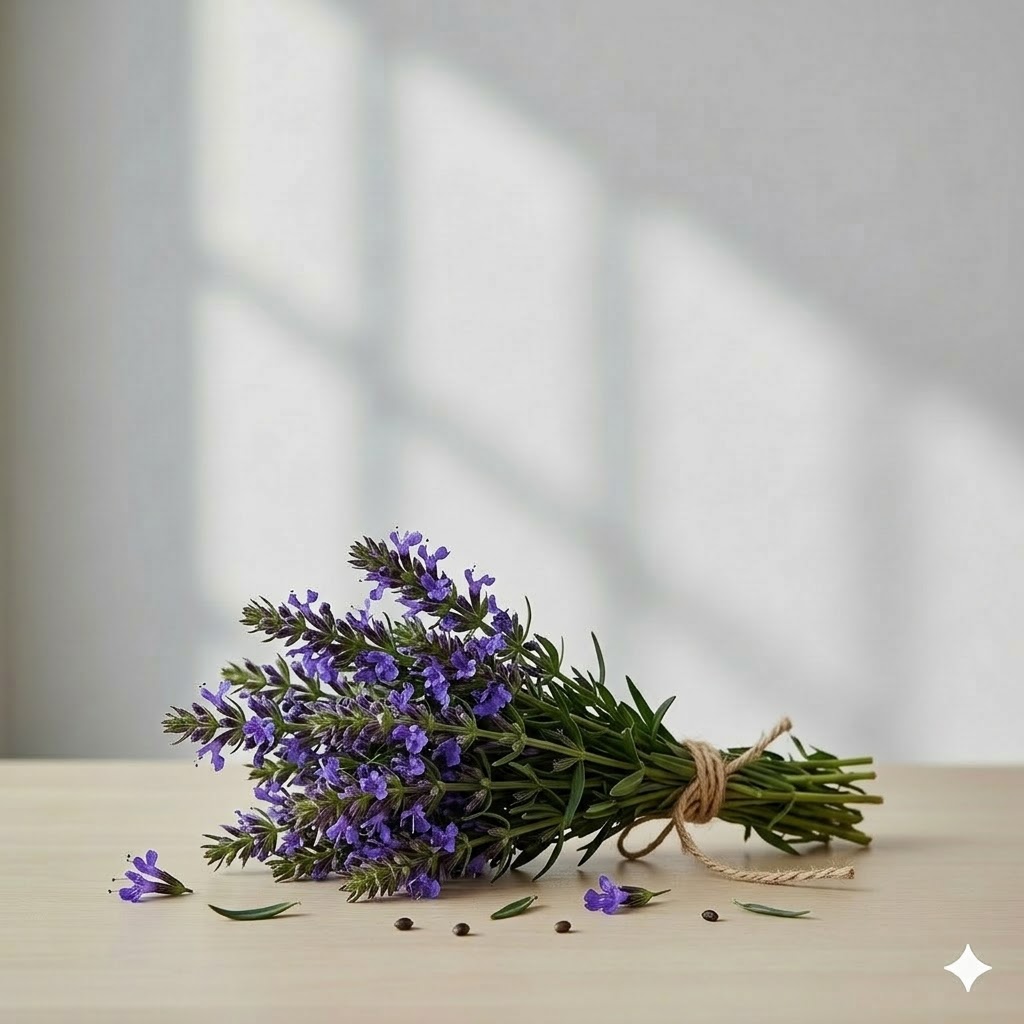
Hyssop essential oil is steam-distilled from the flowering tops and leaves of Hyssopus officinalis, a small, aromatic herb in the mint family that grows around the Mediterranean and across southern and central Europe. Its blue-purple flower spikes are loved by bees, and the leaves have a warm, minty, slightly camphoraceous scent.
The oil is rich in ketones such as pinocamphone and isopinocamphone, together with beta-pinene. These give hyssop its sharp, herbal power, and they are also the reason it needs more care than most oils. Safety guidance for hyssop is more cautious than for many popular oils, so please read the safety section before using it.
Benefits and Traditional Uses
The science: hyssop has a crisp, camphoraceous aroma that many people find alerting and bright. Research into its aroma is limited, so enjoy it as a pleasant cue for a work session rather than a treatment.
How to use (the clear head): diffuse 2 drops of hyssop with 3 drops of Lemon for a short 30 minute session in a well-ventilated room, with no children, pets or pregnant people present.
The science: hyssop has long been used as an aromatic herb, and the oil has shown antimicrobial activity in laboratory studies. It is better thought of as a fragrance for the home than as a cleaner or disinfectant.
How to use (the herbal room): diffuse 2 drops of hyssop with 2 drops of Eucalyptus in a large, ventilated room, in short sessions only.
How to Use Hyssop Essential Oil
| Method | Instructions | VivaForte tip |
|---|---|---|
| Diffusion | 2 to 3 drops in an ultrasonic diffuser, for no more than 30 minutes in a large, ventilated room. | Keep children, pets and anyone pregnant out of the room. |
| Inhalation | 1 drop on a tissue, held at arm’s length for a few breaths. | Occasional use only, and never in a small, closed space. |
| Topical | Skin use is not recommended for this oil because of its ketone content. | Speak to a qualified aromatherapist before considering any skin use. |
| Blending | 1 drop added to a diffuser blend as a herbal accent. | Pair with lemon, lavender or cedarwood. |
Hyssop Safety Information
- Potent oil, handle with care. Hyssop contains ketones that can be neurotoxic in high doses. Use very small amounts, for short periods, and in a well-ventilated room.
- Skin. We do not recommend leave-on skin use of hyssop oil. It may cause an allergic skin reaction, so avoid contact with skin, and wash with soap and water if it spills.
- External and aromatic use only. Do not swallow essential oils.
- Pregnancy, breastfeeding and health conditions. Avoid hyssop oil during pregnancy and breastfeeding, and if you have epilepsy or other seizure conditions or high blood pressure. Speak to a healthcare professional before use if you have any medical condition or take medication.
- Children. Not suitable for use with children. Keep out of reach and do not diffuse in rooms where children are.
- Pets. Hyssop is a ketone-rich oil that can be harmful to pets, especially cats. Do not diffuse it around animals or apply it to them.
- Chemical profile. High in isopinocamphone, pinocamphone and beta-pinene.
For general guidance on dilution, patch testing and sun safety, read our Essential Oil Safety guide.
History and Heritage
Hyssop has been grown in gardens around the Mediterranean and in monastery herb gardens across Europe for many centuries. The English name comes from the Greek hyssopos, which is thought to trace back to a Hebrew word, ezov. The hyssop of the Bible may in fact have been a different aromatic plant, so the connection is a matter of tradition.
In European herbal tradition, hyssop was used as a flavouring, as a strewing herb to freshen rooms, and in teas and herbal preparations. Today it is mainly grown for its aromatic oil and for gardens, where its flowers attract bees and butterflies.
Hyssop Essential Oil FAQs
Is hyssop essential oil safe to use on the skin?
We do not recommend leave-on skin use. Hyssop is a ketone-rich oil that can cause skin reactions, and published guidance is cautious. Keep it for occasional diffusion in small amounts, and speak to a qualified aromatherapist before considering anything else.
Can I use hyssop oil during pregnancy or with epilepsy?
No. Avoid hyssop oil during pregnancy and breastfeeding, and if you have epilepsy, other seizure conditions or high blood pressure. Its ketones can be neurotoxic in high doses. Speak to a healthcare professional for advice.
Is hyssop oil safe around children and pets?
No. Hyssop is not suitable for children, and can be harmful to pets, especially cats. Do not diffuse it in rooms where children or animals are, and keep the bottle out of reach.
What does hyssop smell like and what blends with it?
It smells warm, camphoraceous and sweetly herbal. It blends well with Lemon, Eucalyptus, Lavender and Rosemary.
How much hyssop oil should I diffuse?
Very little. Use 2 to 3 drops in a diffuser for no more than 30 minutes, in a large, well-ventilated room, and with no children, pets or pregnant people present. Never use it in a small, closed room.
Continue Exploring
- Rosemary: a herbal, camphoraceous oil that shares hyssop’s crisp, clearing character.
- Lavender: a softer, floral herb that rounds off hyssop’s sharpness.
- Lemon: a bright citrus partner for fresh, clean-smelling room blends.
- Essential Oil Safety: dilution, patch testing and sun safety explained.
- All Single Essential Oils: browse the full VivaForte botanical range.