
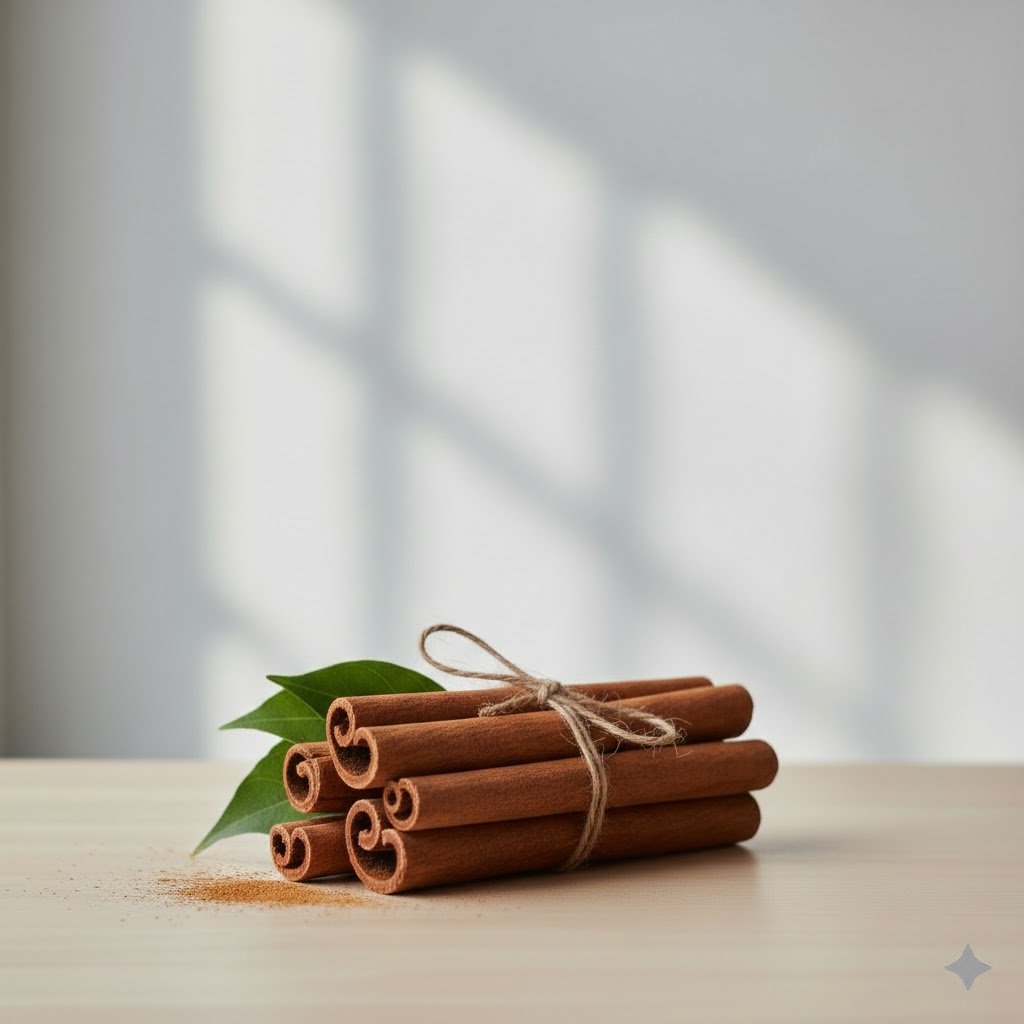
Cinnamon
The Ancient Fire of Protection and Vitality
Botanical Name: Cinnamomum zeylanicum
Note: Middle to Base
Scent: Warm, Spicy, Sweet, Woody
Top 3 Benefits:
- Immune Fortifier: Rich in cinnamaldehyde, it is one of the most powerful antimicrobial oils in nature, perfect for seasonal protection.
- Circulatory Stimulant: Its warming nature helps stimulate blood flow and ease cold extremities or stiff muscles.
- Metabolic Support: Known to help stabilize the spirit and reduce sugar cravings by providing a grounding, “full” aromatic experience.
The Spice of Kings
Once more valuable than gold, Cinnamon has been traded across the globe for thousands of years as a symbol of luxury and health. Derived from the inner bark of the tropical Cinnamomum zeylanicum tree, this oil is a powerhouse of “hot” chemistry. In traditional Chinese medicine, it was used to tonify the Yang energy—the fire of the body. Today, it remains a favorite for its ability to cut through mental fog and physical lethargy. Its aroma doesn’t just fill a room; it wraps it in a protective, warming embrace, making it a cornerstone for wellness during the autumn and winter months.
The Science: High concentrations of cinnamaldehyde have been scientifically proven to inhibit the growth of various airborne pathogens.
How to Use (The Protective Shield): Diffuse 2 drops of Cinnamon with 4 drops of Lemon to purify the air during flu season.
The Science: Cinnamon acts as a rubefacient when diluted, increasing local blood flow to the skin and creating a physical sensation of heat.
How to Use (The Warming Rub): Mix one drop only into 40ml of carrier oil for a stimulating foot massage after being out in the cold.
The Science: The spicy aroma stimulates the limbic system, helping to move “stuck” energy and combat feelings of isolation or depression.
How to Use (The Drive Blend): Diffuse with Sweet Orange to create a joyful, high-energy environment for creative work.
Methods of Use
| Method | Instructions | VivaForte Tip |
| Diffusion | 2–3 drops (less is more with Cinnamon). | Pair with Clove and Orange for the ultimate “Autumn Hearth” scent. |
| Inhalation | 1 drop on a tissue, held away from the face. | Use to sharpen the mind when you feel a mid-afternoon energy slump. |
| Topical | Extreme Caution: Max 0.1% dilution. | Always test on a small patch of skin first; it is a very “hot” oil. |
| Room Spray | Mix 10 drops with water and alcohol in a spray bottle. | Use to refresh rugs and kill odors in entryways. |
History & Heritage
Cinnamon holds a legacy so ancient and shrouded in mystery that for centuries, its true origin was a closely guarded secret of Arab traders. To keep prices high, they spun fantastical tales of “Cinnamon Birds” that built nests of precious bark on inaccessible mountain peaks. In Ancient Egypt, it was a primary ingredient in the sacred Kyphi incense and was valued more highly than gold for its role in the mummification of royalty. The Old Testament frequently mentions Cinnamon as a component of the “Holy Anointing Oil,” symbolizing spiritual purity and fire. By the Roman era, Emperor Nero famously burned a year’s supply of the spice at his wife’s funeral as an ultimate display of grief and opulence. Across the Silk Road, from the Ayurvedic practitioners of India to the apothecaries of Medieval Europe, Cinnamon has always been the “Spice of Life”—a symbol of warmth, wealth, and the undying fire of the human spirit.
Safety & Technical Data
Chemical Profile: High in Cinnamaldehyde, Eugenol, and Linalool.
Safety: DERMAL IRRITANT. Never use undiluted. Do not use on sensitive or diseased skin. Avoid use during pregnancy. Not suitable for use in baths as it can irritate sensitive membranes.
WARNING: May cause an allergic skin reaction. Keep out of reach of children.