
Academy › Single Essential Oils › Cajeput
Cajeput Essential Oil
The Fresh Breath of the Tropical Wetlands
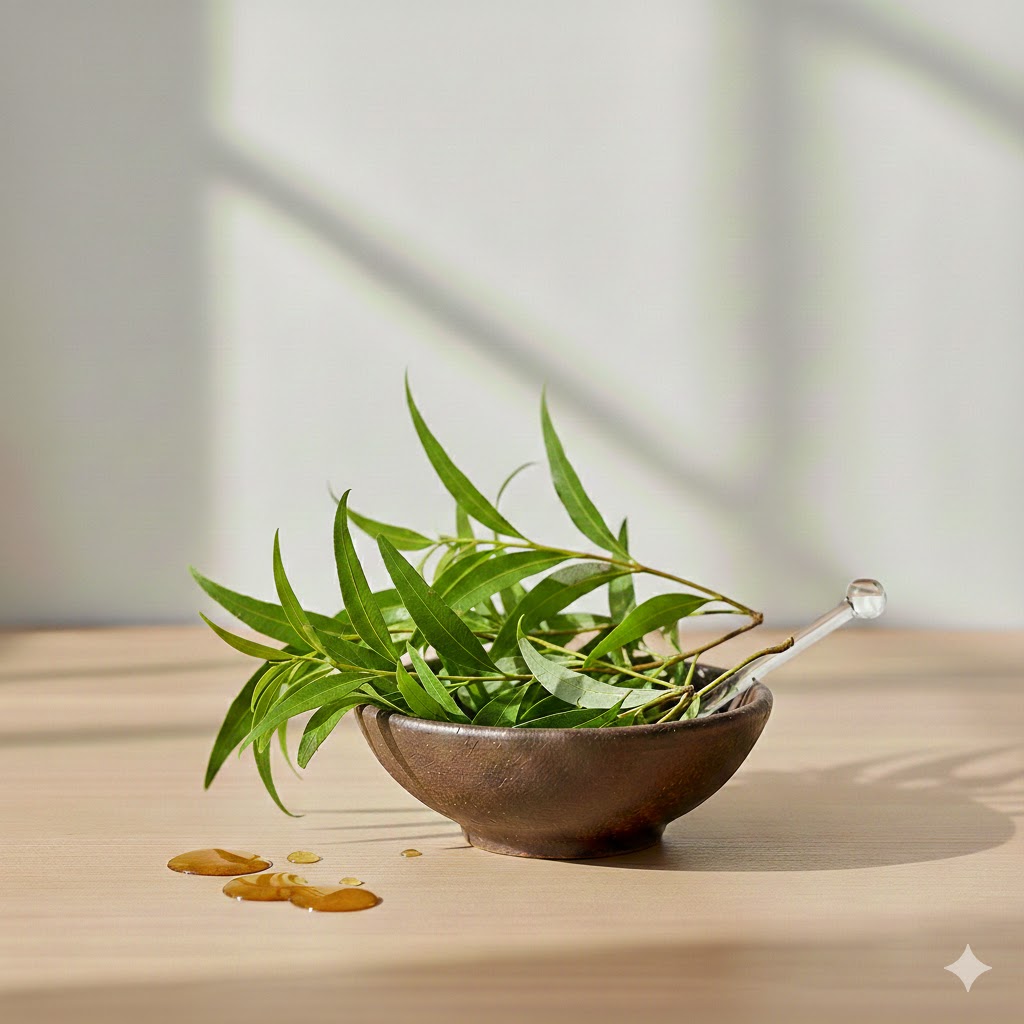
Cajeput essential oil is a bright, camphorous and gently sweet oil steam-distilled from the leaves and twigs of a Southeast Asian tree, loved for its clean, penetrating freshness in diffusers and home blends.
Botanical name: Melaleuca cajuputi
Aroma: Fresh, camphorous, herbal and slightly sweet
Note: Top
Main growing region: Southeast Asia, including Vietnam and Indonesia
Typically extracted: Steam-distilled from the leaves and twigs
Blends well with: Lemon, Peppermint, Eucalyptus, Lavender and Rosemary
Top 3 benefits:
- Fresh, open air: a crisp, cineole-rich scent that many people find clean and airy, especially in the cooler months.
- Clear-headed scent: its bright, camphorous top note is traditionally associated with feeling alert and refreshed.
- Warming massage blends: traditionally used in Southeast Asian massage oils and liniments, diluted well in a carrier oil.
Safety first: cajeput is rich in 1,8-cineole, so keep skin use to 1% or less, patch test first, and never use it on or near the face of babies and young children. Read the full safety information.
What Is Cajeput Essential Oil?
Cajeput essential oil is steam-distilled from the leaves and twigs of Melaleuca cajuputi, a tree that grows in the swampy lowlands of Southeast Asia. The name comes from the Malay kayu putih, meaning “white wood”, a reference to the tree’s pale, papery bark. It is a close botanical relative of Tea Tree and Niaouli.
Its fresh character comes mainly from 1,8-cineole, with alpha-terpineol and limonene adding a softer, sweeter, slightly floral edge. Compared with eucalyptus, many people find cajeput a little rounder and sweeter, though still sharp and camphorous. It works as a lively top note on its own in a diffuser and blends easily with citrus, mint and herbal oils.
Benefits and Traditional Uses
The science: cajeput is rich in 1,8-cineole, a compound that gives the oil its clear, camphorous aroma. Many people find the scent of cineole-rich oils pleasantly open and refreshing, particularly during colder months. Research on aromatherapy is limited, so enjoy it as a scent rather than a treatment, and speak to a healthcare professional about any breathing concerns.
How to use (the fresh-air diffuser): add 3 or 4 drops to an ultrasonic diffuser in a well-ventilated room for 30 to 60 minutes, or put 1 drop on a tissue and hold it a little way from your face.
The science: cajeput has a long tradition in Southeast Asian liniments and massage oils, where its warming, camphorous scent is part of the appeal. On the skin it can feel mildly warming, which is one reason it must always be well diluted.
How to use (the evening rub): mix 3 drops of cajeput into 15ml of a carrier oil such as grapeseed or sweet almond (about 1%). Patch test first, then massage into the shoulders or legs, avoiding the face and broken skin.
The science: bright, camphorous top notes are traditionally associated with a sense of alertness and clarity. Research into aromatherapy is limited, so think of cajeput as a pleasant part of your routine rather than a treatment for tiredness or low mood.
How to use (the afternoon lift): diffuse 3 drops of cajeput with 2 drops of Lemon while you work, in a ventilated room and in short sessions.
How to Use Cajeput Essential Oil
| Method | Instructions | VivaForte tip |
|---|---|---|
| Diffusion | 3 to 4 drops in an ultrasonic diffuser, in sessions of 30 to 60 minutes in a ventilated room. | Blend with lemon or peppermint for a fresh morning scent. Keep babies, young children and pets out of the room. |
| Inhalation | 1 drop on a tissue or cotton ball, held a little way from the face. | Keep it in your bag for a quick refresh when travelling. Not for young children. |
| Topical | Maximum 1% dilution (about 3 drops per 15ml of carrier oil). | Patch test first and avoid the face, sensitive areas and broken skin. |
| Bath | 2 or 3 drops mixed into a tablespoon of carrier oil or unscented bath base, then added to warm water. | Never add the oil to water on its own. Keep it away from the eyes and do not use it in children’s baths. |
| Blending | 1 to 2 drops added to a diffuser blend as a sharp, bright top note. | Use it to lift heavy resins and woods, or pair it with lavender and rosemary. |
Cajeput Safety Information
- Dilute and patch test. Use no more than 1% on the skin (about 3 drops per 15ml of carrier oil). Cajeput may cause skin irritation or an allergic skin reaction in some people, so patch test first and stop using it if irritation occurs. Avoid sensitive or damaged skin.
- External and aromatic use only. Do not swallow essential oils.
- Pregnancy, breastfeeding and health conditions. Speak to a healthcare professional before use if you are pregnant or breastfeeding, or have epilepsy, asthma, liver problems or any other medical condition, or take regular medication.
- Children. Cajeput is rich in 1,8-cineole, which can cause breathing difficulties in young children. Do not use it on or near the face of babies or young children, and keep it out of their reach.
- Pets. Cajeput is closely related to tea tree, which can be harmful to cats and dogs. Ventilate the room, let animals leave when diffusing, and do not apply it to or near them.
- Chemical profile. High in 1,8-cineole, with alpha-terpineol and limonene.
For general guidance on dilution, patch testing and sun safety, read our Essential Oil Safety guide.
History and Heritage
Melaleuca cajuputi grows naturally across Southeast Asia and northern Australia, often in wet, swampy ground. Its common name comes from the Malay kayu putih, meaning “white wood”, and the oil has long been produced in the Indonesian islands, including the Moluccas.
In the places where it grows, cajeput oil has traditionally been used in household liniments and massage oils, valued for its penetrating, camphorous scent. It is thought to have reached Europe through trade with the East Indies, and it remains a familiar scent in balms and rubs across Southeast Asia today.
Cajeput Essential Oil FAQs
Is cajeput essential oil safe to use on the skin?
Only when well diluted. Keep skin use to 1% or less (about 3 drops per 15ml of carrier oil), patch test first, avoid the face and broken skin, and stop if irritation occurs. It is not for babies or young children.
Is cajeput oil safe around pets?
Take care. Cajeput is related to tea tree, which can be harmful to cats and dogs. If you diffuse it, use a ventilated room, let animals leave freely, and never apply it to their skin or fur.
Is cajeput oil safe during pregnancy?
There is limited guidance, so speak to your midwife, doctor or a qualified aromatherapist before using it while pregnant or breastfeeding. Many people choose to avoid cineole-rich oils at this time.
What does cajeput smell like and what blends with it?
It smells fresh, camphorous and herbal, with a slightly sweet edge. It blends well with Lemon, Peppermint, Lavender and Rosemary.
What is the difference between cajeput and tea tree?
They are related Melaleuca species. Cajeput is rich in 1,8-cineole and smells fresher, sweeter and more camphorous, while tea tree is higher in terpinen-4-ol and has a sharper, medicinal scent.
Continue Exploring
- Tea Tree: a close Melaleuca relative with a sharper, more medicinal scent.
- Eucalyptus: another cineole-rich oil with a cooler, more camphorous freshness.
- Niaouli: a gentler, sweeter cousin from the same botanical family.
- Essential Oil Safety: dilution, patch testing and sun safety explained.
- All Single Essential Oils: browse the full VivaForte botanical range.