
Academy › Single Essential Oils › Spearmint
Spearmint Essential Oil
The Gentle Mint of Light Refreshment
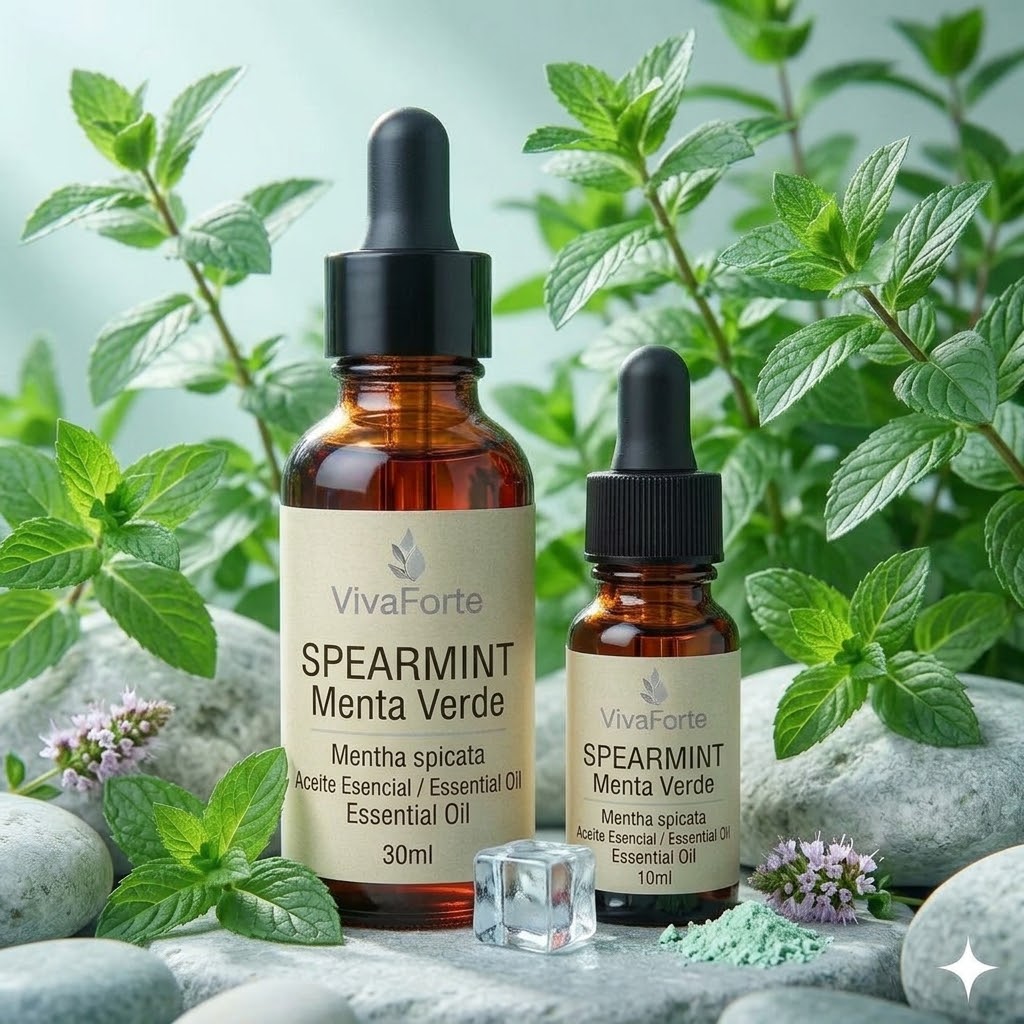
Spearmint essential oil is a sweet, soft and refreshing mint steam-distilled from leaves and flowering tops, loved as a gentler alternative to peppermint in diffusers, blends and everyday home fragrance.
Botanical name: Mentha spicata
Aroma: Sweet, soft, minty and fresh
Note: Top
Main growing region: Temperate regions, including the United States
Typically extracted: Steam-distilled from the leaves and flowering tops
Blends well with: Lavender, Lemon, Basil, Rosemary and Peppermint
Top 3 benefits:
- A gentler mint: a rounder, sweeter freshness than peppermint, popular with people who find peppermint too sharp.
- Light and uplifting: many people find its sweet minty scent a cheerful lift during a flat or sluggish afternoon.
- Easy to blend: a bright top note that sits well with citrus, lavender and green herbal oils.
Safety first: spearmint is gentler than peppermint but still needs care, so keep skin use to 1% or less, patch test first, and avoid it near the faces of young children and if you are pregnant unless a professional advises otherwise. Read the full safety information.
What Is Spearmint Essential Oil?
Spearmint essential oil is steam-distilled from the leaves and flowering tops of Mentha spicata. It is the mint behind many familiar flavours, from chewing gum to toothpaste, and the oil has the same sweet, soft, minty smell. The leaves have a pointed shape, which is thought to explain the name.
Where peppermint leans on menthol for its icy bite, spearmint is built around carvone, which gives it a rounder, sweeter freshness. Alongside carvone there are smaller amounts of limonene and 1,8-cineole. The result is a mint that many people find more comfortable and less severe than peppermint.
Benefits and Traditional Uses
The science: minty scents are traditionally associated with alertness and a fresh, light mood. Aromatherapy research is limited, but many people find spearmint a cheerful, gentle pick-me-up that is less intense than peppermint.
How to use (the afternoon lift): put 1 drop on a tissue and breathe in slowly, or diffuse 3 drops of spearmint with 2 drops of Lemon in a ventilated room.
The science: spearmint has a clean, familiar scent that suits kitchens, bathrooms and shared spaces. It is a pleasant fragrance rather than a disinfectant or air purifier.
How to use (the fresh kitchen): diffuse 3 drops of spearmint with 2 drops of Lavender for a light, green-fresh room scent, for 30 to 60 minutes at a time.
The science: spearmint is traditionally used in a diluted body oil after meals, but research is limited, so enjoy it as a pleasant, cooling ritual rather than a treatment. Speak to a healthcare professional about persistent digestive symptoms.
How to use (the after-dinner rub): dilute 2 drops of spearmint in 10ml of carrier oil (about 1%), patch test first, and massage gently in clockwise circles over the stomach.
How to Use Spearmint Essential Oil
| Method | Instructions | VivaForte tip |
|---|---|---|
| Diffusion | 3 to 5 drops in an ultrasonic diffuser, in sessions of 30 to 60 minutes. | A good choice when peppermint feels too strong. Ventilate the room. |
| Inhalation | 1 drop on a tissue or cotton ball, breathed in slowly. | Keep it off your skin and away from the eyes. |
| Topical | Maximum 1% dilution (about 2 drops per 10ml, or 3 drops per 15ml, of carrier oil). | Patch test first, avoid the face and eyes, and do not use on young children. |
| Massage | 2 drops in 10ml of carrier oil (about 1%), massaged gently over the stomach. | Wash your hands afterwards and keep away from the eyes. |
| Blending | 1 to 2 drops added to a diffuser or perfume blend as a sweet minty top note. | Try it with lemon, lavender or basil. |
Spearmint Safety Information
- Dilute and patch test. Use no more than 1% on the skin (about 3 drops per 15ml of carrier oil). Spearmint may cause an allergic skin reaction, so patch test first and stop using it if irritation occurs. Avoid the eyes, sensitive skin and broken skin.
- External and aromatic use only. Do not swallow essential oils.
- Pregnancy, breastfeeding and health conditions. The product label advises avoiding spearmint oil during pregnancy and breastfeeding. Speak to a healthcare professional before use if you are pregnant or breastfeeding, have a medical condition such as epilepsy or asthma, or take prescription medicines.
- Children. Keep out of reach of children, and do not use on or near the face of babies or young children, as mint oils can affect breathing in very young children.
- Pets. Mint oils can be harmful to pets, particularly cats. Ventilate the room, let animals leave freely when diffusing, and do not apply the oil to or near them.
- Chemical profile. High in carvone, with limonene and 1,8-cineole.
For general guidance on dilution, patch testing and sun safety, read our Essential Oil Safety guide.
History and Heritage
Spearmint has been grown and used for a very long time. Mints were known to the ancient Greeks and Romans, and are mentioned in classical writings as aromatic herbs, and spearmint is thought to have spread across Europe and beyond with Roman and later colonial travellers.
In the kitchen, spearmint is the classic mint of sauces, teas, salads and cocktails. In the 19th and 20th centuries it became a leading flavour in chewing gum and oral care products, and the essential oil is now produced in temperate regions around the world, including the United States.
Spearmint Essential Oil FAQs
Is spearmint essential oil safe to use on the skin?
Only when diluted and used with care. Keep skin use to 1% or less (about 3 drops per 15ml of carrier oil), patch test first, avoid the face and eyes, and do not use it on young children.
Is spearmint oil safe during pregnancy?
The label advises avoiding it during pregnancy and breastfeeding, so please speak to a midwife or healthcare professional before using it. Guidance on mint oils in pregnancy is limited.
Is spearmint oil safe around pets?
Take care. Mint oils can be harmful to pets, especially cats. Diffuse only in a ventilated room, let animals leave freely, and never apply the oil to their skin or fur.
What does spearmint essential oil smell like and what blends with it?
It smells sweet, soft and minty, like fresh spearmint leaves or chewing gum. It blends well with Lavender, Lemon, Basil and Rosemary.
What is the difference between spearmint and peppermint oil?
Peppermint is high in menthol and smells icy and sharp. Spearmint is high in carvone and smells sweeter and softer. Many people prefer spearmint for a gentler, family-friendly mint, though both need care around young children.
Continue Exploring
- Peppermint: the stronger, icier mint for a more intense lift.
- Lemon: a bright citrus partner for a fresh, uplifting diffuser blend.
- Basil: a green, herbal oil that pairs well with sweet mint.
- Essential Oil Safety: dilution, patch testing and sun safety explained.
- All Single Essential Oils: browse the full VivaForte botanical range.